Tuesday, 24 November 2026 — Africa’s health agenda is being shaped by gaps between policy and frontline services, insecurity disrupting outbreak response, emerging antimicrobial-resistance concerns and the pressure to finance essential programmes as international assistance changes. New evidence on adolescent health, fungal resistance and health financing is drawing attention to the capacity of African systems to turn commitments into services, while the second day of CPHIA 2026 focuses on immunisation, local production and health sovereignty.
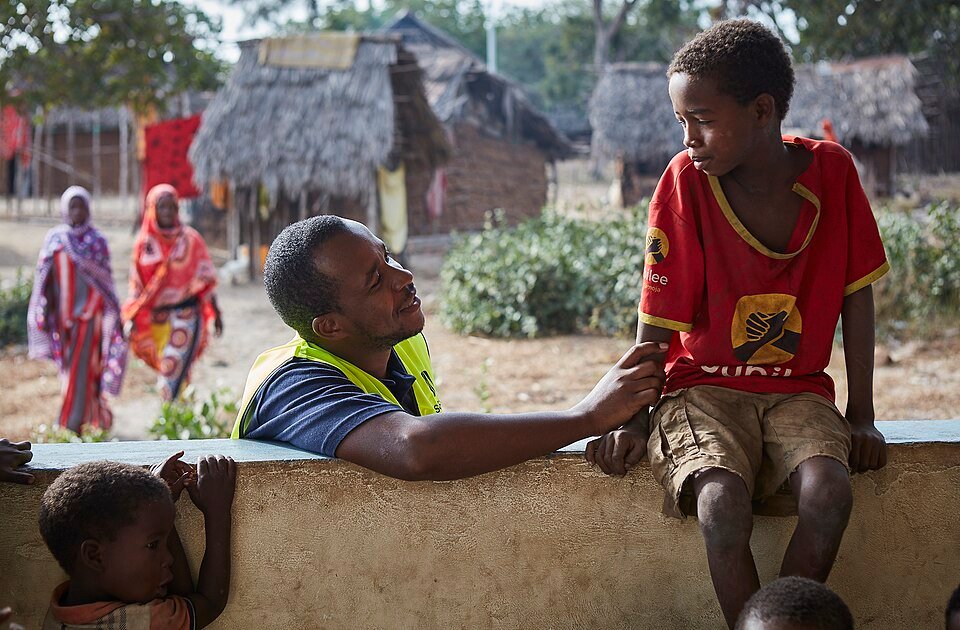
Photo: Safari Doctors’ volunteer medic speaks with a young boy at a mobile clinic in Lamu, Kenya. Safari Doctors / Neil Thomas, CC BY-SA 4.0. Illustrative image; not connected to the reports below.
1. Africa CDC finds major gaps in adolescent-friendly health services
A new Africa CDC assessment reports that adolescent girls aged 10–19 accounted for 16.5 per cent of all pregnancies in 2025 among the 12 countries able to report complete data. The share reached 24.2 per cent in Southern Africa. Only 12.9 per cent of reporting health facilities offered adolescent- and youth-friendly services, despite 83 per cent of countries reporting a national policy and 60 per cent reporting comprehensive sexuality education. The report also flags gaps in confidentiality, consent, spending and age-disaggregated data. These indicators vary in coverage and should not be treated as a complete continental estimate.
Sources: Africa CDC report and DNE Africa’s coverage. A standalone Health Signal Africa article is in draft.
2. Fighting disrupts Ebola response near hospital in Ituri
Heavy fighting near a hospital in Ituri province, Democratic Republic of the Congo (DRC), forced WHO staff and response partners to shelter in a maternity ward for more than 24 hours, disrupting hospital operations and the wider Ebola response. WHO Director-General Tedros Adhanom Ghebreyesus said on 22 November that partners were working to secure safe passage and called for health facilities, patients and workers to be protected. Reuters and Al Jazeera independently reported the statement; the hospital and armed parties were not publicly identified in those reports.
Sources: Reuters and Al Jazeera. The latest case counts in our DRC Ebola coverage are dated through 17 November; no new national total was confirmed in this reporting window.
3. Satellite analysis points to excess deaths beyond recorded Ebola toll
A Reuters investigation published on 23 November used satellite imagery to compare cemetery growth in Bunia with the pre-outbreak period. It estimated more than 1,000 excess deaths by early November, over 50 per cent above the official Ebola death tally of 707 for the city. Excess deaths are not confirmed Ebola deaths: the estimate may include indirect deaths, including people who avoided hospitals, and cannot identify the cause of each burial. The analysis is consistent with warnings about under-detection, but it is not a substitute for case investigation or death certification.
Source: Reuters satellite and cemetery analysis. See also the 23 November briefing.
4. Cameroon study detects triazole resistance in fungal samples
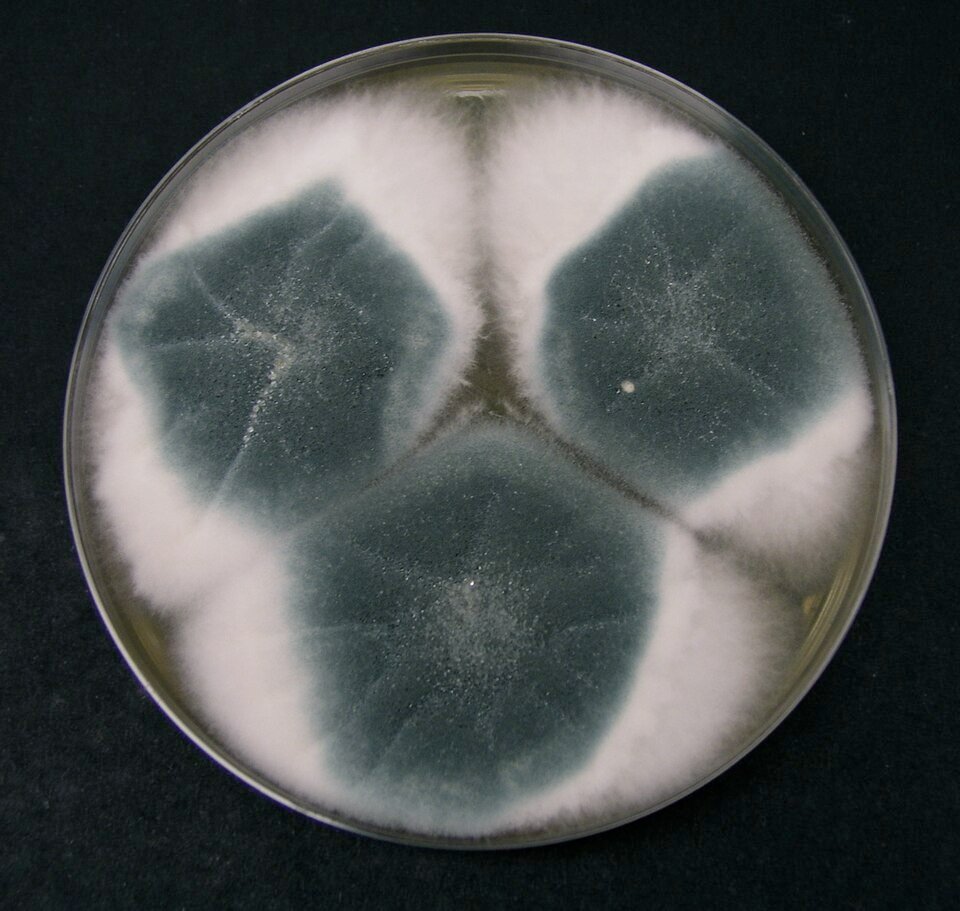
Researchers studying 136 isolates of Aspergillus fumigatus from air, soil, human-associated samples, corn and groundnuts in Yaoundé found 42 per cent resistant to at least one of four tested triazoles and 17 per cent cross-resistant to two or three. The study was published on 17 November; McMaster University published a research summary on 23 November. The findings raise surveillance questions about clinical and environmental exposure, but the small, city-based sample does not establish national prevalence or prove that agricultural fungicides caused resistance.
Sources: primary study and McMaster University. A standalone research article is in draft.
5. UNICEF asks Kenya to protect child-focused budgets as aid falls
UNICEF Representative to Kenya Shaheen Nilofer urged national and county governments to protect allocations for health, education, child protection and social assistance during World Children’s Day celebrations in Nairobi. The appeal, reported by Capital FM on 23 November, highlighted risks to children in poverty, children with disabilities and households facing limited services, and called on county assemblies to prioritise children when approving budgets. The statement did not quantify a specific funding cut. Capital FM’s report was republished by other outlets, so those copies are not independent corroboration.
Source: Capital FM Kenya. It connects with our Kenya health-financing transition report.
6. Ethiopia reports 44% local medicine-market share; procurement metrics differ
Ethiopia’s health minister announced in August that locally manufactured medicines and health products had risen from 8 per cent to 44 per cent of the domestic market. Fana revisited the development on 23 November. The World Bank says local production exceeds 40 per cent of medicine supply, while a peer-reviewed analysis in the Bulletin of the World Health Organization reports local manufacturers supplied 23 per cent of the Ethiopian Pharmaceuticals Supply Service’s Revolving Drug Fund procurement in 2024, against a 60 per cent target. These measures use different denominators; they should not be read as contradictory or interchangeable. Regulatory capacity, imported raw materials, financing and procurement remain important constraints.
Sources: Ethiopian News Agency, Fana Media Corporation, World Bank and peer-reviewed Bulletin of the World Health Organization analysis (DOI: 10.2471/BLT.25.295594). A standalone article is in draft.
7. CPHIA’s second day centres on immunisation, financing and health sovereignty
The official programme for 24 November includes global health-architecture reform, continental pandemic preparedness, vaccine manufacturing, the launch of the Continental Immunization Forum, the inaugural Continental AIDS Monitoring Report and discussions on a CPHIA Health Financing Pathway Compact. Africa CDC’s programme also reiterates a target for Africa to produce 60 per cent of its vaccine needs locally by 2040. These are scheduled discussions and launches—not outcomes confirmed by this briefing.
Sources: official CPHIA programme and Africa CDC media advisory (PDF). Read our CPHIA opening coverage.
8. Africa CDC governance changes as board chair is elected
Uganda’s Health Minister Chris Baryomunsi was elected chair of the Africa CDC Governing Board for a three-year term at its meeting in Addis Ababa on 22 November, according to Health Policy Watch, which also reported that the board was unable to agree on the Director-General’s reappointment and continued discussions on 23 November. ChimpReports also reported the chair election, but its page returned 403 during this check. An official Africa CDC announcement confirming both developments was not located.
Sources: ChimpReports and Health Policy Watch.
9. Global health financing reform faces pressure as aid falls
At the Geneva Health Forum, frontline organisations and researchers called for reforms to global health governance to deliver measurable improvements for communities. Health Policy Watch reports that international health aid is projected to fall by more than half from its pandemic peak by 2030. The projection is global, not an Africa-only estimate, but it matters for African health programmes that rely on external financing. The debate is about whether governance reform can address the scale of funding losses and unequal decision-making.
Source: Health Policy Watch, 23 November 2026.
10. New commentary argues Africa needs a two-track vaccine strategy
A Nature Immunology commentary published on 23 November argues that vaccine sovereignty should combine affordable routine procurement with strategic investment in adaptable platforms, research and development, outbreak-response capacity and regulatory expertise. It is an expert commentary, not a new trial or manufacturing outcome, but it adds a useful policy frame to the CPHIA debate on local production and sustainable resilience.
Source: Nature Immunology.
11. AU launches 2026–2030 roadmap for maternal, newborn and child health
The African Union launched a continental roadmap at CPHIA on 23 November with three targets: zero preventable maternal and newborn deaths, zero home deliveries and zero unvaccinated children. Coverage reports an estimated 180,000 maternal deaths and 1.18 million newborn deaths in Africa in 2023. The roadmap calls for skilled facility births, stronger referral and emergency services, improved immunisation and national implementation. The figures are attributed to the continental report; the roadmap sets ambitions, not guaranteed outcomes. A standalone article is in draft.
Sources: KBC and Pulse Uganda. See the official Africa CDC roadmap.
12. ECA calls for health budgets to be tracked from promise to delivery
At CPHIA on 23 November, the UN Economic Commission for Africa urged governments to follow health financing through five stages: promised, budgeted, released, spent and delivered. ECA said this could help health and finance ministries identify where commitments fail to translate into services. Its release cited Africa CDC data suggesting external health aid was projected to fall about 70 per cent between 2021 and 2025, while reported outbreaks rose around 40 per cent between 2022 and 2024. These are source-reported regional figures and do not establish country-level causation. A standalone health-financing article has been updated in draft with the framework.
Source: ECA press release, 23 November 2026.
Technology and research watch
- Digital health and AI: Africa CDC’s 26 November CPHIA programme is scheduled to cover digital health, artificial intelligence, data sovereignty and climate resilience. These are agenda items, not new results. Health Signal Africa’s recent AI-enabled polio-surveillance dashboard story remains relevant.
- Kenya diagnostics: No new update on the NPOC ACCESS pilot was verified in the last 48 hours. Our previous report covers near-point-of-care TB diagnostics and the AI-enabled digital stethoscope in Kiambu.
- Clinical trials: No new Africa-based clinical-trial result or trial launch was verified in this window.
- Resistance and diagnostics: The Cameroon Aspergillus study is the clearest research signal in this window; it supports surveillance and susceptibility testing, not a change in treatment guidance on its own.
- Local manufacturing: Ethiopia’s domestic pharmaceutical-market share is a policy and industrial-development signal, but procurement figures and market-share estimates must be kept distinct.
Health opportunities closing soon
Verified opportunities are listed on Health Signal Africa’s Opportunities page. Confirm the latest terms with the issuer before applying.
- 1 December: UNICEF Sierra Leone National First Foods Action Plan consultant (deadline 02:55 EAT); UNICEF Health Emergency Preparedness and Response Specialist, P-4, Nairobi; WHO Public Health Programme Management consultant and WHO Malaria Specialist, Brazzaville.
- 25 November: IRC Health Supply Chain Specialist (Kenya/UK; location and salary differences are flagged); IRC Nutrition and Livelihoods Officer, Palabek, Uganda (conservative deadline; employer portal differs).
- 26 November: UNICEF Health Innovation Consultant; UNICEF Health Specialist—Health Economics and Financing, P-4, Nairobi; International Medical Corps Senior Specialist, Monitoring and Evaluation (GUARD, DRC).
- 27 November: WHO institutional-capacity assessment consultancy (Band B, US$7,000–9,980/month); Medair Ebola Health Advisor, DRC; MSF Public Health and Humanitarian Medicine Director, Nairobi; OSDA WASH Engineer and WASH Officer, Mandera.
- 29 November: UNICEF Mozambique WASH Emergency Response Consultant roster.
- 30 November: AFENET Zonal Partner Coordination Lead, Bunia; Global Communities Project Director, DRC health workforce (appointment contingent on project award).
- 4 December: ALIMA Clinical Research Referent for EBO-PEP; Medair Regional Ebola Coordinator, DRC.
- 6 December: MSF Health Promotion and Community Engagement Manager, Ebola emergency pool.
- 7 December: Kenya Ministry of Health BREHS consultancy; ALIMA MHPSS Flying Manager, Nigeria; Nutrition International Technical Advisor for maternal and newborn health and nutrition (multi-country).
- 31 December: IVI Senior Research Scientist I pipeline position, Nairobi (anticipated hiring; not an immediate appointment guarantee).
New listings were added for Nutrition International, IRC Uganda and two OSDA WASH roles. The UNICEF First Foods Action Plan listing was returned to the active page after the official vacancy showed a 1 December closing date, correcting an earlier date. MSF RFP-2026-EA-007 was removed because mandatory participation confirmation closed on 18 November, even though bid submission is due 2 December; new suppliers can no longer enter the process. Direct ReliefWeb pages were inaccessible for some listings; employer portals and available syndication were used. The IRC Uganda deadline is inconsistent (25 versus 26 November); the earlier date is used conservatively.
Verification note
This briefing covers developments published or reported between 22 and 24 November 2026. The Cameroon study itself was published on 17 November, but its university research summary appeared on 23 November. The Ethiopia 44 per cent market-share figure was announced in August, not newly measured in November. The 23 per cent EPSS procurement measure refers to 2024; the full paper returned an access challenge, so the figure was checked against PubMed’s indexed record and remains source-reported pending full-text review. The DRC cemetery analysis estimates excess deaths and cannot attribute each death to Ebola. The CPHIA programme lists scheduled items, not completed outcomes. The UNICEF Kenya budget appeal was not independently corroborated by a standalone UNICEF release. Where primary data or independent corroboration were unavailable, the limitation is stated.


Discussion