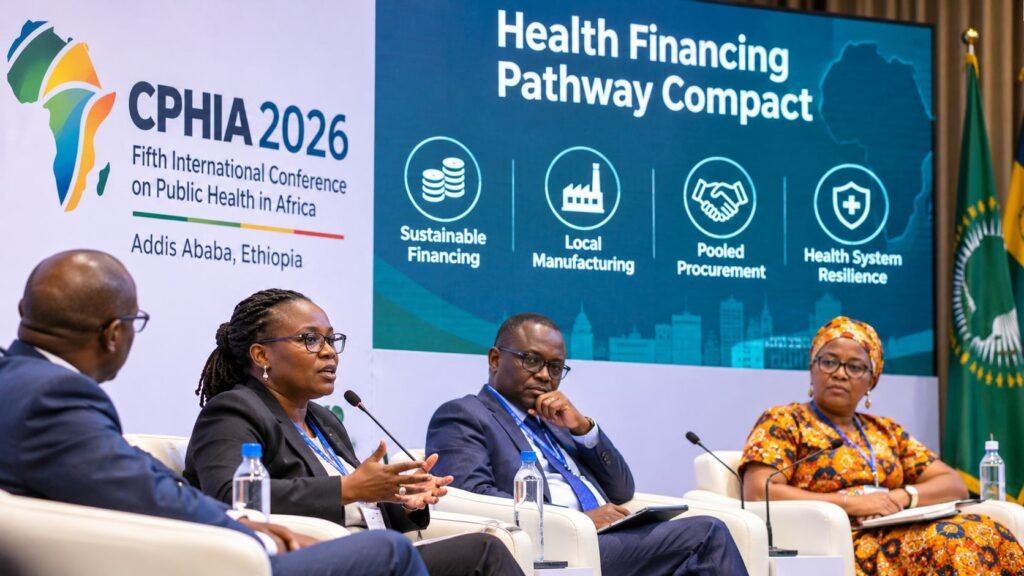
Addis Ababa, Ethiopia — 23 November 2026 — African governments should track health-financing commitments from the moment they are announced through national budgets, cash releases, expenditure and the services delivered, the United Nations Economic Commission for Africa (ECA) has urged. The proposal was presented during the Fifth International Conference on Public Health in Africa (CPHIA 2026) in Addis Ababa, where leaders are debating health sovereignty as external financing conditions change.
The call moves the discussion beyond how much governments promise to spend. It asks whether commitments are costed, budgeted, released on time, used efficiently and translated into better care. That distinction is critical for health programmes dependent on donor support, medicines, diagnostics, community services, health workers and emergency preparedness.
Track the budget from promise to delivery
ECA proposed a five-step accountability framework: what was promised, what was budgeted, what was released, what was spent and what was delivered. The sequence could help ministries of health and finance identify where financing commitments break down—whether a pledge never enters the budget, an allocation is not released, spending is delayed, or money is spent without measurable service results.
The framework is intended to be jointly owned by health and finance ministries and used to review both government and partner commitments. It could make health financing more transparent by linking annual budgets and expenditure records to service-delivery measures, rather than treating announcements and allocations as evidence of progress.
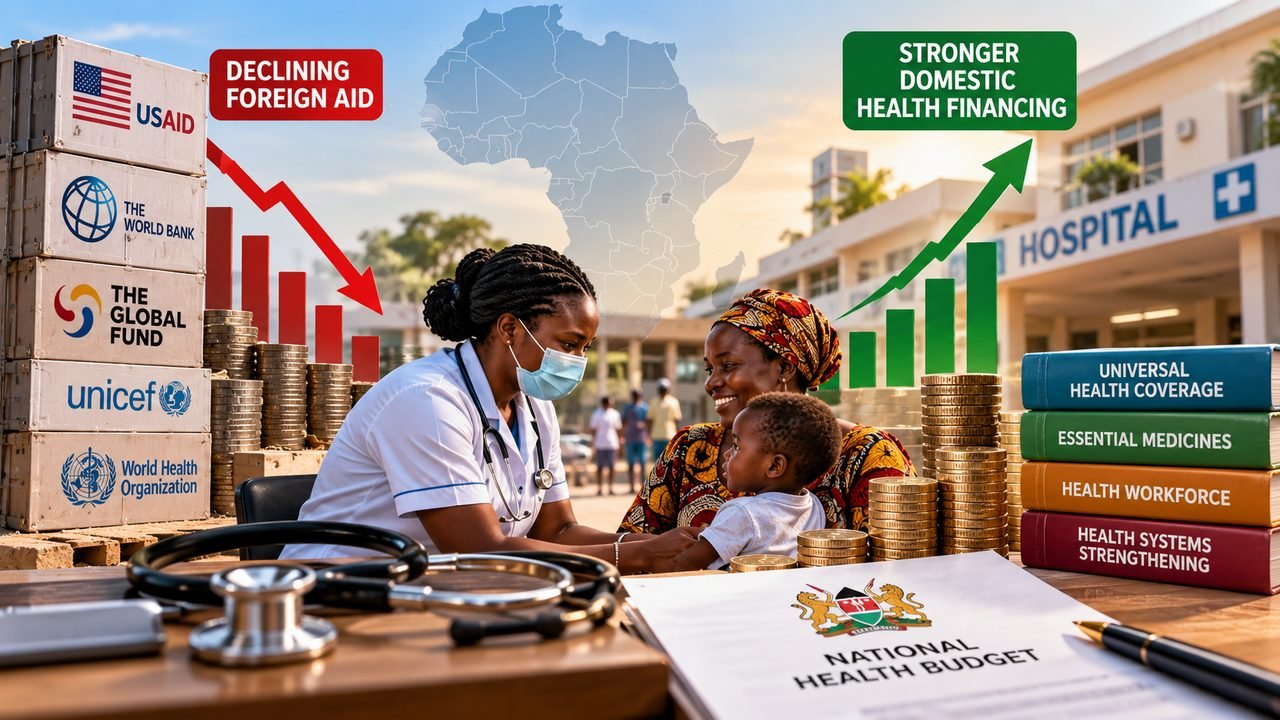
Aid reductions are sharpening the domestic financing question
ECA cited Africa CDC data indicating that external health aid to Africa was projected to decline by about 70 per cent between 2021 and 2025, while reported disease outbreaks rose by roughly 40 per cent between 2022 and 2024. These are figures attributed to the ECA release and should not be interpreted as country-specific trends or as proof that aid reductions caused the increase in outbreaks.
Changing external funding is exposing the importance of predictable domestic resources. Governments may need to finance recurrent costs such as salaries, medicines, laboratory supplies, maintenance, surveillance and primary-care delivery. But increased allocations alone will not guarantee continuity: cash-flow timing, procurement, workforce availability and the quality of spending matter.
Health investment has an economic case
ECA argued that health should be presented to finance ministries as an investment in productivity, jobs and human capital, not only as a competing budget line. This can strengthen the case for domestic financing, but it also places an obligation on health ministries to demonstrate value, publish results and improve efficiency. The five-stage tracker could help make that case by showing what spending delivers.
Possible reforms include broader and more equitable revenue mobilisation, better pooling of funds, strategic purchasing, stronger public financial management, reducing waste and protecting households from excessive out-of-pocket payments. External partners remain important, particularly during transitions, but financing should be predictable and aligned with national priorities.
What the proposal means for African health systems
Health sovereignty will not be achieved simply by changing who pays. It depends on whether countries can sustain essential services, pay and retain health workers, procure quality medicines, maintain diagnostics, reach underserved communities and protect patients from financial hardship. The accountability framework is a proposal, not yet a continent-wide system; its impact will depend on adoption, data quality, transparency and follow-through.
The financing discussion connects to our 24 November Africa Health Briefing and our report on Kenya’s health-financing transition, which examines how domestic budgets may absorb responsibilities previously supported by external funding.
Sources
- Economic Commission for Africa, ECA urges Africa to turn health commitments into action, 23 November 2026.
- WHO Regional Office for Africa, Securing the future of health in Africa through sustainable financing.
- Africa CDC, CPHIA 2026: health security and sovereignty agenda.


Discussion