Brazzaville, Republic of the Congo — 20 November 2026 — The World Health Organization’s Regional Office for Africa has added artificial intelligence functions to its operational polio surveillance dashboards, allowing programme officers to ask questions in plain language and receive maps, charts, tables or summaries. The update was announced on 18 November as part of WHO’s Geographic Information Systems (GIS) work.
WHO Africa receives weekly surveillance and operational data from all 47 countries in the Region, including poliovirus detections, laboratory results, vaccination campaign coverage and health-facility visits. Previously, producing district-level maps and country summaries could require several manual steps, including locating datasets, cleaning and combining information and generating reports. The new dashboard functions are intended to make those data easier for programme staff to explore without having to perform each step themselves.
Plain-language questions can return operational views
WHO describes a use case in which an officer asks for circulating vaccine-derived poliovirus type 2 (cVDPV2) detections by district in a particular country since January 2026. The dashboard can return a visual breakdown and generate summaries from current and archived records. Similar tools are being used to monitor delayed vaccination campaigns and explore reasons for delays.
The intended benefit is quicker access to information for planning and response. Programme officers may be able to identify districts with surveillance gaps, areas where campaign performance is suboptimal or locations requiring additional attention. The tools could help teams bring surveillance, laboratory and campaign data together when decisions are time-sensitive.
AI is a support tool, not a substitute for surveillance expertise
Polio surveillance depends on reliable reporting, laboratory confirmation, field investigations and careful interpretation of data. A dashboard cannot resolve missing reports, inconsistent definitions, poor-quality specimens or delayed field investigations. AI-generated summaries also need to be checked against underlying records before they guide action, especially when a result could affect outbreak classification, campaign targeting or resource allocation.
WHO has not published an independent evaluation of the new functions’ accuracy, time saved or effect on vaccination coverage. The announcement describes capability and intended use, not measured performance. The technology should therefore be treated as a developing operational aid rather than a validated replacement for analysts.
What countries will need for responsible use
National programmes will need staff training, data-quality controls, clear access permissions, privacy safeguards and interoperable systems. The interface should be useful for officers with different levels of technical experience, while data scientists and epidemiologists retain the ability to investigate complex questions and verify results. Evaluation should examine whether the AI tools actually reduce time to decision, improve identification of surveillance gaps or lead to better campaign planning.
For African health systems, this is a practical digital-health development because it is being embedded in an existing surveillance workflow. Its value will depend on whether it improves decisions and helps teams act on data—not simply on whether it can produce a chart or summary.
Sources
WHO Africa: How AI is helping reinforce polio surveillance in Africa; DNE Africa: Polio surveillance in Africa gets AI tools from WHO.
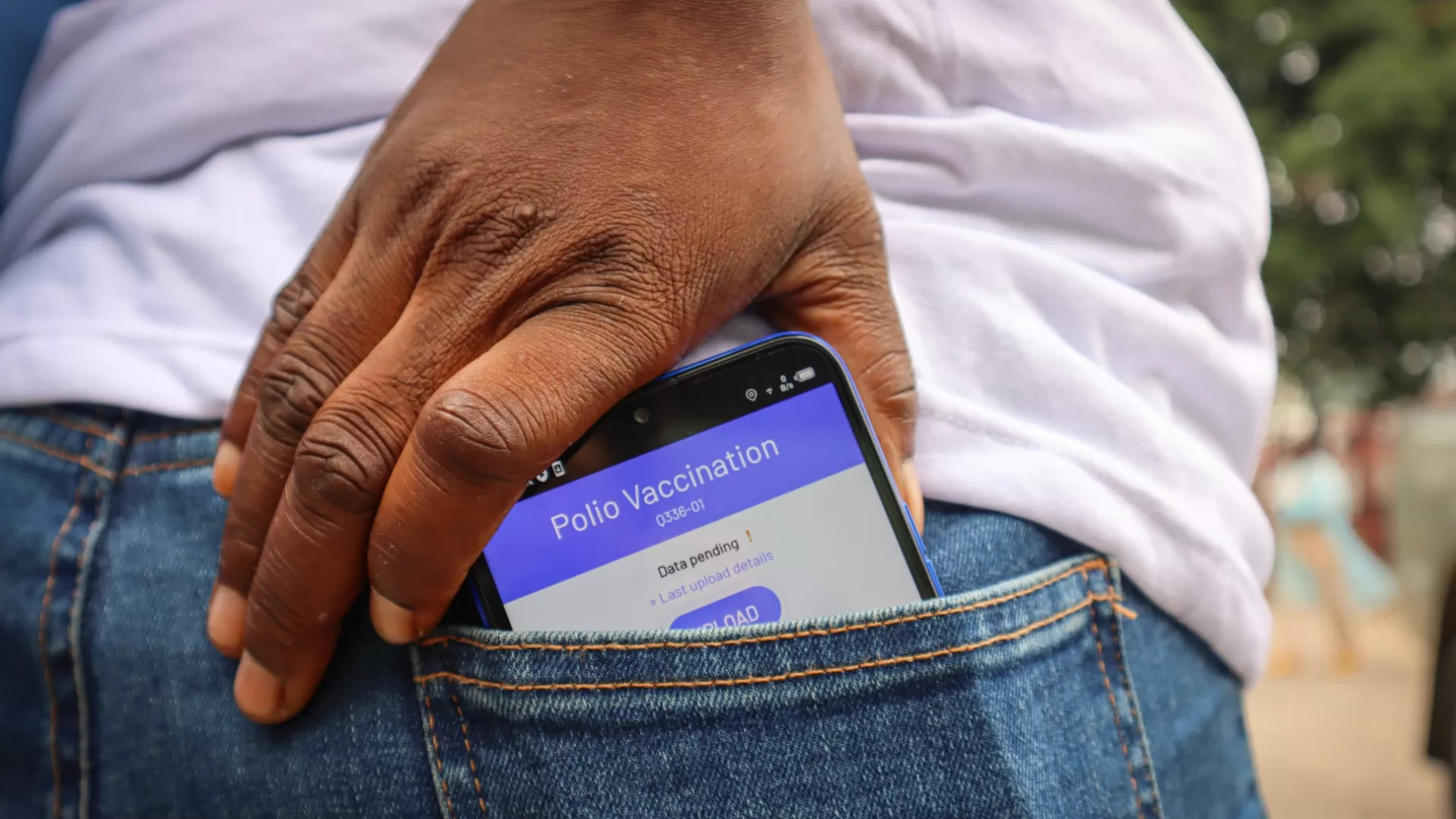
Limitations: WHO has described the dashboard capability but has not published independent accuracy, efficiency or outcome metrics. The featured image shows a vaccination-record phone screen, not the AI dashboard.


Discussion