Nairobi, Kenya — 23 November 2026 — Kenya will need to increase domestic health expenditure by KSh20 billion in 2028 as it takes on more responsibility for programmes and health-system functions currently supported through the Kenya–United States Government-to-Government Health Cooperation Framework, according to the Parliamentary Budget Office (PBO).
The transition is expected to shift financing responsibilities for commodities, frontline health workers, laboratory systems and digital infrastructure over the coming years. The PBO’s November 2026 report, Budget Options for FY 2027/28 and the Medium Term, lays out the planned timetable and highlights the fiscal obligations that Kenya will need to meet as external support declines.
Domestic spending commitments increase as US support declines
The report projects planned US support to fall from US$414.294 million in 2026 to US$161.494 million in 2030. Kenya’s additional domestic health expenditure, measured against the 2025 baseline, is scheduled to rise from KSh10 billion in 2027 to KSh20 billion in 2028, KSh35 billion in 2029 and KSh50 billion in 2030.
These figures describe the planned transition rather than money already released or spent. The PBO says the sustainability of the framework will depend on domestic allocations rising sufficiently and predictably, with the timing of appropriations and releases affecting whether programmes can maintain operations.
13,293 frontline health worker positions shift to Kenyan financing
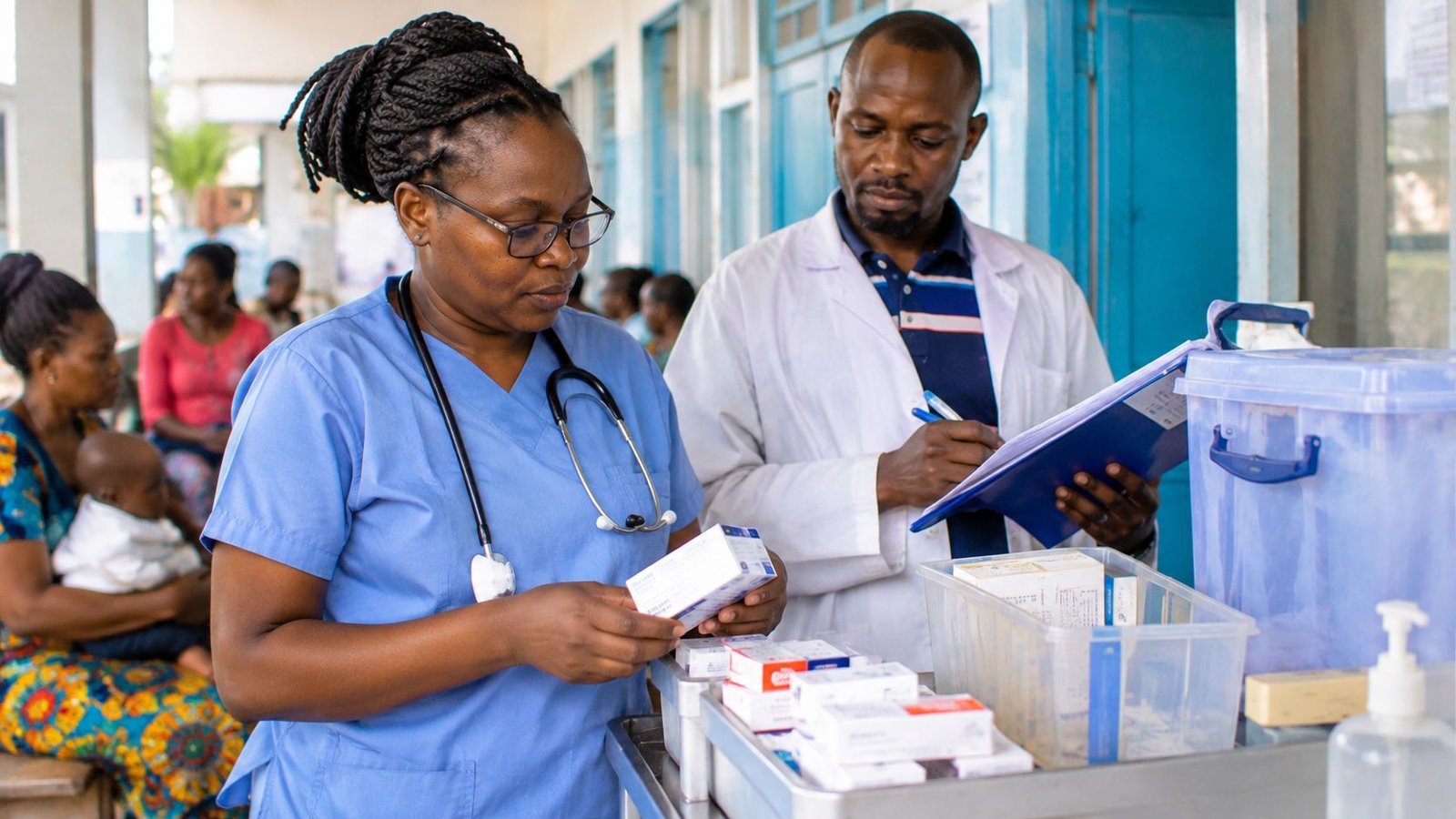
One of the most consequential changes concerns the health workforce. Under the framework, US financing is expected to cover 28,668 frontline health worker full-time equivalents (FTEs) in 2026 and 21,407 in 2027. The PBO report says US financing for these workers ends from 2028, when Kenya is expected to finance 13,293 FTEs annually through 2030 and absorb the supported workers by 30 June 2028.
Absorption into the public workforce creates a recurrent wage obligation rather than a one-off expense. The report therefore warns that the transition will require fiscal space to cover salaries and related employment costs beyond the five-year framework. The numbers describe financing arrangements and FTE commitments; they should not be interpreted as a net new hiring announcement.
Commodity supply and laboratory financing also move toward domestic responsibility
The framework includes a phased transition in financing commodities used in HIV, tuberculosis, malaria and maternal, newborn and child health programmes. The PBO lists US commodity funding declining over time while Kenya’s additional contribution increases. The report also states that the US Government intends to transfer procurement, warehousing and distribution of its commodities to the Kenya Medical Supplies Authority (KEMSA) by 31 December 2026, with a transition framework and readiness assessment to be developed.
Laboratory commodities follow a similar transition. US financing is expected to decline and end, while Kenya’s financing increases. The report stresses that the transition is operational as well as financial: Kenya will need systems for forecasting, procurement, storage, distribution and traceability to ensure that the financing changes do not disrupt the availability of essential products.
Digital health investment comes with long-term operating costs
The framework provides US$175 million over five years for data systems, including TaifaCare health information management, disease surveillance, laboratory information systems and commodity management. The PBO says Kenya will be responsible for ongoing costs such as software licences, cloud computing, hardware maintenance and replacement, cybersecurity and other recurrent needs not covered by US financing.
Strategic interventions worth a projected US$747.59 million over five years are also intended to support programme integration, claims processing and strategic purchasing, laboratory strengthening, disease surveillance, workforce systems, supply chains and institutional reforms. The PBO describes these investments as front-loaded, with greater domestic responsibility expected as the framework progresses.
The 2028 transition will test budget execution
By 2028, the transition brings several obligations together: an additional KSh20 billion domestic health expenditure commitment relative to the baseline, financing for 13,293 frontline health worker FTEs, rising domestic support for laboratory commodities, and growing responsibility for digital and strategic health systems. The PBO also notes that continued US support is linked to Kenya meeting agreed co-investment commitments, creating a risk if domestic budget constraints or delayed releases prevent the government from meeting them.
The central issue is not only whether Kenya increases its health budget, but whether the money is appropriated, released and spent on time—and whether systems can maintain services during the change. The transition’s impact will ultimately be measured by continuity of medicines and diagnostics, frontline staffing, programme integration and access to care.
Source: Parliamentary Budget Office, Budget Options for FY 2027/28 and the Medium Term, November 2026.
Health Signal Africa’s reporting is based on the PBO’s published projections and framework descriptions. Figures are planned financing commitments and transition arrangements, not confirmation of actual disbursement or service impact.
Discussion