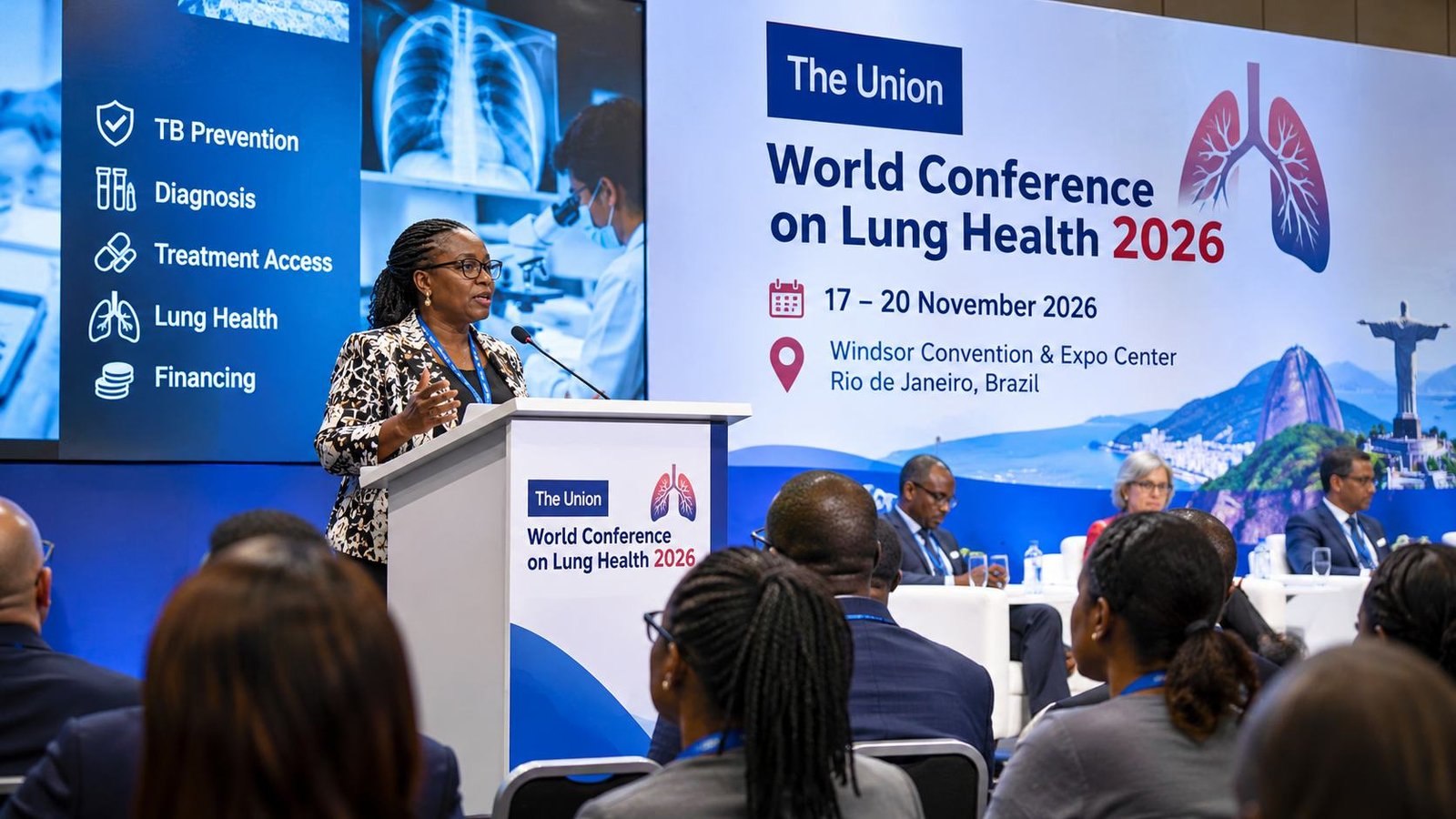
Rio de Janeiro, Brazil — Global tuberculosis and lung health leaders will meet in Rio de Janeiro from 17 to 20 November for The Union World Conference on Lung Health 2026, a major scientific gathering taking place as countries confront persistent gaps in TB diagnosis, treatment access and financing.
The meeting at the Windsor Convention & Expo Center will bring together researchers, clinicians, public health practitioners, advocates, policymakers and affected communities. The programme is expected to focus on translating evidence into stronger prevention, diagnosis, treatment and integrated lung health services.
WHO puts the future of the TB response on the agenda
The World Health Organization (WHO) will convene sessions on strategic priorities, present findings from the Global Tuberculosis Report 2026 and contribute to discussions on the next phase of the global TB response. A WHO End TB Strategy Summit is scheduled for 15 November, ahead of the main conference. On 17 November, the WHO Global #EndTB Symposium will present findings from the 2026 report; a separate expert consultation on 18 November will gather technical input for a post-2030 global TB strategy.
New treatment research and community perspectives
The UNITE4TB consortium has announced that first results from its PARADIGM4TB Phase 2 platform trial will be presented during the conference, including findings on regimens containing ganfeborole and BTZ-043. These are research findings, not evidence of routine-care availability. Other discussions will consider long-acting injectable TB treatment and prevention; these approaches remain under research and development and will require further evidence, regulatory review and access planning.
Why the meeting matters beyond Rio
WHO estimates that 10.6 million people developed TB in 2025 and about 1.13 million died. Although domestic TB funding increased, international financing fell and millions of people with TB were still not diagnosed or reported. For African health systems, the discussions are relevant to rapid molecular testing, drug-resistant TB services, community-led care, integrated respiratory health and sustainable domestic financing.
What this means
What is changing? The global TB community is reviewing evidence and priorities as it approaches the next phase of the End TB effort.
What comes next? WHO consultations and conference discussions will inform future strategy, research and implementation priorities.
What does it mean? Countries will need stronger domestic financing, earlier diagnosis and accessible treatment if progress is to accelerate.
What solutions are available? WHO-recommended rapid diagnostics, effective treatment, prevention, community engagement and integrated primary care are established priorities; new regimens and long-acting approaches remain under evaluation.
Who is offering them? National TB programmes, WHO, The Union, research consortia, civil society and development partners.
Sources
The Union World Conference on Lung Health 2026; WHO programme at the conference; UNITE4TB conference update; WHO Global TB Report 2026 news release.


Discussion