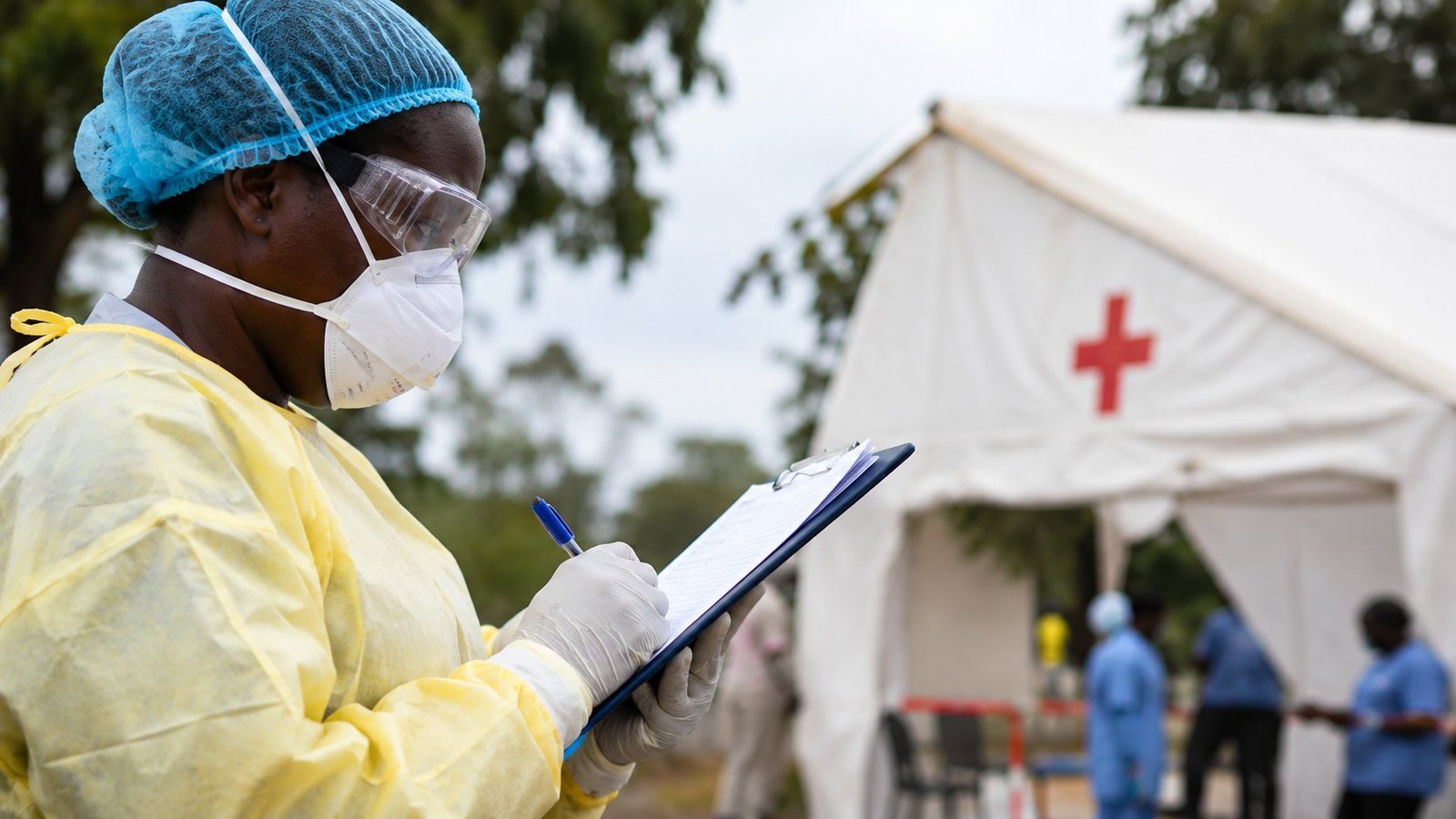
Sunday, 15 November 2026 — Africa’s health agenda over the past 48 hours has been shaped by a worsening humanitarian outlook in the Democratic Republic of the Congo (DRC), a renewed warning about the continent’s diabetes diagnosis gap, Nigeria’s completion of Ebola contact monitoring and new attention to clinical research against Bundibugyo virus. In Kenya, a WHO photo story has highlighted farmers moving from tobacco to food crops, linking noncommunicable disease prevention with nutrition and livelihoods.
The developments point to a common challenge: health outcomes depend on reliable primary care, food security, trusted public-health systems and the ability to sustain services through conflict, disease emergencies and economic pressure.
Central Africa: DRC hunger projections rise as disease outbreaks compound the crisis
A joint release issued on 13 November by FAO, WFP, UNICEF and WHO says 30.3 million people in the DRC could face Crisis-level acute food insecurity or worse between January and June 2027. Nearly 29 million are projected to face IPC Phase 3 or above between September and December 2026, including 3.6 million in Emergency, or Phase 4. The number in Phase 4 is projected to rise to 4.2 million in early 2027.
More than 11 million people in North Kivu, South Kivu and Ituri are projected to face Crisis-level hunger or worse in the first half of 2027. The agencies identify nine territories expected to experience Emergency levels. Conflict, displacement, disrupted markets, high prices and restricted access to farmland are driving the deterioration.
Ebola, cholera, mpox and other health emergencies are adding pressure on households and health services. The UN agencies warn that acute malnutrition, unsafe water, poor sanitation and reduced access to healthcare are increasing risks for children and other vulnerable groups. They call for food assistance, protection of agricultural livelihoods, treatment of acute malnutrition, continuity of health services and safe humanitarian access.
The 30.3 million figure is a projection for January–June 2027, not a current count or a declaration of famine. IPC Phase 3-or-worse includes Phase 4; the figures should not be added together. Read the WHO joint release and the FAO statement. Anadolu Agency also reported the new IPC outlook on 13 November.
Health Signal Africa has updated its standalone analysis: DR Congo Hunger Crisis Could Push 30.3 Million Into Acute Food Insecurity.
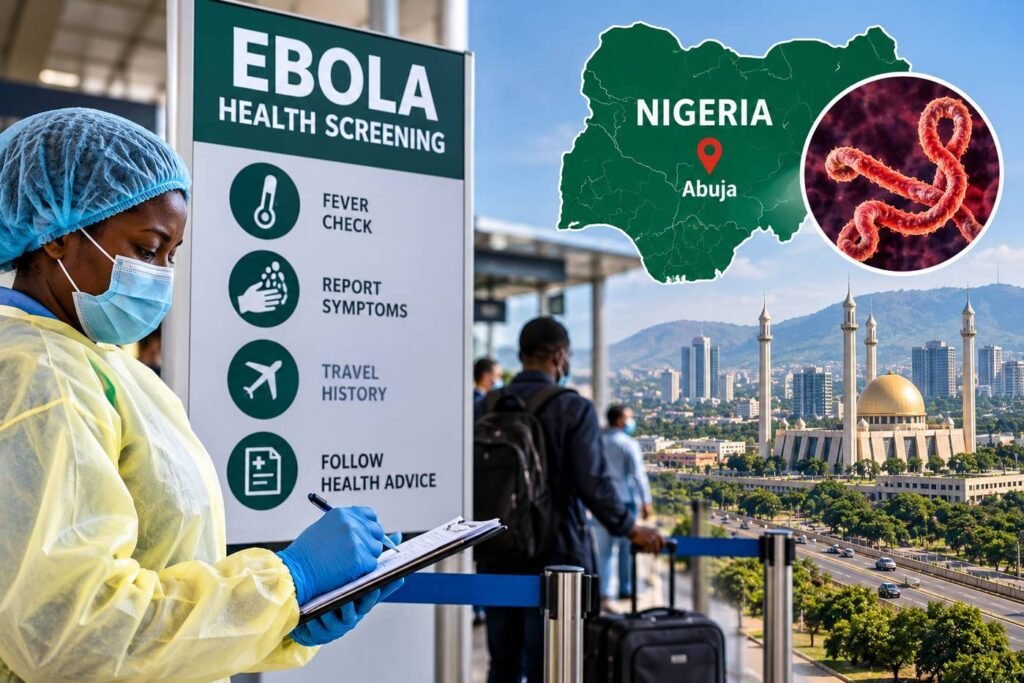
West Africa: Nigeria completes monitoring of all 62 Ebola contacts
Nigeria’s Centre for Disease Control and Prevention said on 13 November that all 62 contacts linked to the country’s imported Bundibugyo Ebola case had completed the 21-day monitoring period without developing the disease. Thirteen contacts reported fever or other non-specific symptoms during follow-up, but all tested negative. Seven alerts investigated across five states during the preceding three weeks were also negative.
The index patient, who was medically evacuated to Switzerland, recovered and was discharged from hospital. Reuters and Al Jazeera reported the NCDC announcement. The agency has cautioned that completing contact monitoring does not itself constitute an official end-of-outbreak declaration. Nigeria must complete the applicable 42-day period after the last confirmed patient’s recovery or departure before an end can be declared.
The milestone demonstrates the value of early detection, contact tracing, laboratory testing and cooperation between health authorities and communities. It does not remove the need for continued surveillance, particularly while transmission continues in the DRC and movement across borders remains substantial. See Reuters’ report and Al Jazeera’s coverage.
Health Signal Africa’s related article is available as an editorial draft: Nigeria Completes Ebola Contact Monitoring Without Secondary Cases.
Pan-African: WHO highlights Africa’s diabetes detection gap
For World Diabetes Day on 14 November, WHO’s Regional Director for Africa urged governments to strengthen early diagnosis and access to affordable, continuous care. Citing the International Diabetes Federation’s 11th Diabetes Atlas, WHO said an estimated 24.6 million adults aged 20–79 were living with diabetes in the IDF Africa region in 2024. The number is projected to reach 59.5 million by 2050.
The IDF estimates that 72.6% of adults with diabetes in its Africa region were undiagnosed in 2024, equivalent to about 17.9 million people. It also estimates 216,000 diabetes-related deaths in 2024. These are modelled estimates, not a new national survey. The IDF Africa region covers 49 sub-Saharan African countries and territories and is not identical to the WHO African Region.
WHO says early detection must be followed by accessible treatment, trained health workers, diagnostics, affordable insulin and essential medicines, and reliable follow-up. It highlighted WHO PEN, HEARTS-D and PEN-Plus as tools supporting primary-care and first-referral services. Rwanda was commended for achieving nationwide district-level PEN-Plus coverage, while WHO acknowledged that major workforce, diagnostic and medicine gaps remain elsewhere.
The IDF also estimates that one in seven live births in its Africa region is affected by hyperglycaemia in pregnancy, underlining the connection between diabetes services and maternal healthcare. Read the WHO African Region message and the IDF Africa regional estimates.
East Africa: Kenyan farmers shift from tobacco to food crops
A WHO photo story published on 14 November describes how farmers in Migori County are moving from tobacco to crops including high-iron Nyota beans, soya and groundnuts. WHO says the Tobacco-Free Farms initiative, launched in Kenya in 2021 with UN agencies, county and national partners, has supported more than 12,400 farmers to move away from tobacco, nearly 8,900 of them in Migori.
The story documents a learning visit by farmers and officials from Embu County, where some growers are considering similar changes. WHO cites a cost-benefit analysis of the October–December 2024 season that found tobacco recorded a net loss per acre while most alternative crops performed better. The photo story provides programme examples and farmer accounts; it is not a national impact evaluation or proof that every alternative crop will be more profitable in every location.
The initiative links tobacco control with food security, agricultural livelihoods and reduced exposure to tobacco-related health risks. It also shows why transition support needs reliable seeds, extension services, market access and evidence on farm-level costs. Read WHO’s story from Migori and Embu.
Research watch: Bundibugyo Ebola vaccine and treatment trials
WHO’s 4 November update confirmed that two additional vaccine candidates, Oxford and Serum Institute of India’s ChAdOx1 and Moderna’s mRNA-1469, had been recommended for further evaluation in the Tumaini clinical trial in the DRC, subject to national approvals. The trial uses a ring-vaccination approach and is designed to evaluate multiple candidates. WHO also described the PARTNERS treatment trial, which is evaluating the monoclonal antibody MBP134, remdesivir and their combination, alongside other investigational approaches.
A Le Monde field report published on 15 November said the Bravo vaccine study had enrolled about 2,030 participants by 27 October and aims to recruit 20,000 across three sites. It also reported that MBP134 had been administered to 755 patients in the PARTNERS treatment study, while investigators cautioned that recoveries cannot yet be attributed to the experimental medicines rather than natural immune responses. These are reported recruitment and treatment counts, not efficacy results. None of the candidates should be presented as an approved vaccine or proven treatment for Bundibugyo virus. WHO said initial treatment-trial findings were expected in the coming months and vaccine-trial results in early 2027. Research remains one part of the response; surveillance, clinical care, infection prevention, safe access and community trust are still essential.
Read WHO’s clinical research update and Le Monde’s 15 November report. Health Signal Africa has updated its article on DR Congo Ebola vaccine and treatment trials.
Health opportunities: current deadlines and regional roles
Two UNICEF opportunities were added to the Health Signal Africa Opportunities page after checks against the issuer’s official recruitment system:
- Somalia: International Consultant to develop the national Child Survival Action Plan, a 3.5-month assignment supporting maternal, newborn and under-five survival planning. Deadline: 22 November 2026. View listing.
- Ethiopia: Maternal Nutrition Specialist, NO-3, UNICEF Ethiopia. Open to Ethiopian nationals only; deadline: 23 November 2026. View listing.
A UNICEF consultancy supporting Kenya’s Gavi 6.0 country application and Ebola response planning closes on 15 November at 23:55 EAT. Applicants should consult the official vacancy notice immediately. ReliefWeb was checked for health-related vacancies and consultancies published between 13 and 15 November, but no new listing in that window could be independently verified. An existing ReliefWeb-sourced listing for the International Rescue Committee’s Health Supply Chain Specialist remains open until 26 November. The official IRC Workday notice lists both Nairobi and London locations; its GBP 41,767–49,599 salary range is the UK band only and must not be applied to Kenya. View the opportunity or apply through IRC. A previously stored CEFA Project Coordinator listing for a TB and HIV programme in Kenyan correctional facilities has been moved to draft because its source link could not be confirmed against a direct current notice. It will be restored only after the original vacancy is verified.
See the Health Signal Africa Opportunities page for eligibility, requirements and application links. Deadlines and eligibility can change; applicants should confirm details with the issuer before applying.
Technology and innovation watch
The most significant research development remains the expansion of the DRC Bundibugyo vaccine and treatment trials. The Kenya Tobacco-Free Farms programme is also relevant to prevention innovation because it connects tobacco control with alternative agricultural value chains. No new African AI diagnostic product or digital-health effectiveness result published in the 13–15 November window was verified for this edition. Health Signal Africa will continue to distinguish pilots, research-stage interventions and completed evaluations.
Editorial verification note
This briefing prioritises institutional and primary sources published between 13 and 15 November 2026. Where the latest available outbreak bulletin carries an earlier data cut-off, that date is stated rather than presenting it as a new count. The DRC hunger figures are projections; diabetes figures are IDF estimates; vaccine and treatment candidates remain investigational; and the Kenya tobacco-farming story is a programme photo story rather than an independent impact evaluation. No unsupported figures or efficacy claims have been added.
Discussion