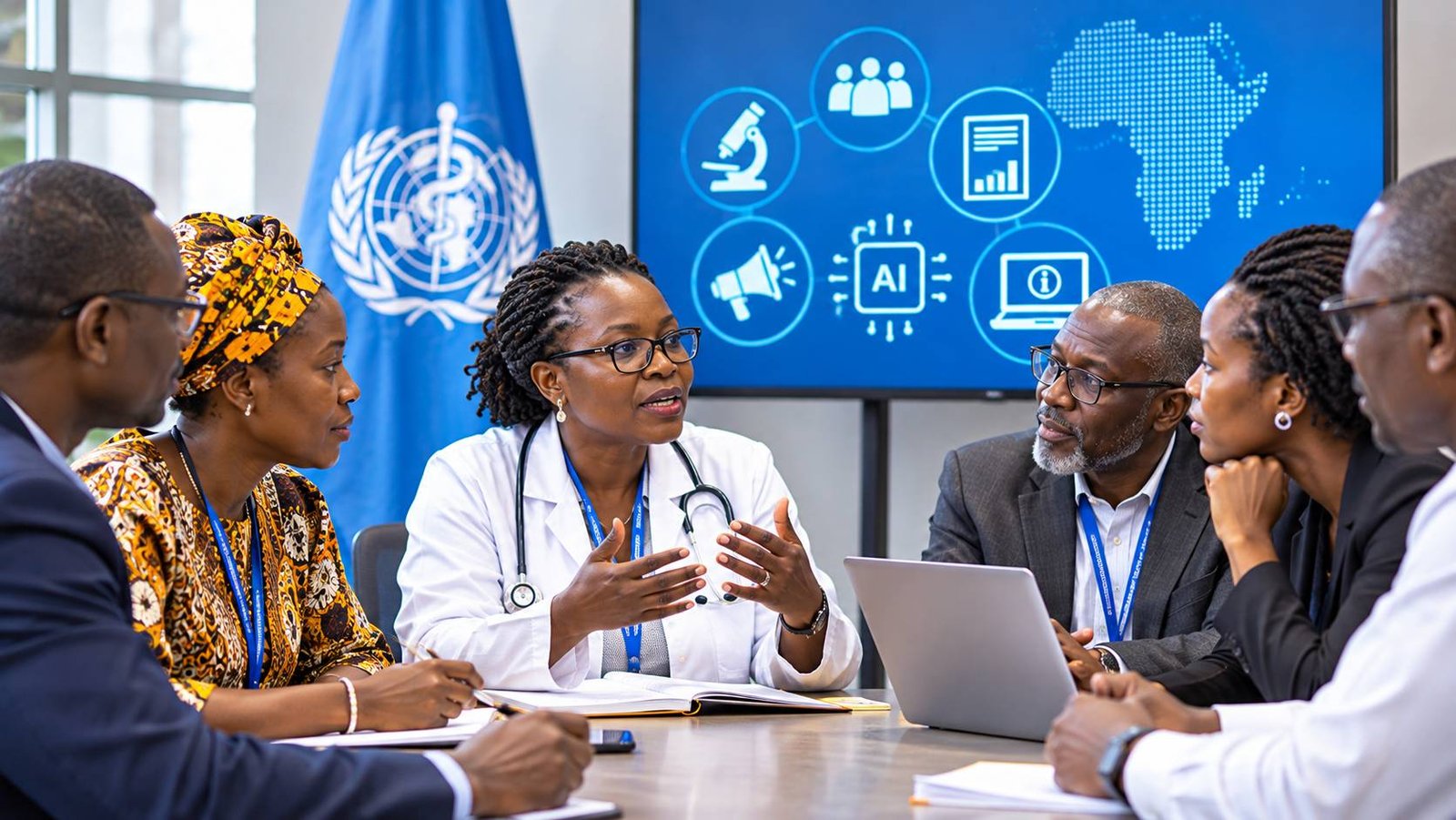
Geneva, Switzerland — The World Health Organization (WHO) has launched a global movement bringing together more than 240 organisations to strengthen trust in science and improve the use of evidence in health and development decisions. The initiative, called Together for Science and Health, was launched on 10 November and is intended to connect researchers, policymakers, health professionals, communities, young people, civil society and other institutions.
The movement comes at a time when rapid technological change, artificial intelligence and social media are transforming how people encounter health information. WHO says the initiative will focus on bringing science and society closer together, strengthening evidence use in policymaking and improving how scientific information is communicated and discussed.
Why trust has become a public health issue
Public confidence influences whether people accept vaccination, follow outbreak guidance, seek timely care, participate in research and use medicines appropriately. When false or misleading claims spread rapidly, health authorities can struggle to communicate risk and maintain confidence in interventions. Distrust can also be fuelled by poor service experiences, unequal access to care, opaque decision-making and histories of exclusion.
These challenges are relevant across Africa, where communities receive information through a mix of radio, television, messaging platforms, social media, community health workers, religious networks and local leaders. Health communication must account for language, literacy, connectivity, cultural context and the credibility of the messenger. A generic online campaign may not reach people who have limited internet access or who rely on trusted local networks.
Three priorities for collaboration
WHO describes three areas of action. The first is science and society: involving communities in setting research priorities and ensuring that scientific work reflects people’s needs and lived experiences. The second is science and policy: improving dialogue between researchers and decision-makers so that evidence informs timely and practical policies. The third is science communication: making evidence easier to find, understand and discuss, while responding constructively to misinformation and disinformation.
The movement is not a single health programme or a replacement for national science and communication institutions. It is a platform for collaboration and shared commitments. WHO has invited governments, universities, research and health institutions, professional associations, media organisations, civil society and technology companies to participate.
What African institutions can contribute
African universities and research institutions can strengthen public engagement by communicating findings in accessible language and sharing study limitations, not only positive results. Ministries of health can make decision-making processes more transparent and work with community organisations before emergencies occur. Journalists can verify claims, explain uncertainty and link readers to original evidence. Health workers and community health promoters can help identify questions that matter locally and explain guidance in context.
Technology platforms and digital health organisations also have responsibilities. Their systems influence which claims become visible and how quickly misinformation circulates. Greater transparency, accessible reporting channels and collaboration with credible public health institutions can help reduce harm while protecting legitimate public debate.
Trust must be earned through practice
The launch provides a framework, but its impact will depend on whether participating organisations translate commitments into measurable action. Relevant indicators could include community participation in research, public access to evidence, transparent correction practices, stronger science communication and documented use of research in policy decisions.
For Africa, the opportunity is to ensure that global scientific progress is not only produced elsewhere and communicated to communities as a finished instruction. Local researchers, health workers and communities need a meaningful role in shaping the questions, interpreting findings and deciding how evidence is applied.
Sources and limitations
Sources: WHO, Together for Science and Health movement launch, 10 November 2026; WHO initiative overview.
The movement is a newly launched collaboration platform. Its long-term outcomes have not yet been evaluated. The number of participating organisations is the figure reported by WHO at launch.

Discussion