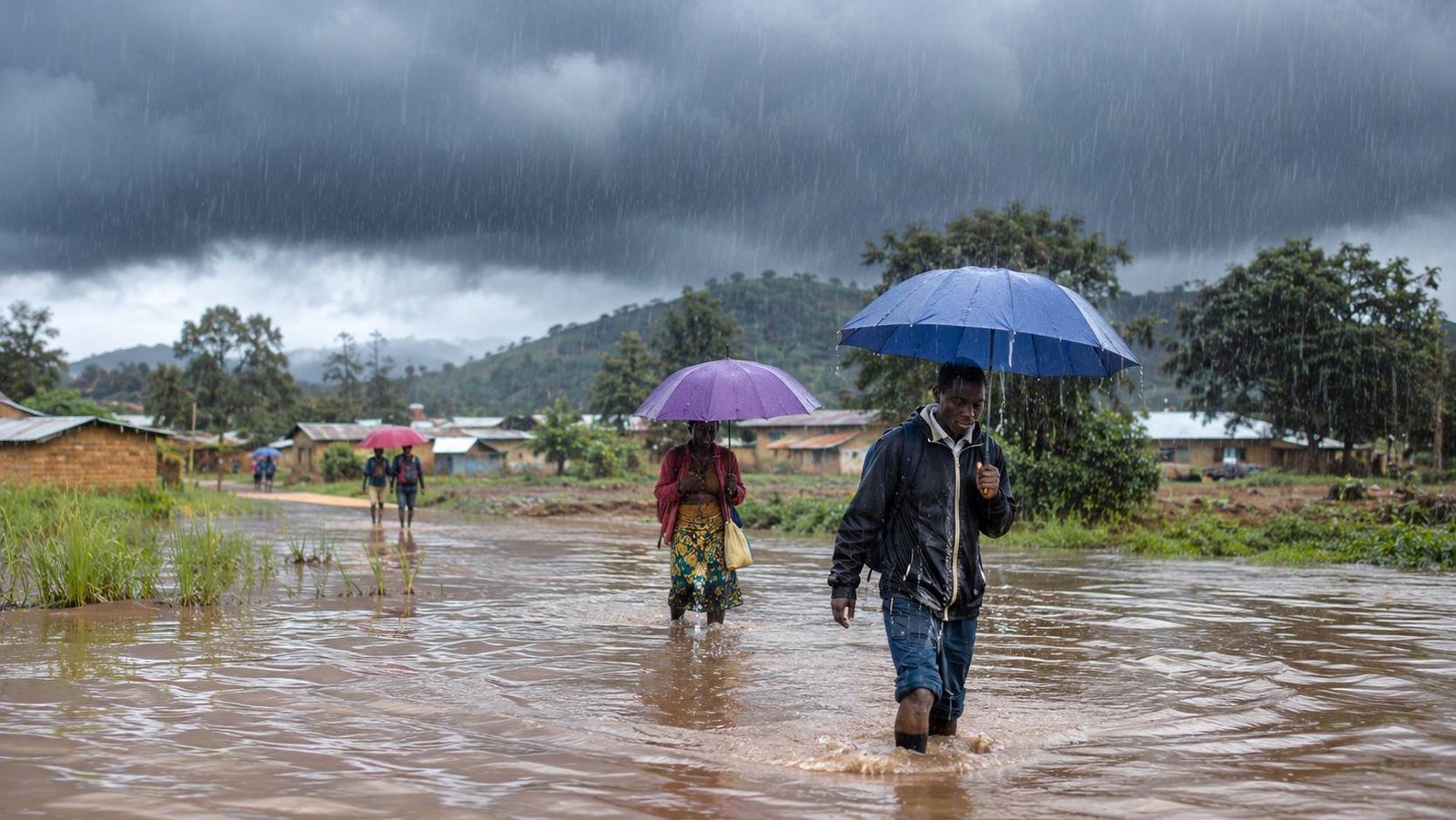
Geneva, Switzerland — A strengthening El Niño is emerging as a major global climate concern for the final months of 2026 and the beginning of 2027, with forecasts pointing to contrasting rainfall risks across Africa. The United Nations’ climate outlook indicates increased chances of wetter-than-normal conditions in parts of East Africa during the October–December rainy season, while parts of Southern Africa face a greater likelihood of drier conditions as their rainy season begins.
El Niño is a naturally occurring climate pattern associated with warmer-than-average sea surface temperatures in the central and eastern tropical Pacific. It can influence atmospheric circulation and shift rainfall and temperature patterns in regions far from the Pacific. Its effects are not uniform: the same event can increase flood risk in one region while worsening drought conditions in another.
Why the forecast matters for food and health
In East Africa, intense or prolonged rainfall can increase the risk of flooding, damage roads and bridges, displace households and interrupt access to health facilities. Flooding can contaminate water sources and sanitation systems, raising the risk of diarrhoeal disease. Standing water and disrupted environmental conditions can also influence mosquito breeding and malaria transmission in some settings, although the relationship depends on local ecology, temperature and timing.
In parts of Southern Africa, rainfall deficits can threaten crop production, livestock, water supplies and household income. Food insecurity can worsen malnutrition, particularly among children, pregnant women and people living with chronic illness. Drought can also increase pressure on water and sanitation services and make it harder for health facilities to maintain reliable supplies.
Climate shocks affect health beyond direct injuries and infectious disease. Displacement, loss of livelihoods, school disruption and household debt can increase stress and reduce access to routine care, including antenatal services, immunisation and treatment for chronic conditions.
Kenya prepares for the peak of the short rains
Kenya is preparing for heavier-than-usual rainfall during the October–December short-rains season, with November expected to be the peak. The National Disaster Operations Centre has warned that about 1.5 million people could be affected and urged residents in flood-prone areas to move to safer ground. An Associated Press report published on 13 November said Nairobi County had identified about 172 potential shelter venues where food and medicine could be provided if evacuations are needed. The county also plans to work with Safaricom to send mobile-phone alerts to residents.
The 1.5 million figure is a preparedness estimate, not a count of people already affected. The 172 shelter venues refer to Nairobi County and should not be interpreted as a national total. AP reported that county teams were clearing drainage channels and river corridors ahead of the rains, while residents in low-lying settlements continued to face barriers to moving to safer housing.
WHO reported in September that a national assessment had identified 18 counties and 5,660 health facilities in areas considered at risk, with overall flood preparedness assessed at 54%. The Ministry of Health had activated a Health Sector El Niño Contingency Plan. WHO also described efforts to strengthen the Kenya Defence Forces’ emergency medical capacity, including training an initial group of 30 team members and testing response procedures through a tabletop exercise.
For health services, the main concerns include contaminated water, damage to sanitation systems, disrupted referrals and interruptions to essential medicines. WHO has warned that flooding can contaminate water, block access to clinics and push families into crowded shelters where cholera can spread. Other waterborne illnesses are also a concern when sanitation systems are damaged. Standing water can create mosquito breeding sites, but the extent of any vector-borne disease risk depends on local ecology and surveillance; these are preparedness considerations, not evidence of a current outbreak.
Forecasts are an opportunity to prepare
Seasonal forecasts do not predict the exact weather in every district, and they should not be interpreted as certainty that a particular community will experience a flood or drought. Their value is that they provide governments and humanitarian agencies with an opportunity to prepare before impacts intensify.
Actions include strengthening early-warning communication, mapping communities exposed to floods and water shortages, pre-positioning essential medicines and emergency supplies, protecting health facility power and water systems, and preparing mobile health teams for areas where roads may become inaccessible. Public health authorities can also reinforce water treatment, sanitation monitoring, vector surveillance and risk communication.
Health systems need climate-ready planning
National disaster agencies, meteorological services, ministries of health, agriculture and water, local governments and humanitarian partners need to share forecasts and translate them into operational decisions. Health facilities should review contingency plans for patient surges, supply interruptions and staff access. Communities need understandable warnings and practical guidance, including safe water storage and evacuation information where relevant.
For African countries, the challenge is not simply responding to extreme weather after it occurs. It is building climate resilience into routine health planning, infrastructure investment, food systems and disease surveillance. The quality of preparation in the coming weeks could influence how severely communities experience the season.
Sources and limitations
Sources: United Nations, El Niño focus; Associated Press, Kenya flood preparedness, 13 November 2026; WHO Kenya, 8 September 2026; WHO Kenya, 28 September 2026.
Seasonal outlooks describe probabilities, not certainties. The 1.5 million exposure figure is a preparedness estimate reported by AP, and the 172 shelter venues relate to Nairobi County. WHO’s 54% preparedness assessment is from September 2026, not a new November assessment. Local impacts will depend on geography, preparedness, infrastructure and subsequent weather updates.
Discussion