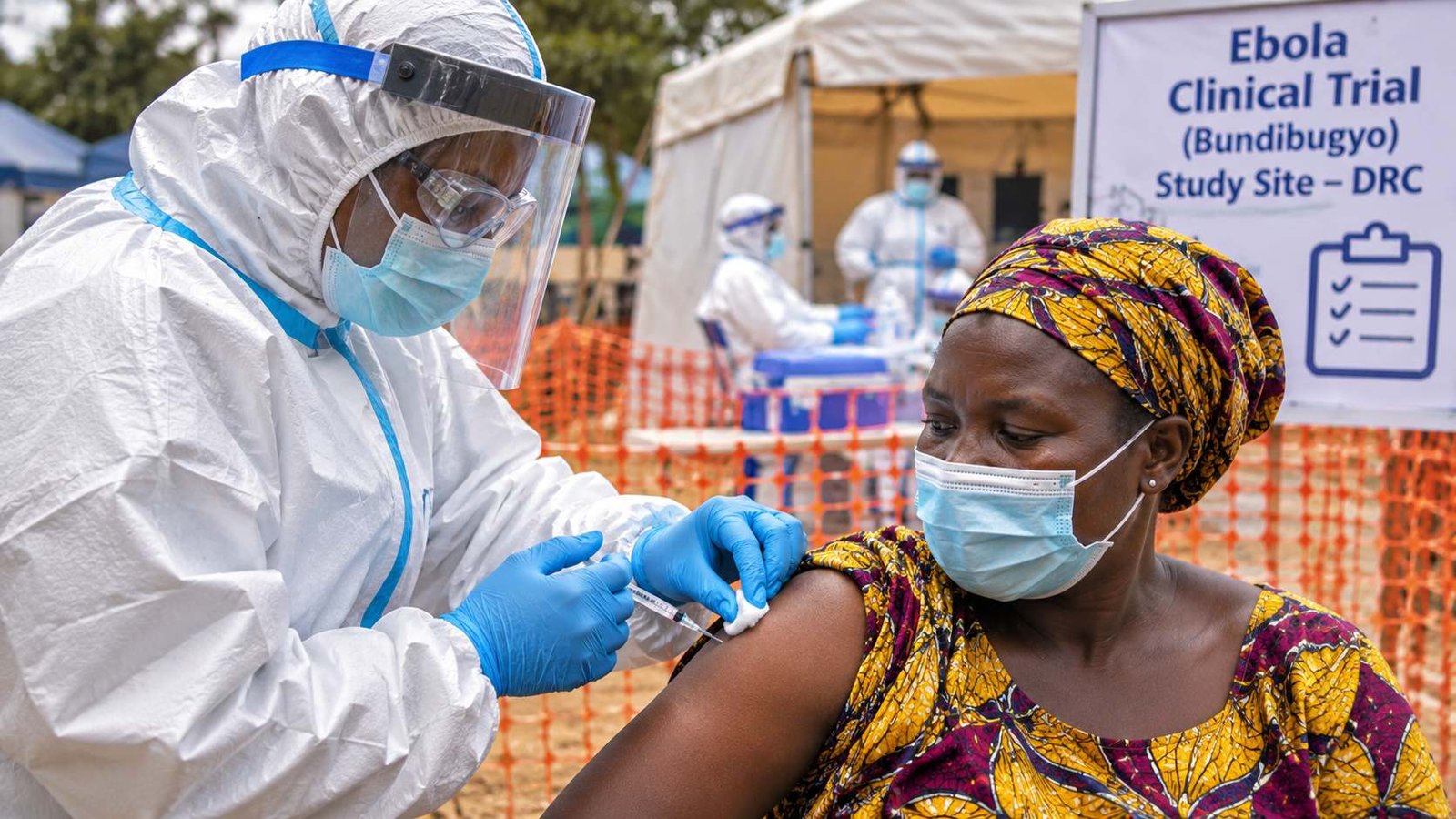
Bunia, Democratic Republic of the Congo — Researchers are testing several vaccine and treatment candidates against Bundibugyo virus disease as the Democratic Republic of the Congo (DRC) continues to face a major Ebola outbreak. The studies mark an important expansion of research into a virus for which no vaccine or specific treatment has been licensed. But the candidates remain investigational: the trials have not yet established that they prevent infection, reduce deaths or improve recovery.
The research involves two complementary approaches. The Tumaini trial is evaluating vaccines among people at risk of exposure, while the PARTNERS study is testing experimental treatments in patients with confirmed Bundibugyo virus disease. A separate study is examining post-exposure prevention. These studies address different stages of infection and should not be treated as interchangeable.
Why researchers are testing new Bundibugyo vaccines
Vaccines already used against Ebola caused by the Zaire ebolavirus cannot automatically be assumed to protect against Bundibugyo virus. The current DRC outbreak is caused by a different ebolavirus species, and there is no licensed vaccine specifically approved for Bundibugyo virus disease.
On 4 November 2026, the World Health Organization (WHO) said its independent technical advisory group had recommended two additional candidates for evaluation in Tumaini: ChAdOx1, developed by the University of Oxford with the Serum Institute of India, and Moderna’s mRNA-1469. The recommendation was based on available preclinical and early clinical evidence. The candidates are expected to enter the trial after the necessary national approvals.
Tumaini is a multi-candidate clinical trial using a ring-vaccination approach. This means researchers identify contacts of confirmed cases and other people at risk, then offer vaccination within defined exposure networks. The trial is also evaluating Ervebo, a vaccine licensed against Zaire ebolavirus, to investigate whether it can reduce severe disease or death from Bundibugyo virus. Its performance against this strain remains unknown.
What the treatment studies are testing
The PARTNERS trial, launched in July 2026, is evaluating the monoclonal antibody MBP134, the antiviral remdesivir and a combination of the two in patients with confirmed Bundibugyo virus disease. WHO has also said maftivimab is expected to be added to the study. A separate post-exposure prophylaxis study is evaluating obeldevisir among people at high risk after exposure.
A field report published by Le Monde on 15 November said the Bravo vaccine study had enrolled about 2,030 participants by 27 October and aims to recruit 20,000 people across Bunia, Mongbwalu and Butembo. The report also said MBP134 had been administered to 755 patients in PARTNERS. Those figures describe reported enrolment and treatment exposure; they are not evidence that the interventions work.
The distinction matters because patients may recover through supportive clinical care and their own immune response. Without properly analysed trial comparisons, researchers cannot attribute recovery to an investigational medicine. Safety, dosage, effectiveness and possible adverse effects must be assessed before any candidate can be recommended for routine use.
What happens next in the trials
The next steps include obtaining national approvals for the additional vaccine candidates, enrolling eligible participants, continuing follow-up and analysing safety and outcome data. WHO said initial findings from the treatment trials were expected in the coming months, while results from the vaccine trial were anticipated in early 2027. These are expected reporting windows, not guaranteed dates for final results or regulatory decisions.
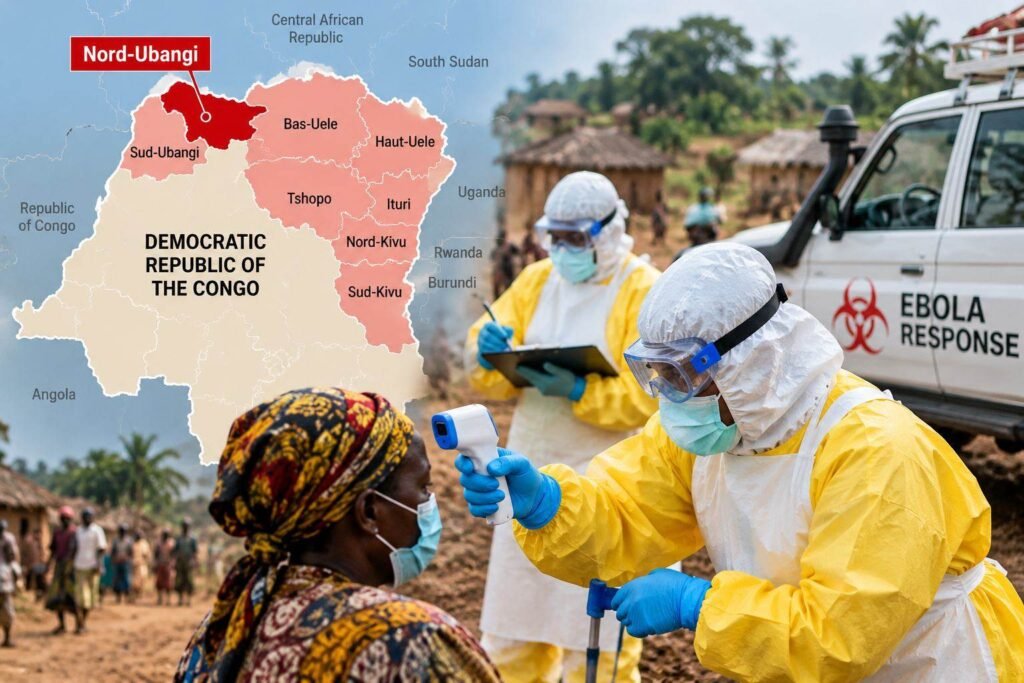
The studies may also need to adapt as the outbreak changes location. The Le Monde report described plans to continue research at additional sites as transmission shifts between affected areas. Any expansion must maintain ethical review, informed consent, reliable follow-up and appropriate clinical oversight. Trial participation is voluntary and should not be confused with access to proven treatment.
What the research means for patients and outbreak control
For people at risk, the immediate message is that experimental vaccines and medicines are not yet established protection against Bundibugyo virus. Anyone with a possible exposure or symptoms should follow instructions from local health authorities and seek assessment through designated health services. Treatment decisions remain the responsibility of qualified clinical teams using national protocols and the best available evidence.
For the DRC and neighbouring countries, the trials could generate evidence needed for future outbreak preparedness. They may help identify whether particular vaccine platforms can protect against Bundibugyo virus and whether antibody or antiviral treatments improve patient outcomes. However, research alone cannot stop transmission. Rapid case detection, accessible testing, safe isolation, supportive care, contact tracing, infection prevention in health facilities and trusted community engagement remain essential.
Security and access are also central to the response. Attacks on health facilities and workers, insecurity and interrupted contact tracing can prevent researchers and response teams from reaching communities. A trial can only produce reliable evidence if participants can be safely enrolled and followed, health workers are protected and communities understand the purpose and limits of the research.
Who is leading the research and supporting the response
WHO identifies the DRC’s Institut National de Recherche Biomédicale (INRB) as the lead institution for the Tumaini vaccine trial, working with the University of Antwerp and partners including WHO, Epicentre, Médecins Sans Frontières, the Institute of Tropical Medicine in Antwerp, Africa CDC and the DRC Ministry of Health. The Coalition for Epidemic Preparedness Innovations (CEPI) has supported the development of candidate vaccines.
WHO is supporting the research through its Research and Development Blueprint and Health Emergencies Programme, including technical advice, protocol development and coordination. National authorities remain responsible for regulatory approvals and the integration of research into the country’s outbreak response.
What African health systems should watch
The most important milestones will be the entry of the new candidates into Tumaini after national clearance, publication of safety and efficacy findings, and evidence from PARTNERS on whether the experimental treatments improve outcomes. Health authorities and health workers should also monitor whether trial sites can maintain ethical standards, laboratory capacity, referral pathways and continuity of care during insecurity.
The DRC research effort is significant because Bundibugyo virus has received less clinical research attention than the Zaire ebolavirus species. Results could strengthen preparedness across Africa, but only if they are independently assessed, transparently reported and translated into accessible interventions when evidence supports their use. Health Signal Africa is tracking these developments alongside its coverage of the DRC outbreak response.
Sources and limitations
This article distinguishes trial design, candidate status and reported participant counts from demonstrated clinical benefit. No efficacy result is claimed, and none of the candidates described here is presented as an approved vaccine or proven treatment for Bundibugyo virus disease.
Primary source: WHO, Two new candidate vaccines to join Ebola trial as treatment research advances, 4 November 2026; WHO Disease Outbreak News, 6 November 2026. Additional reporting: Le Monde, Ebola: In the DRC’s main epicenter, first treatment trials rekindle hope, 15 November 2026; CEPI, First participant vaccinated in pivotal Phase 2/3 Bundibugyo vaccine trial in DRC, 23 October 2026.
Discussion