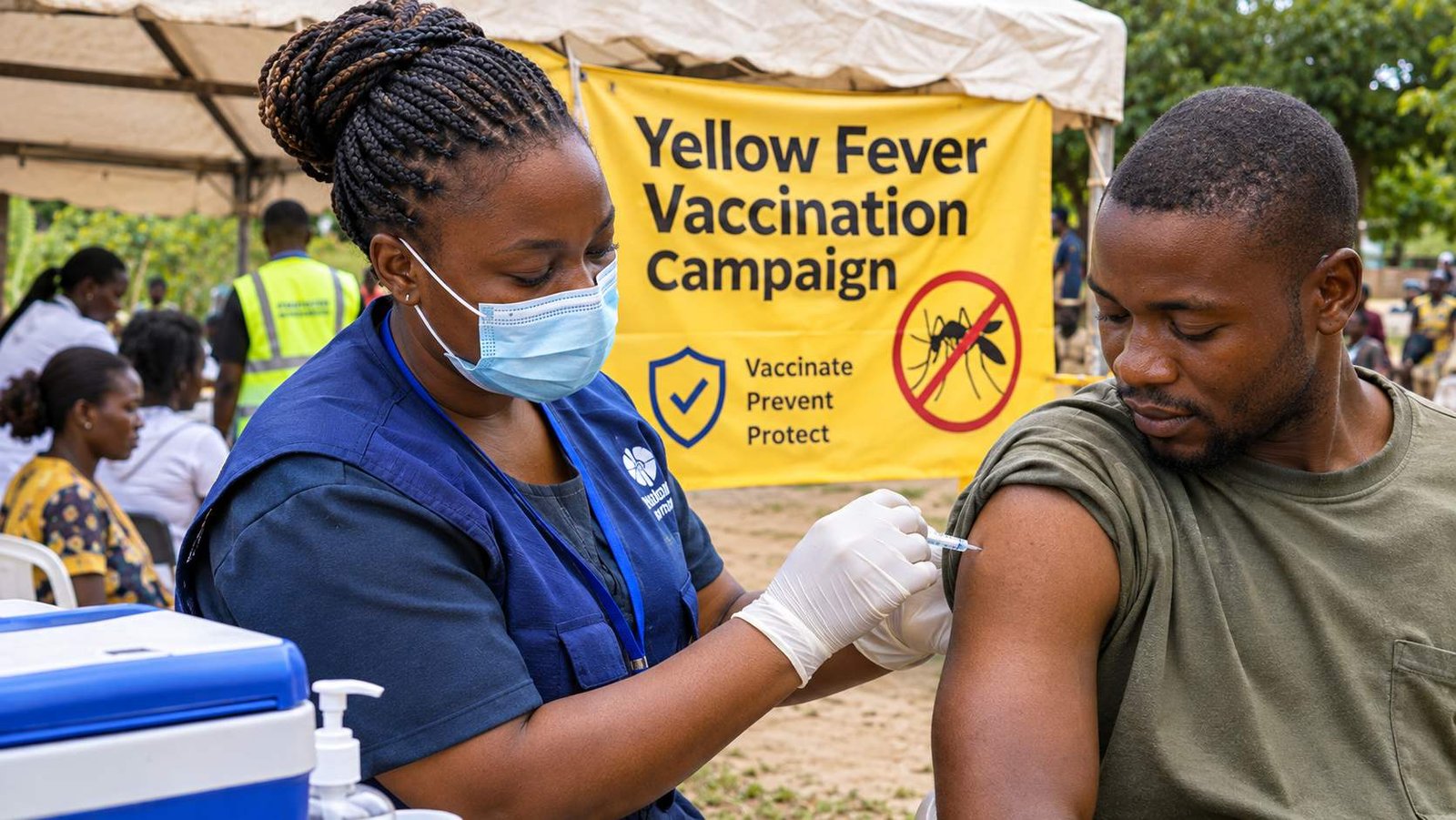
AFRICAN REGION, 7 November 2026 — Nine African countries recorded 67 confirmed yellow fever cases, including 18 deaths, between 1 January and 12 October 2026, according to a World Health Organization Disease Outbreak News report published on 6 November. Recent outbreak activity has been concentrated in parts of West Africa, including communities close to international borders.
The countries listed by WHO are Burkina Faso, Cameroon, the Central African Republic, Côte d’Ivoire, Ghana, Guinea, Liberia, Nigeria and Togo. The organisation said the latest activity was concentrated in Burkina Faso, Côte d’Ivoire, Ghana and Liberia. It warned that population movement, the presence of mosquito vectors and uneven vaccination coverage could contribute to further transmission.
West African countries account for the recent outbreak activity
WHO’s country breakdown records 30 confirmed cases and 10 deaths in Côte d’Ivoire, 15 cases and three deaths in Burkina Faso, nine cases and one death in Cameroon, four cases and three deaths in Ghana, and four cases and one death in Nigeria. The remaining reports include two cases in the Central African Republic and one each in Guinea, Liberia and Togo. No deaths among confirmed cases were reported from the Central African Republic, Guinea or Togo in the data presented.
The country figures do not all have the same reporting cut-off. For example, the WHO report uses data available to different dates for Burkina Faso, Côte d’Ivoire, Ghana and other countries, with the overall regional summary covering the period through 12 October. The total should therefore be read as the latest regional picture assembled for the report, not as a real-time count for 6 November.
WHO identified occupational and environmental exposures as important risk factors. People working in or near forested areas, mining sites and other outdoor environments may have greater exposure to infected mosquitoes. Movement across borders can also make it harder to identify where infections occurred and to coordinate surveillance and vaccination in affected communities.
Vaccination remains the central prevention measure
Yellow fever is a mosquito-borne viral disease. Many infections are mild or produce no symptoms, but severe illness can cause jaundice, bleeding and organ failure. WHO says vaccination is the most effective way to prevent the disease. A single dose of an approved yellow fever vaccine provides long-lasting, generally lifelong protection for most people.
Countries responding to the current outbreaks are strengthening surveillance and case investigation, laboratory testing, active case finding, risk communication and community engagement. Vaccination activities are being directed towards affected and at-risk areas. WHO also encourages countries to maintain routine immunisation and ensure that vaccine supplies are available for both regular services and outbreak response.
The WHO assessed the overall public-health risk as moderate at the regional level on 27 October, while the global risk remained low. It has not recommended restrictions on travel to or trade with the countries named in the report. This assessment does not remove the need for vaccination advice and routine precautions for people travelling to areas where yellow fever transmission occurs.
What the update means for Kenya and neighbouring countries
Kenya is not among the nine countries listed in this WHO update. The report nevertheless has regional relevance because yellow fever prevention depends on vaccination, clinical recognition and surveillance that can identify infections quickly. Health authorities and travellers should follow current national and WHO guidance on vaccination requirements and risk areas, rather than assuming that the absence of Kenya from this particular list means that no preparedness is needed.
For countries with affected border communities, the immediate priorities include checking vaccination coverage, identifying populations with limited access to routine immunisation, ensuring that suspected cases are investigated and tested, and sharing information with neighbouring countries. Local risk communication should explain where vaccination is offered and how people can access it without creating unnecessary alarm.
The report also highlights the importance of consistent surveillance data. Because country reporting periods differ, governments and regional partners need to publish dated updates that distinguish confirmed infections from suspected cases and explain when the data were collected. Clear reporting helps health services target vaccination and other response measures where they are most needed.
The 67 confirmed cases and 18 deaths are a reminder that yellow fever remains a preventable but potentially severe threat in parts of Africa. Sustained vaccination, early diagnosis, vector surveillance and cross-border coordination will be central to preventing further spread.
Discussion