Geneva, Switzerland — A woman infected with Bundibugyo virus disease has been discharged from Geneva University Hospitals after doctors confirmed her full recovery, marking a further milestone in the management of an imported Ebola case linked to Nigeria. The hospital said the cantonal physician authorised her discharge on 11 November 2026. The announcement does not end Nigeria’s contact monitoring or the wider regional response, which continues to be driven by community transmission in the Democratic Republic of the Congo (DRC).
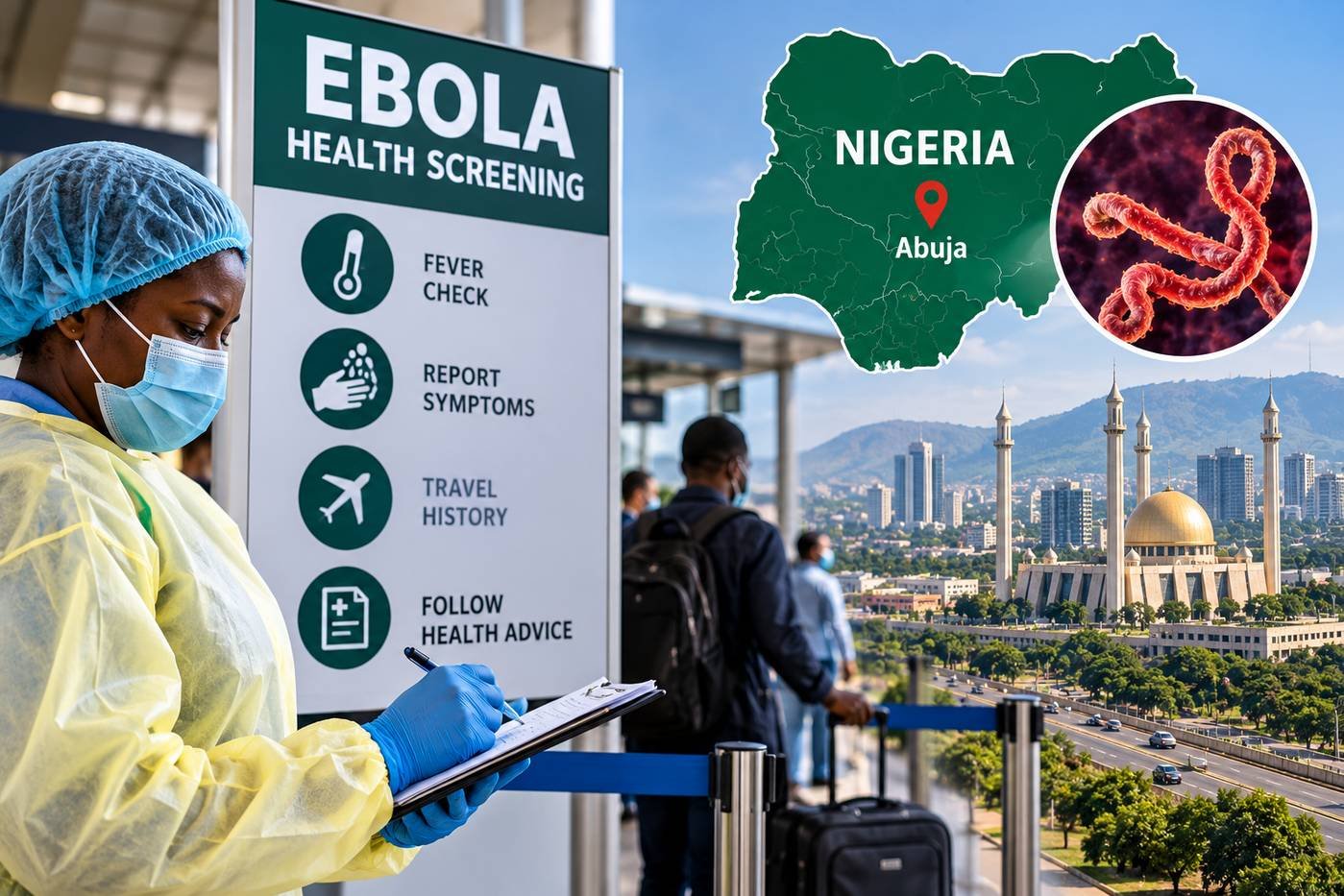
Illustrative image: Public-health personnel conduct routine traveller screening at an airport. The image is illustrative and does not depict the patient or the medical evacuation.
Geneva hospital confirms recovery and discharge
Geneva University Hospitals (HUG) said the patient left the hospital on 11 November after the medical team confirmed her full recovery and the cantonal physician approved her discharge. The hospital said it would not provide further information out of respect for the patient’s privacy.
The patient was medically evacuated from Nigeria to Switzerland on 26 October. Her husband, a Swiss diplomat and close contact, was transferred separately to University Hospital Zurich for isolation and monitoring. The Swiss authorities said at the time that both hospitals were prepared to manage the cases under specialist infection-control protocols and that there was no risk to the general population. The husband was not reported as a confirmed case.
The patient’s infection source has not been publicly established. Reuters reported that she had spent two weeks in Uganda before returning to Abuja, where she later sought medical care. The travel history has raised questions about possible undetected transmission, but it does not establish where or how she became infected.
Nigeria continues to monitor contacts
Nigeria’s Centre for Disease Control and Prevention (NCDC) continued to list one confirmed Bundibugyo virus disease case and no deaths in its situation dashboard updated for 11 November. The agency had identified 62 contacts linked to the case. Fifty-two had completed their 21-day follow-up, while 10 remained under monitoring at the latest reporting cut-off.
The NCDC dashboard also listed seven negative cases and said the country had screened more than 667,000 traveller health declarations at 16 points of entry since 5 June. The screening total reflects recorded declarations, not a count of people who have been tested for Ebola. Contact follow-up is conducted for 21 days from the relevant exposure date, so individual monitoring periods do not all end on the same day.
The patient’s discharge in Switzerland should therefore be understood as an individual recovery milestone. Nigeria still needs to complete follow-up of the remaining contacts, investigate any new alerts and maintain surveillance at health facilities and points of entry. The 11 November dashboard did not report a second confirmed case.
Regional outbreak remains concentrated in the DRC
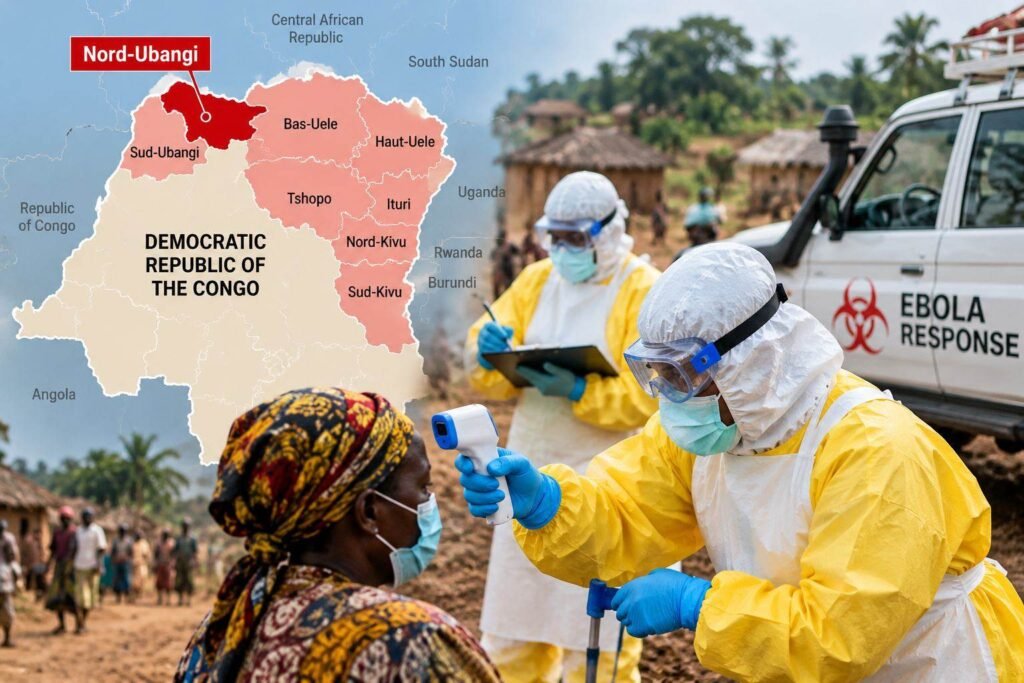
The wider Bundibugyo outbreak continues to pose a serious health-security challenge in Central Africa. The European Centre for Disease Prevention and Control reported on 12 November that the DRC had recorded 11,114 confirmed cases and 5,433 related deaths as of 11 November, using data through 10 November. The figures remain subject to review and harmonisation by the Congolese authorities.
WHO and humanitarian organisations have warned that insecurity, missed infections, shortages and attacks on health facilities are hampering response work in affected provinces. The outbreak has also required neighbouring countries to maintain surveillance, laboratory readiness and cross-border coordination. Kenya has discharged its last patient and begun the 42-day monitoring period, while South Sudan has strengthened preparedness despite reporting no confirmed case.
Why the virus requires continued vigilance
The outbreak is caused by Bundibugyo virus, a species of Ebola virus for which there is currently no licensed vaccine or specific approved treatment. Care is based on supportive clinical management, early detection, safe isolation and infection prevention and control. Candidate vaccines and therapeutics remain under evaluation and should not be described as proven countermeasures.
The case also illustrates why international medical evacuation and domestic contact tracing must operate together. Specialist isolation units can provide care for a confirmed patient, but health authorities still need to identify and monitor contacts, investigate possible transmission chains and keep routine health services safe. The source of infection in this case remains under investigation, and the absence of additional confirmed cases in Nigeria as of 11 November does not remove the need for continued surveillance.
Sources and limitations
This report draws on the Geneva University Hospitals discharge statement of 11 November 2026, the Nigeria CDC Ebola dashboard updated 11 November, Reuters reporting published 12 November and the ECDC multi-country outbreak update of 12 November. The patient’s infection source has not been publicly confirmed. The 52 completed and 10 ongoing contact follow-ups are Nigeria’s figures as of 11 November; they are not a declaration that the country’s response is over.

Discussion