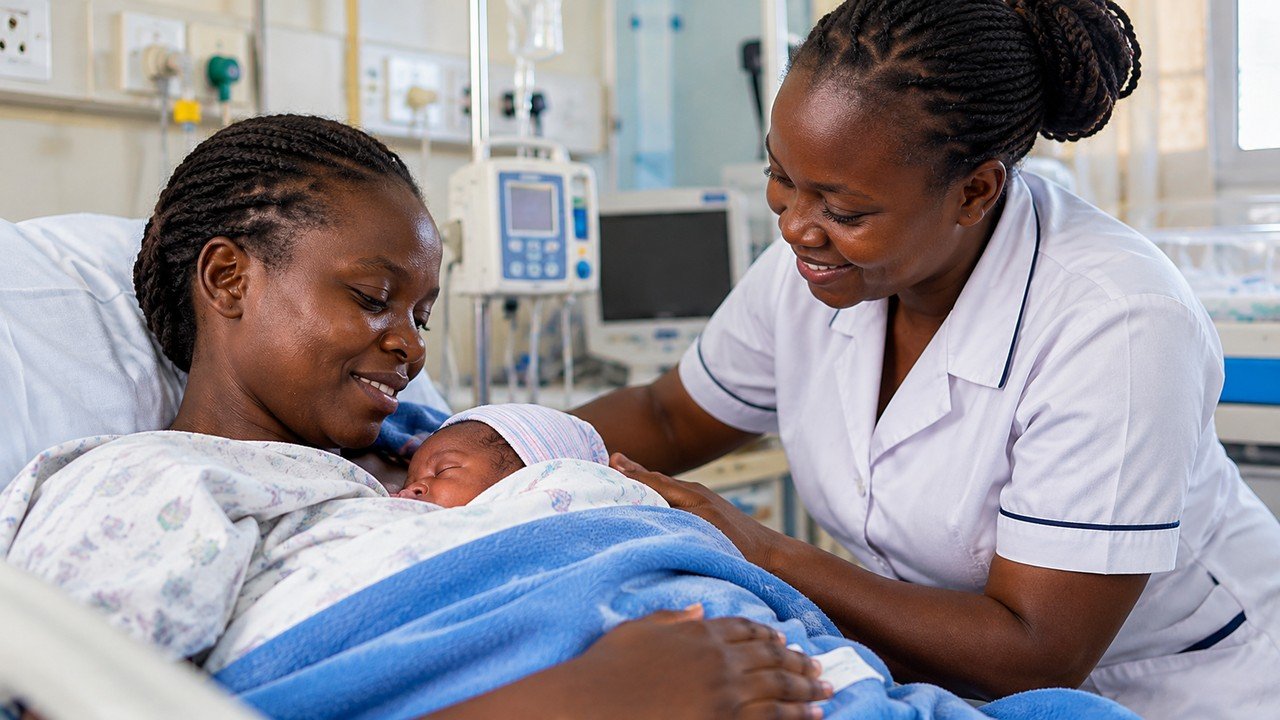
Kenya is advancing a five-year, US$80 million investment plan aimed at reducing preventable maternal and newborn deaths and stillbirths. The plan, co-designed by the Government of Kenya and the Beginnings Fund, will focus on 21 high-burden counties and 200 priority health facilities. The Ministry of Health says the investment is intended to strengthen the quality and reliability of care around pregnancy, childbirth and the first days of a newborn’s life—periods when delays in treatment can have life-threatening consequences.
The 200 facilities in focus
The 200 priority facilities comprise 20 Level 5 hospitals, 136 Level 4 hospitals and 44 high-volume health centres. The mix is significant because maternal and newborn care depends on a functioning network: health centres must be able to identify complications, provide essential services and refer patients quickly, while higher-level hospitals need the staff, equipment, blood and medicines required to manage emergencies. Strengthening only one part of that network can leave gaps elsewhere, particularly when patients need urgent transfer between facilities.
The Ministry’s announcement identifies emergency obstetric and newborn care, access to essential commodities and medical technologies, and training and support for health workers as key investment areas. The plan also includes referral systems, blood availability, and maternity and newborn care infrastructure. These are practical requirements for managing complications such as severe bleeding, hypertensive disorders of pregnancy, obstructed labour, premature birth and newborn breathing difficulties. The effectiveness of the investment will depend on whether facilities can deliver these services at all hours, not only whether equipment is procured or training sessions are completed.
What the projected impact means
By 2030, the plan is expected to reach 5.9 million mothers and newborns with higher-quality care and avert an estimated 46,494 maternal and newborn deaths and stillbirths. These figures are projections set out in the Ministry’s announcement. They should not be reported as lives already saved or as a guaranteed outcome. The eventual impact will depend on the speed and quality of implementation, the distribution of resources across the selected counties, and the ability of facilities to maintain services as demand changes.
The plan is designed to complement Kenya’s Reproductive, Maternal, Newborn, Child and Adolescent Health Investment Case and the Every Woman Every Newborn Everywhere Acceleration Plan. Aligning a new investment with existing national priorities can reduce fragmentation and help counties coordinate resources. It also creates an opportunity to use common targets and performance measures rather than requiring facilities to report through disconnected systems for different partners.
Data, accountability and domestic financing
Another component is the integration of maternal and newborn health data into TaifaCare to strengthen performance monitoring and accountability. Better data can help managers see whether facilities have essential supplies, whether referrals are completed, whether patients receive timely care and where outcomes remain poor. But a digital system is useful only when information is accurate, staff are trained to use it, and decision-makers act on what the data reveal. The plan’s emphasis on measurable milestones and clear responsibilities will therefore be important.
The Ministry says implementation will be guided by joint governance arrangements, county participation, performance-based financing and progressive domestic financing. Principal Secretary for Medical Services Dr Ouma Oluga is designated to co-chair the steering committee. The domestic-financing component deserves particular attention. External investment can help close urgent gaps, but maternal and newborn services require recurring budgets for health workers, blood products, medicines, maintenance, transport and referral operations. Counties and national institutions will need to plan for these costs beyond the five-year investment period.
What families should expect
For families, the value of the plan will be measured in whether a woman can reach a facility in time, whether staff are available and prepared, whether essential medicines and blood are accessible, and whether a newborn receives appropriate care without avoidable delay. A priority-facility list should translate into visible improvements in service readiness and respectful care. Transparent reporting on funds released, facilities supported, service availability and outcomes can help communities and policymakers assess whether resources are reaching the intended locations.
The investment is an important commitment, but it is not a substitute for careful implementation. The next milestones are to finalise the governance structure, confirm county-level responsibilities, agree on the facility improvement plans and establish a transparent monitoring framework. If the investment strengthens the entire chain of maternal and newborn care—and if domestic financing sustains those gains—it could make a meaningful contribution to reducing preventable deaths. The projections will only become credible achievements when improvements are documented in the services mothers and newborns actually receive.


Discussion