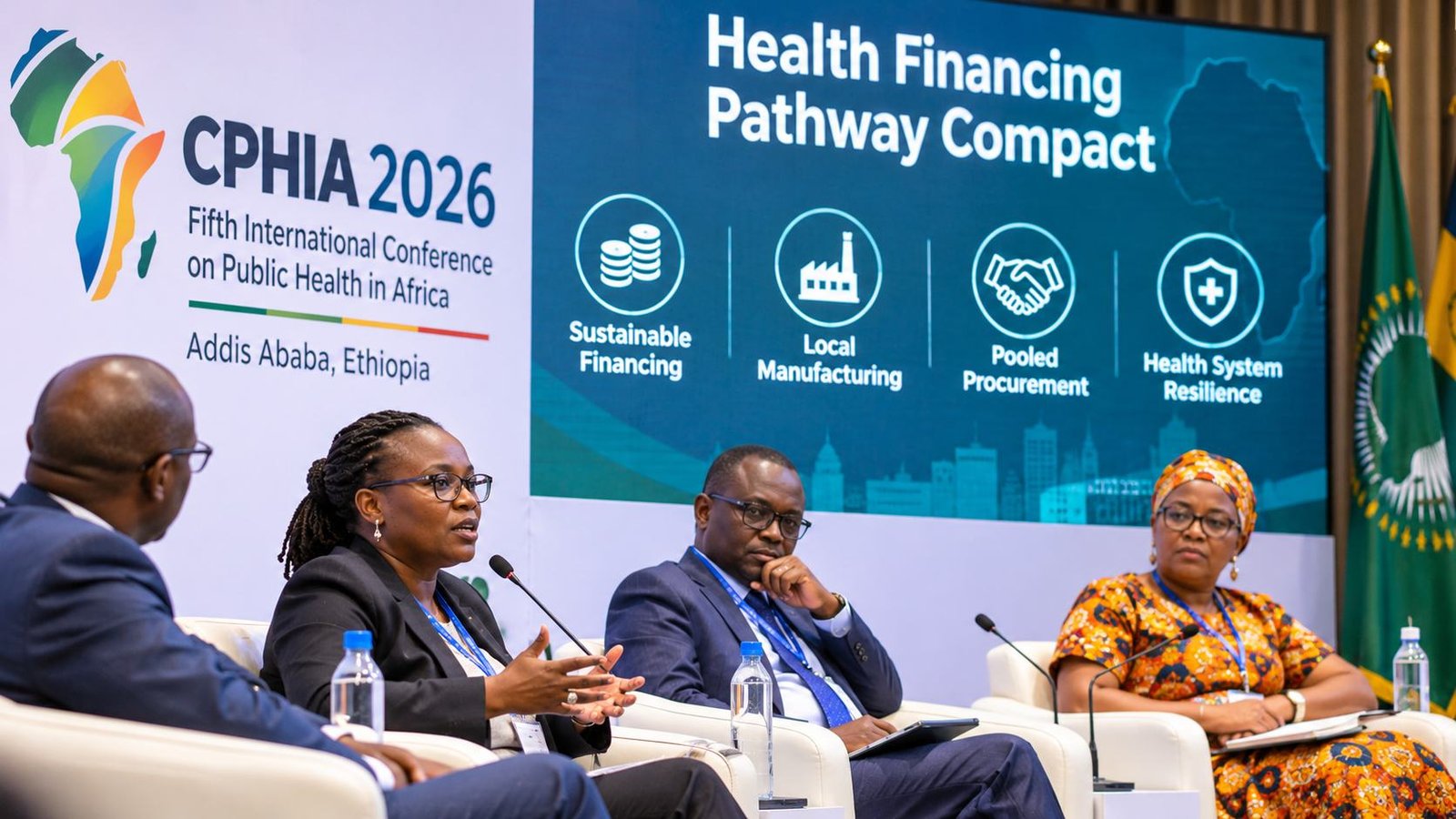
Addis Ababa, Ethiopia — 23 November 2026 — African health financing discussions at the Fifth International Conference on Public Health in Africa are expected to include a Health Financing Pathway Compact, reflecting growing pressure on governments to turn commitments to health sovereignty into predictable domestic funding and measurable action.
The compact appears among the CPHIA 2026 programme highlights, with sessions on sustainable financing, local manufacturing, pooled procurement and health system resilience planned during the five-day meeting in Addis Ababa. Its significance will depend on what countries agree to, how commitments are costed and whether implementation can be tracked.
Financing commitments need to become budget lines
Across Africa, health programmes face a mix of constrained public revenues, debt pressure, competing spending needs, high household payments and reliance on external assistance. These pressures vary widely between countries, but they make predictable health financing a central issue for maintaining services and advancing universal health coverage.
A compact or pathway can help align political commitments and technical priorities. However, declarations alone do not finance clinics, salaries, medicines, laboratories or referral systems. Governments need costed plans, credible revenue sources, budget allocations, timely releases and systems to track expenditure and results.
What could a financing pathway address?
Potential priorities include increasing domestic health spending in a sustainable manner, strengthening pooling and purchasing, improving public financial management, reducing waste, protecting households from catastrophic health costs and aligning partner support with national plans. Health and finance ministries will need to agree on realistic milestones and responsibilities.
Financing reforms should also consider the efficiency and equity of spending. More money is important, but the way resources are allocated and used can determine whether funding reaches primary care, underserved areas and high-impact interventions. Purchasing arrangements should reward quality and access rather than simply increase expenditure.
Accountability is the missing link in many pledges
A useful pathway would define measurable indicators, timelines, reporting responsibilities and mechanisms for review. It should distinguish pledges from appropriations, appropriations from actual releases, and expenditure from outcomes. Transparent progress reporting can help governments, legislatures, civil society and citizens understand whether commitments are being fulfilled.
External partners can support transition planning, technical capacity and predictable financing while aligning with country priorities. But compact implementation must remain country-led and avoid creating another reporting burden disconnected from existing national systems.
What to watch as CPHIA continues
The conference programme lists the Health Financing Pathway Compact among financing discussions, but the programme itself does not establish its final terms. Health Signal Africa will watch for any published declaration, country commitments, financing targets, timelines, accountability arrangements or implementation mechanisms arising from the discussions.
The core test is straightforward: will the compact help African countries finance essential services more reliably and equitably, or will it remain another statement of intent? A credible pathway will need to connect political leadership to costed national plans, funding that is actually released and evidence of improved access and financial protection.
Sources
- Africa CDC, CPHIA 2026 media advisory and programme highlights
- Africa CDC, CPHIA 2026 announcement
- WHO Africa, sustainable health financing in Africa


Discussion