Praia, Cabo Verde — Cabo Verde is preparing a pilot programme to expand cervical cancer screening on Boa Vista Island in 2027, as the country works to strengthen early detection, referral and treatment services across its island communities.
The initiative is led by the Ministry of Health with technical support from the World Health Organization (WHO) and financial support from the Spanish Government through the Spanish Agency for International Development Cooperation (AECID). It aims to develop a National Acceleration Plan to improve the organisation and reach of cervical cancer prevention and care.
A WHO technical mission carried out 12 field visits in October 2026 and consulted around 60 people, including health professionals, community leaders, private-sector representatives, non-governmental organisations and national health programme staff.
Boa Vista selected for screening pilot
Boa Vista has been selected for the pilot, which is expected to target an estimated 1,500 women. The programme aims to increase uptake of human papillomavirus (HPV) screening tests and establish clearer processes for identifying and inviting women, communicating results, referring patients and ensuring follow-up where further assessment or treatment is needed.
Visits to health facilities, laboratory services, maternal and child health services and a private clinic helped assess the local requirements for an organised screening programme. Discussions with community associations also highlighted the role of local engagement in building awareness and encouraging women to participate.
The island setting presents specific challenges. Referral pathways, continuity of care and access to services can be more difficult when patients and providers are separated by distance or transport constraints. The initiative therefore places emphasis on an integrated pathway that links screening with diagnosis and treatment, rather than treating screening as a stand-alone activity.
Vaccination progress provides a foundation
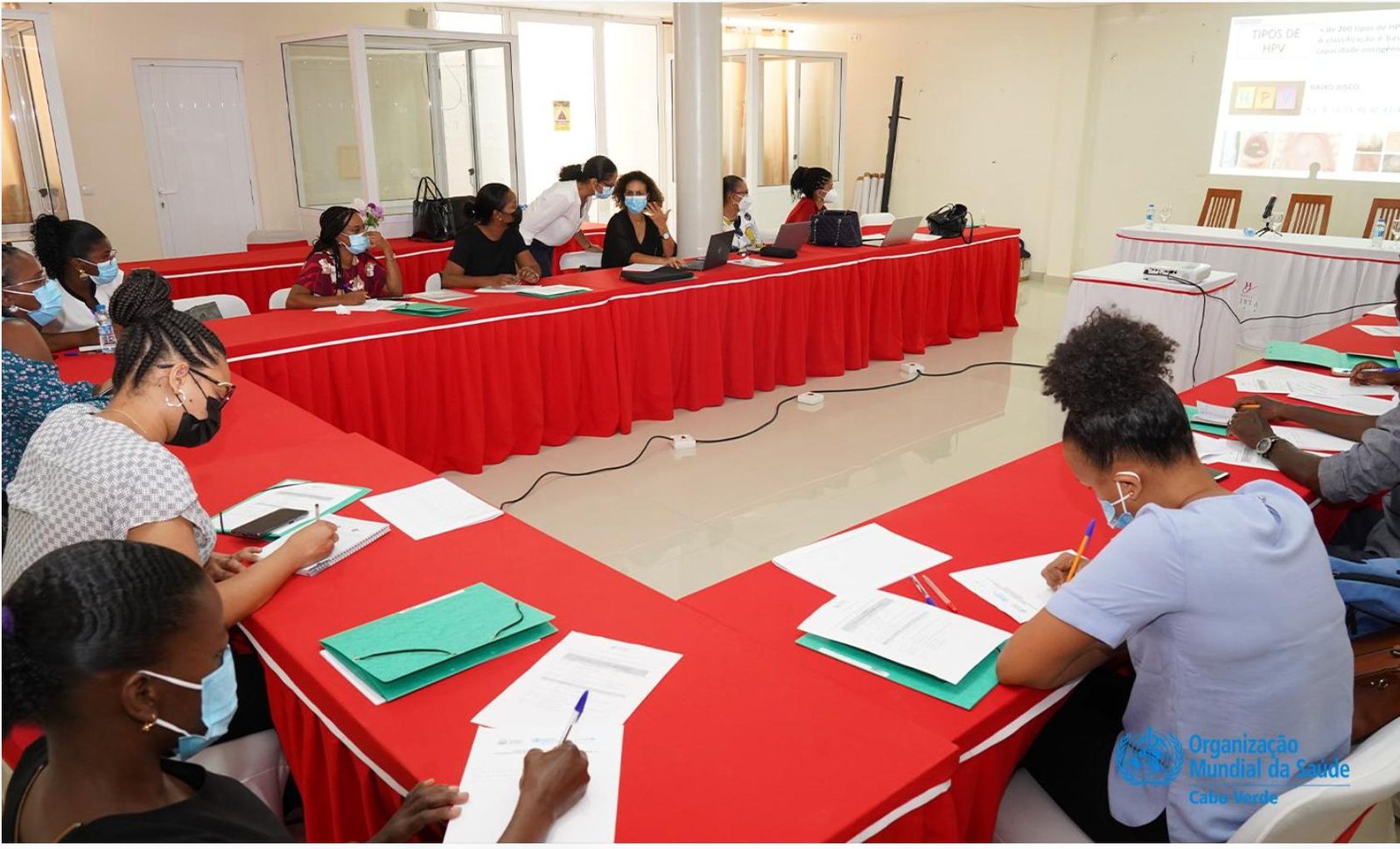
At a national workshop in Praia on 21 October, health officials reviewed the challenges identified during the technical mission and discussed priorities for the National Acceleration Plan. Cabo Verde reported that it had exceeded the target of 90% HPV vaccination coverage among girls and had included boys in its national vaccination strategy.
Vaccination is a key component of cervical cancer prevention, but elimination efforts also depend on screening, early diagnosis and timely treatment. WHO’s global strategy sets targets for HPV vaccination, screening and treatment to accelerate the elimination of cervical cancer as a public health problem.
As part of the Boa Vista pilot preparations, HPV DNA test kits, equipment and consumables were handed over to support implementation. The next steps include finalising the national plan, preparing the pilot, training health workers, developing communication materials and establishing systems for registration, referral and monitoring.
From screening to treatment
Health officials and WHO have emphasised that the availability of equipment alone will not guarantee better outcomes. Women who test positive must be informed of their results and able to access further assessment and treatment without avoidable delays. Health workers also need clear protocols and systems to track patients through the care pathway.
The pilot is expected to generate lessons on how screening, communication, data collection and follow-up can be organised in an island setting. Those lessons could inform the gradual expansion of services to other islands if the approach proves feasible and sustainable.
Source and limitations
The Boa Vista pilot is planned for 2027 and has not yet reported implementation outcomes. The estimated target population is approximately 1,500 women; it should not be interpreted as the number already screened.

Discussion