African countries have a new continental roadmap for expanding community health services, with a target of two million community health workers by 2030. The plan calls for governments and partners to accelerate recruitment, improve training and supervision, and make community health work a more sustainable part of national health systems.
Published by Africa CDC on 27 October 2026, the Community Health Programme – Continental Acceleration Plan 2026–2030 translates the African Union’s commitment into a framework for countries, regional institutions and development partners.
The plan reported that 1,059,085 community health workers had been deployed across the continent as of May 2026. Reaching two million by 2030 will therefore require a substantial increase in the workforce, alongside improvements in how workers are supported and integrated into health services.
Numbers alone will not be enough
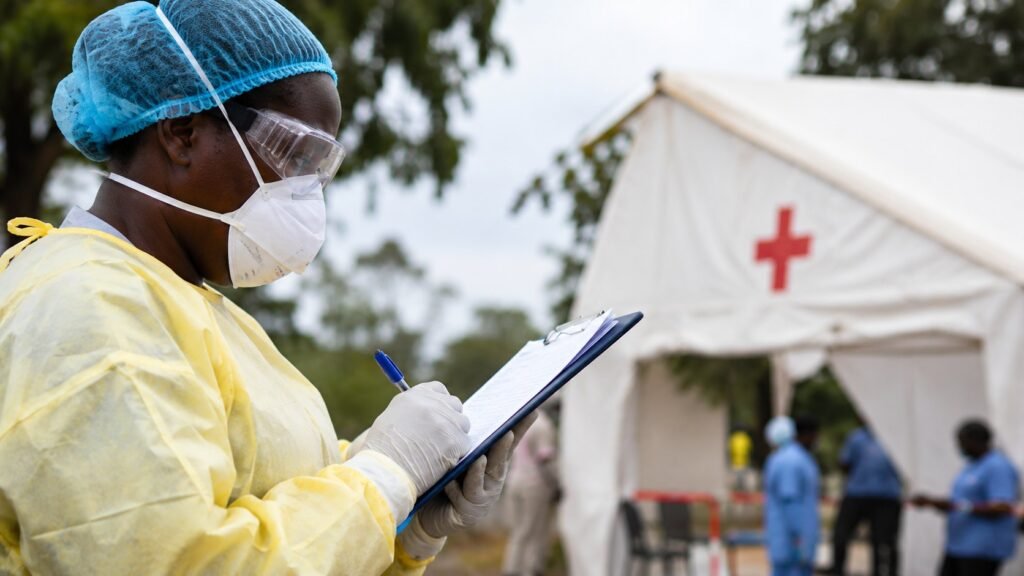
Community health workers can connect households with primary healthcare, provide health education, support prevention activities and help people navigate services. Their role is particularly important where distance, cost or limited facility capacity makes access to healthcare difficult.
However, expanding the workforce without adequate support can leave workers under-equipped or disconnected from formal health services. Africa CDC’s plan identifies continuing challenges in formal recognition, career progression and financing.
According to the plan, only 68% of member states formally recognise community health workers as part of the national health workforce, while 31% offer formal career advancement pathways. It also reports that 85% of member states rely on donors for at least 49% of their community health budgets.
These findings point to a structural challenge: community health services need reliable financing and clear links to nurses, doctors, midwives and other health professionals if they are to deliver consistent care.
A plan built around country needs
The roadmap proposes differentiated pathways based on countries’ starting points and capacity. Rather than assuming every country needs the same intervention, it outlines approaches for consolidating existing systems, completing near-term targets, scaling services or building foundational capacity.
It also calls for better coordination through a shared framework described as “One Budget, One Plan, One M&E Framework.” The aim is to reduce fragmentation between government programmes and partner-funded activities, while strengthening accountability for results.
The plan’s ambitious costing scenario estimates that cumulative investment of approximately US$28 billion may be required through 2030, with annual commitments of around US$4.3 billion. These are planning estimates, not funds already secured or disbursed. The document also projects a potential return of US$19 for every US$1 invested under its ambitious scenario; this should be understood as a modelled projection rather than a guaranteed financial return.
What countries need to do next
The immediate challenge is to translate the continental framework into funded national plans. Governments will need to identify staffing gaps, define roles and competencies, provide training and supervision, establish fair remuneration and ensure community health workers have supplies, referral systems and access to digital tools where appropriate.
Monitoring should go beyond the number of workers recruited. Countries should also measure retention, geographic coverage, quality of services, referrals completed, community access and the reliability of funding.
The two-million target provides a common direction. Its impact will ultimately depend on whether countries can sustain the workforce and integrate it into routine health services, rather than relying on short-term projects.

Discussion