
ABUJA, 8 November 2026 — Nigeria’s public-health agency says the country needs an average of ₦104.4 billion annually to implement its second National Action Plan for Health Security, a five-year programme intended to strengthen the country’s ability to prevent, detect and respond to epidemics. The Nigeria Centre for Disease Control and Prevention (NCDC) says the plan is estimated to cost approximately ₦522 billion over 2025–2029.
The financing requirement was outlined in a statement by NCDC Director-General Dr Jide Idris, reported by the News Agency of Nigeria on 3 November. The statement also clarified the purpose of a ₦10 billion emergency intervention approved by President Bola Tinubu in June 2026. NCDC said the money was released directly to the agency and was intended to support wider health-security needs, not Ebola response alone and not the Presidential Task Force established to coordinate the national Ebola response.
The intervention is intended to cover several disease threats
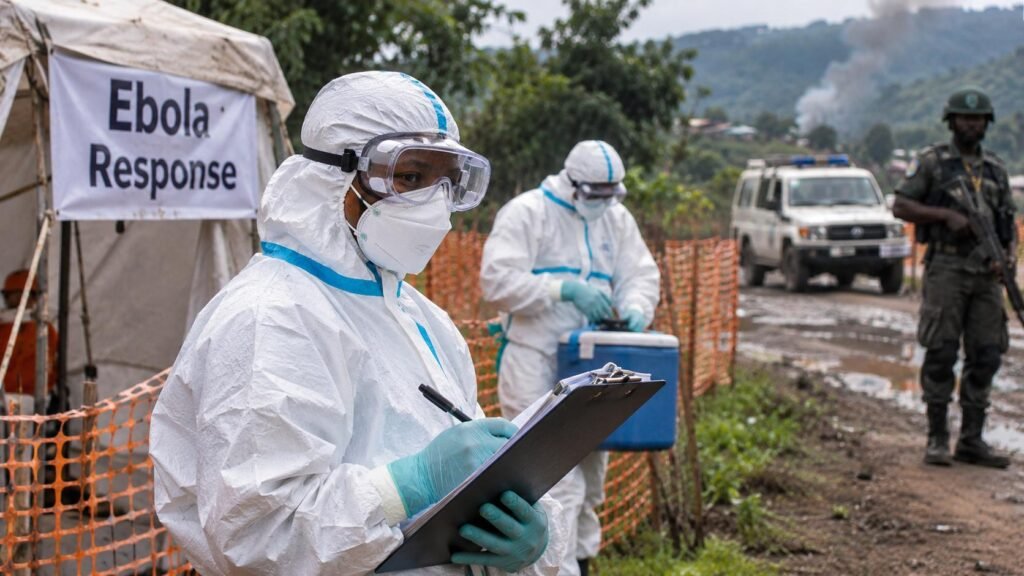
NCDC said the funding request covered prevention, preparedness, early detection, rapid response and recovery for several public-health threats. These include Bundibugyo Ebola disease, Lassa fever, cholera, cerebrospinal meningitis, diphtheria, measles, mpox and antimicrobial resistance. The agency’s position is that emergency preparedness must address the country’s wider pattern of epidemic-prone and endemic diseases rather than be organised around a single outbreak.
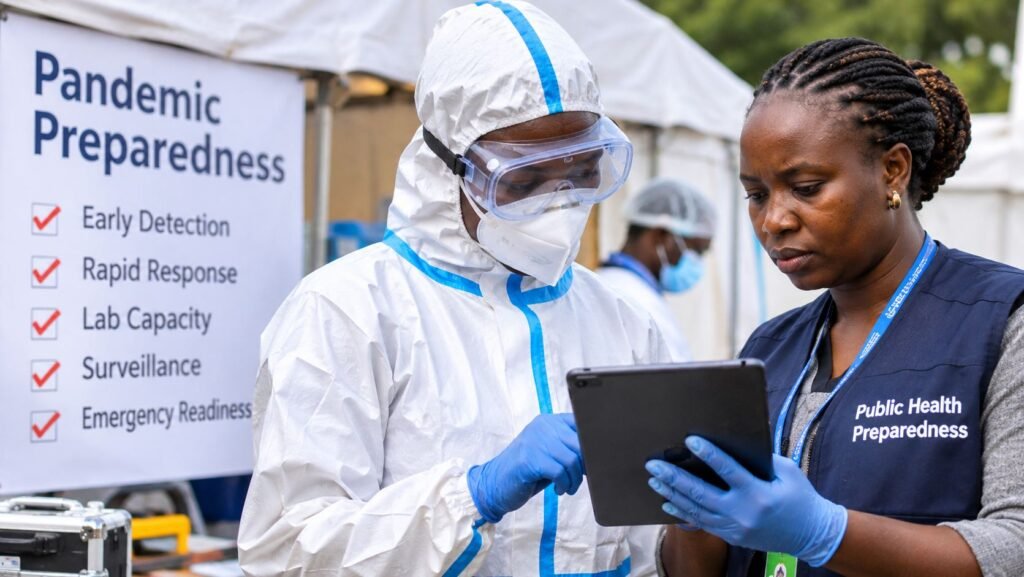
That approach reflects the One Health and multisectoral orientation described for NAPHS 2.0. Effective preparedness involves more than hospitals and isolation facilities. It requires disease surveillance, public-health laboratories, trained personnel, emergency operations, risk communication, infection prevention, animal and environmental health links, and the ability of federal and state institutions to work together.
The June approval by the Presidency was initially announced as emergency preparedness funding for the NCDC. The State House statement said the allocation was intended to strengthen operational preparedness and support critical national public-health emergency activities. The later NCDC clarification provides more detail on the range of threats the intervention is intended to address.
The published funding comparison needs clarification
NCDC’s statement says the ₦522 billion five-year plan averages ₦104.4 billion annually. It also describes the ₦10 billion intervention as about two per cent of the plan’s average annual cost. The arithmetic does not match that wording: ₦10 billion is approximately 1.9 per cent of the five-year total of ₦522 billion, but approximately 9.6 per cent of the stated annual average of ₦104.4 billion.
This distinction does not change the broader point that the plan requires sustained financing. It does matter for public accountability. The agency should clarify whether the two per cent comparison refers to the five-year total or whether another denominator was intended. The statement also did not specify when the June-approved funds were actually disbursed, how much has been spent, or which activities have received funding so far.
Idris also cited a rise in the NCDC’s budgetary allocation from ₦4 billion in 2024 to ₦7 billion in 2025, with ₦22 billion provided in the 2026 Appropriation. He referred to a separate ₦5 billion intervention in 2025 as well as the additional ₦10 billion approved in June 2026. These figures should not be treated as proof that the full NAPHS 2.0 cost is funded; the agency said not all activities under the plan are financed through NCDC.
Preparedness needs predictable funding and public reporting
A credible financing plan should show how money is divided between national and state responsibilities, which capacities will be strengthened, when funds will be released and how progress will be measured. For example, an allocation for laboratories should be linked to testing capacity, turnaround times, staffing, equipment maintenance and the availability of reagents. Emergency response funding should be linked to readiness standards and transparent deployment arrangements.
State governments are especially important because detection and response begin in communities and local health facilities. Federal funding can support national coordination and specialised capabilities, but state and local systems need trained surveillance officers, reliable reporting channels, transport, protective equipment and functional referral pathways.
Nigeria’s ₦10 billion intervention is therefore best understood as one component of a much larger health-security financing challenge. The next test is whether the government can show how the funds are being used and how annual budgets will support the wider plan. Without predictable funding and public reporting, emergency allocations risk becoming isolated responses rather than a durable preparedness system.
Discussion