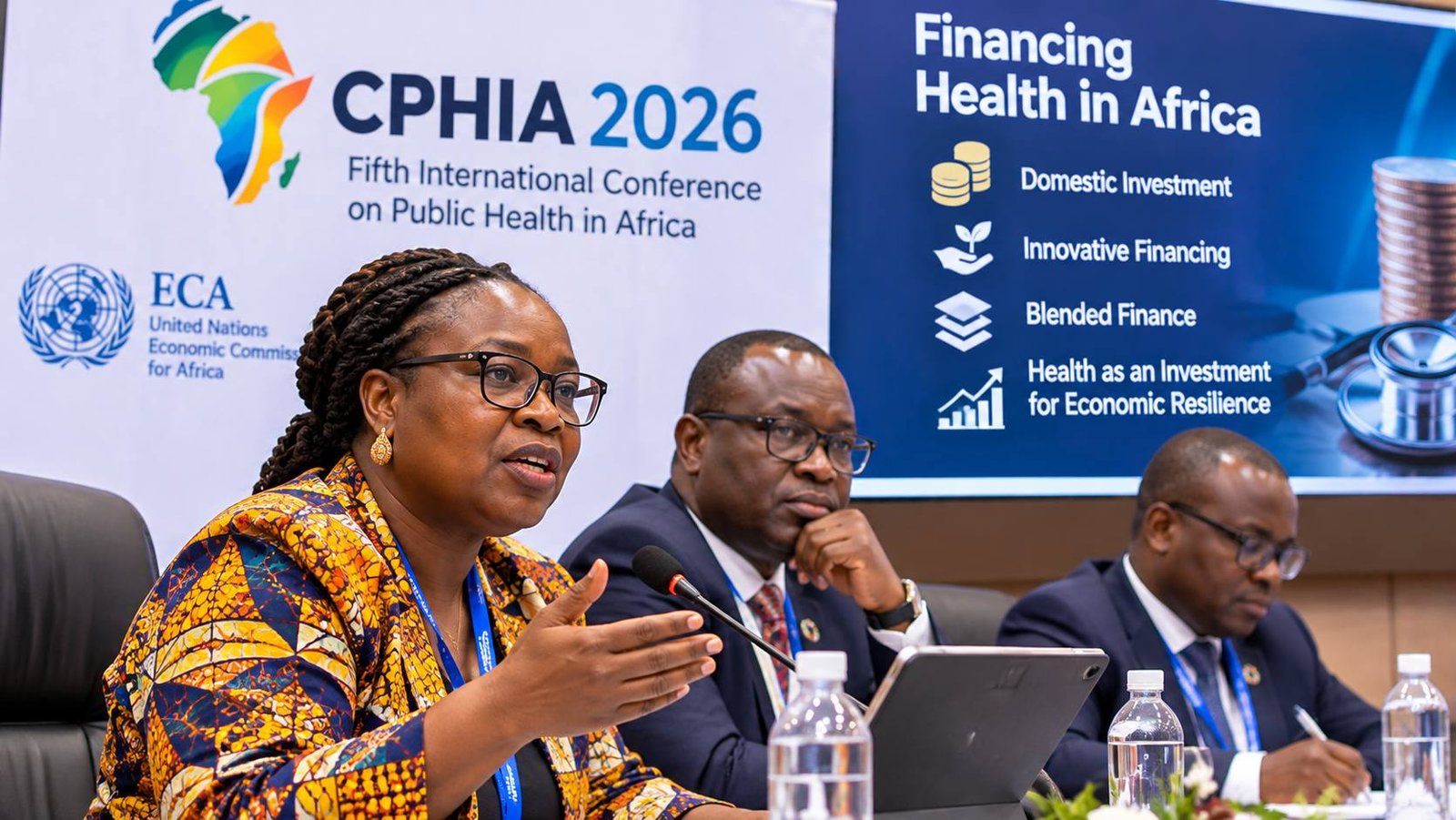
Addis Ababa, 25 November 2026 — African governments should make health-financing commitments visible in national budgets and track whether funding is actually released and spent, the UN Economic Commission for Africa (ECA) said at a panel during CPHIA 2026.
The discussion focused on predictable domestic investment, innovative financing and blended finance. ECA argued that health should be treated as an investment that contributes to economic resilience rather than as a cost competing with other government priorities. Speakers also raised the role of taxes, debt swaps, pension funds and other financing approaches as countries face shifting external funding conditions.
Commitments need a paper trail
Health financing announcements can be difficult to assess when pledged amounts are not linked to appropriations, cash releases, expenditure and service delivery. A government may announce an increase in health spending, but the effect on clinics depends on whether funds reach programmes, facilities and suppliers when needed.
Tracking the full budget cycle would help identify where implementation stalls. It could also improve coordination between health and finance ministries, support legislative oversight and give the public a clearer picture of whether financing reforms are translating into services. The approach is particularly relevant for programmes that depend on reliable recurrent funding for medicines, diagnostics, health workers, surveillance and primary care.
Innovative financing is not a substitute for transparency
Panel speakers described possible financing mechanisms, including taxes on products associated with health risks, debt swaps, investment from pension funds and blended financing for infrastructure. The options differ in their risk, predictability and suitability across countries. Their value depends on clear rules, transparent accounting and protections against diverting resources from other essential services.
The Central African Republic’s finance minister reportedly described an ambition to increase the health share of the national budget from 4 per cent in 2026 to 10 per cent by 2029, alongside proposals to use carbon-credit revenue, debt swaps and pension funds. Such targets will require implementation plans and reporting to determine whether they are achieved. The examples discussed at the panel are proposals and country ambitions, not proof that the financing has already been secured or spent.
Accountability must connect budgets to care
Budget transparency should not stop at publication of allocations. Governments and partners need to disclose funds released and spent, procurement and service-delivery results. This can help identify delays, strengthen accountability and protect patients from costs that should be covered through public financing. Tracking should ideally make it possible to compare planned spending with actual execution and assess what services the resources supported.
The panel also called for finance ministries to be involved in designing health reforms rather than only asked to approve them. Better joint planning could help cost reforms realistically, align financing with priorities and reduce the risk that commitments are made without a funding pathway. Public reporting would give legislatures, civil society and communities a basis to question shortfalls and understand whether promised resources are reaching frontline services.
What this means as external financing changes
As Africa debates health sovereignty and donor transition, a practical accountability system may be one of the tools that helps governments make difficult choices. It cannot replace adequate funding, but it can show where the budget process is failing—whether commitments are not appropriated, cash is not released, procurement is delayed or spending does not produce the intended results.
Any tracker will also depend on comparable data, timely publication and clear definitions across government and partner funding. The panel’s call is a recommendation; its impact will depend on whether countries adopt transparent reporting practices and use the information to correct bottlenecks.
Source
ECA: Health financing also means visible budgets and stronger domestic investment




Discussion