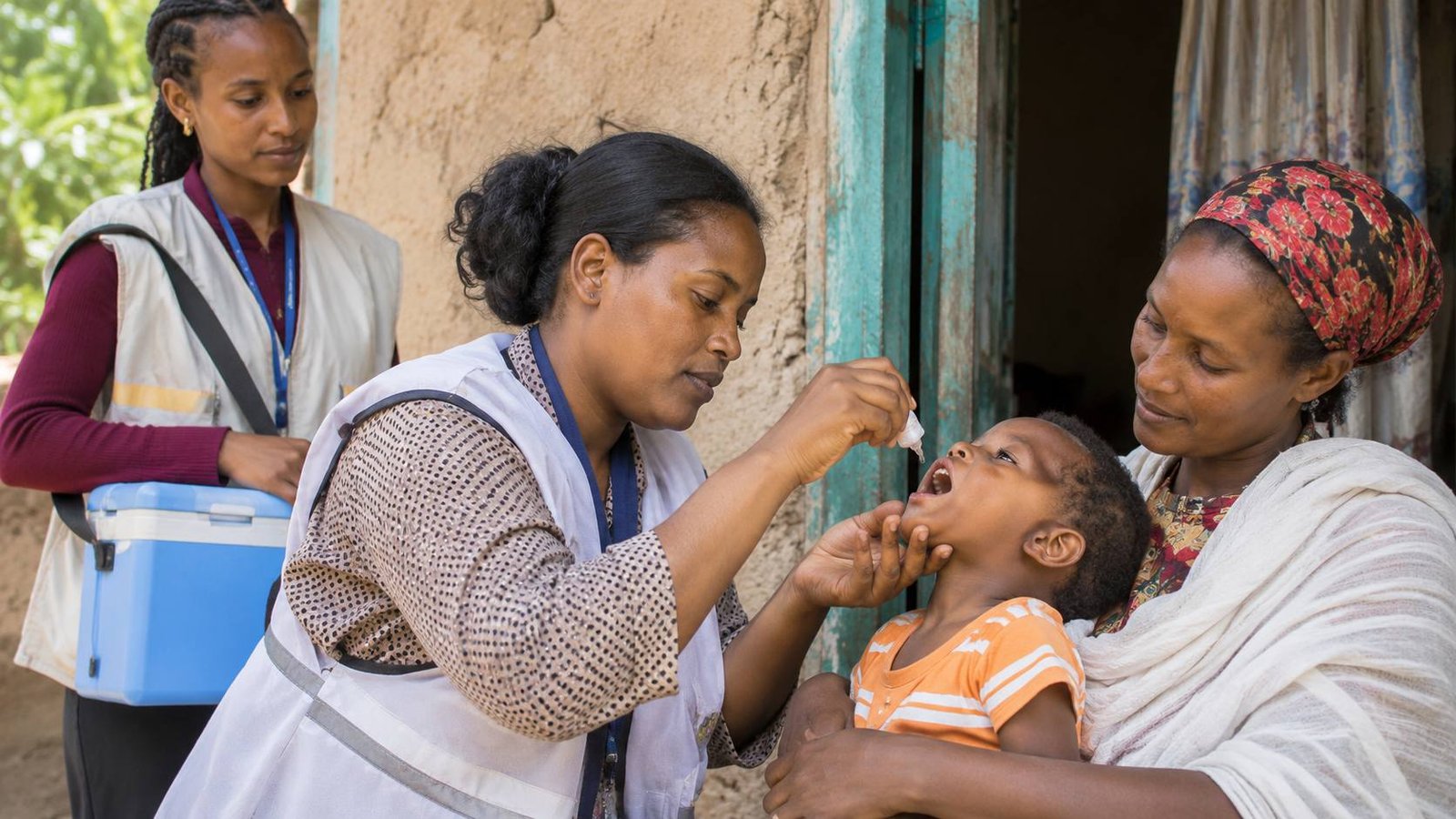
Nairobi, Kenya — 22 November 2026 — Ethiopia has begun a polio vaccination campaign targeting more than 11.3 million children, while new updates on Bundibugyo virus disease in the Democratic Republic of the Congo (DRC) and preparedness in South Sudan underline the need for stronger surveillance and response capacity. Health financing, maternal and newborn services, vaccine research and climate-health negotiations are also in focus across the region.
Ethiopia launches polio campaign targeting 11.3 million children
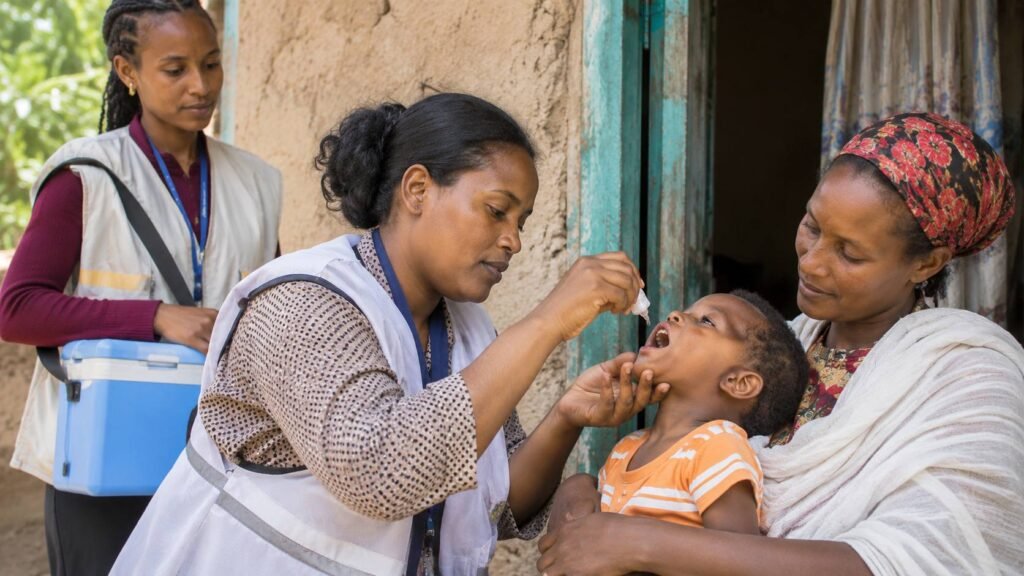
The first campaign round runs from 21–24 November across Addis Ababa, Oromia, Central Ethiopia, South Ethiopia and Southwest Ethiopia. A second round is scheduled for 18–21 December. House-to-house teams aim to close immunity gaps, reach children who have missed routine immunisation and respond to circulating variant poliovirus type 1 reported in several regions. WHO has deployed 28 staff to support coordination, training, monitoring, data management and community engagement. Campaign teams are using digital monitoring tools, including Open Data Kit (ODK), and lot quality assurance sampling to assess implementation.
The target is not a vaccination coverage result. Post-campaign monitoring and surveillance will be needed to assess how many children were reached and identify missed communities. WHO Ethiopia’s announcement provides the dates and target. Health Signal Africa’s campaign report is already published.
DRC Bundibugyo outbreak remains a regional emergency
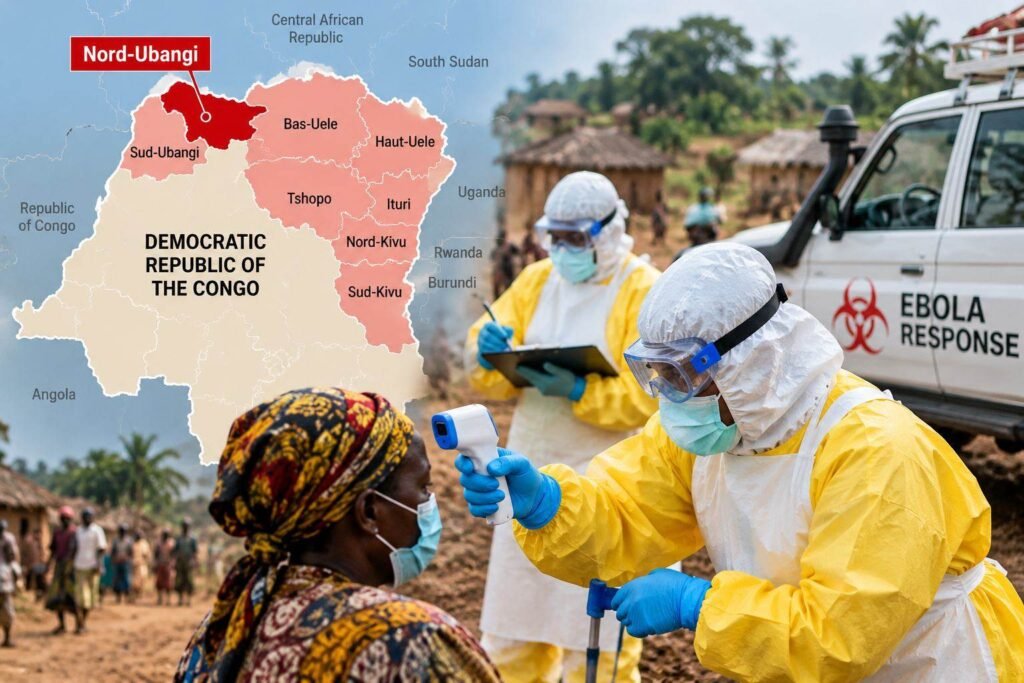
WHO’s 20 November update reports 11,613 confirmed Bundibugyo virus disease cases and 5,678 deaths in the DRC as of 17 November. ECDC’s 19 November update reports 11,504 cases and 5,630 deaths using data through 16 November. The reporting cut-offs differ and the figures should not be treated as directly contradictory or combined. WHO describes continuing transmission and response challenges, including deaths outside treatment centres and access barriers.
Cross-border preparedness remains important for neighbouring countries. Authorities are strengthening surveillance, screening, referral, infection prevention and community engagement. Read WHO’s outbreak update and ECDC’s assessment. Health Signal Africa’s DRC article has been updated.
South Sudan readiness rises to 72.5%, but 15 counties remain high risk
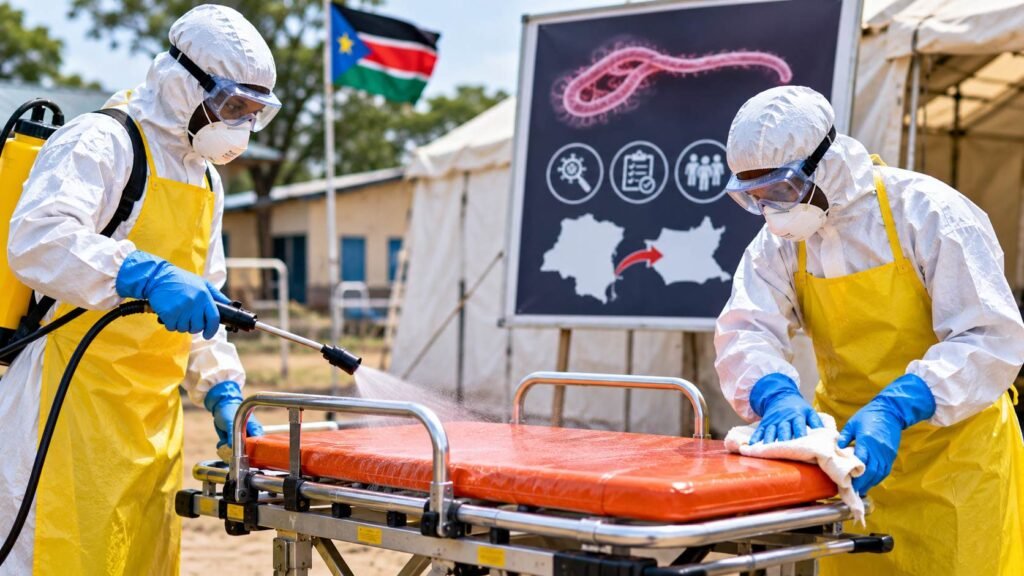
WHO says South Sudan’s assessed readiness for Bundibugyo virus disease improved from 29% in May to 72.5% in October, and a sub-national assessment identified 15 high-risk counties. No confirmed case has been reported in the cited updates. Simulation exercises showed that teams could detect the virus but still faced gaps in safe containment, referral, specimen transport, isolation and contact management. WHO’s AI-enabled Preparedness Data Exchange (PDX) supported risk and readiness analysis; it does not replace field surveillance or guarantee containment. Read WHO’s latest preparedness update.
Nigeria backs local vaccine research for Lassa fever and dengue
Health Minister Muhammad Ali Pate has pledged support for the Centre for Vaccine Research and Biotechnology at Federal University Teaching Hospital, Lafia. Reports published on 20 November say the centre is targeting Lassa fever and dengue research and describes early-stage candidates. No candidate names, trial registrations, clinical phase or results were disclosed in accessible reports. The pledge signals interest in local research capacity, but is not a clinical-trial launch or evidence that a vaccine is ready for use. Read Punch and Nexter News.
Sierra Leone receives equipment to strengthen maternal and newborn care
Medical equipment under the UNICEF-implemented, China-supported “Accelerating Newborn and Child Health in Sierra Leone” project was handed over in Freetown. Local reports describe a US$2.6 million package for the Princess Christian Maternity Hospital and Ola During Children’s Hospital, including an oxygen plant, emergency ward, 7,200 surgical and maternity packs and other supplies. The Chinese Embassy confirms the handover on 16 November and planned distribution but does not detail package value or facility allocation. A local report gives a different ceremony date; the discrepancy is noted in the draft. See the official handover notice.
Kenya: SHA says cancer treatment benefit remains KES 800,000
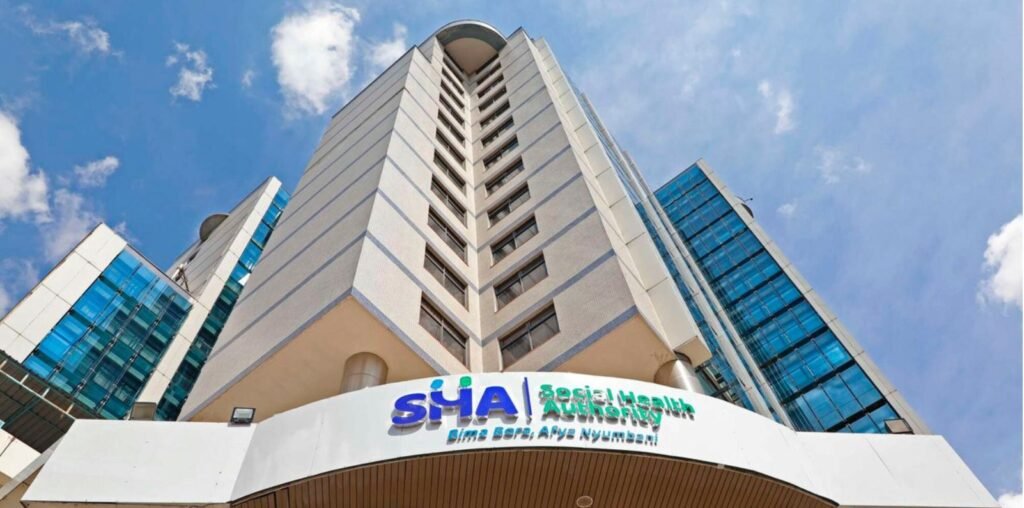
The Social Health Authority says the legally approved cancer benefit remains KES 800,000—KES 400,000 under SHIF and KES 400,000 under ECCIF—despite revisions to approvals and pricing intended to standardise charges. Patient and provider concerns about approvals, delays and out-of-pocket expenses have also been reported. The benefit amount does not automatically mean every medicine or service is covered. Health Signal Africa’s SHA cancer treatment article examines the changes and implementation concerns.
Nigeria health financing follow-up: state allocations exceed ₦3.3 trillion
Published 19 November—slightly outside the strict 48-hour window, included as a financing follow-up. At the 67th National Council on Health, the minister reported state health budget allocations rose from ₦1.97 trillion in 2023 to more than ₦3.3 trillion in 2026, a 67% increase. He called for stronger accountability after 412 of 740 expected reports on previous council resolutions were received. Allocations do not equal funds released or spent. Read the Ministry’s report and Vanguard coverage.
CPHIA pre-conference events begin in Addis Ababa
The Youth Pre-Conference and Women in Health Leadership Summit are scheduled for today, 22 November, at the African Union Commission headquarters. Organisers expect around 4,000 young people and 200 women leaders. The main Conference on Public Health in Africa runs from 23–27 November at the Addis International Convention Centre, with discussions on health security, sovereignty, financing, local production, digital transformation and climate resilience. Expected attendance figures are targets, not actual attendance. See the official programme.
COP31 negotiations continue after the scheduled close
Climate talks in Antalya, Türkiye, continued beyond the 20 November deadline. Reuters reported on 21 November that a revised package was presented and negotiators were close to agreement, with Sunday approval still pending at the time of review. WHO’s Health Pavilion concluded on 20 November after more than 60 events. Health Day launched the voluntary, non-binding Antalya Initiative for Health Resilience. For African health systems, climate adaptation requires resilient facilities, reliable water and power, early warning, climate-sensitive surveillance, workforce protection and financing. Read Reuters’ negotiations update and WHO’s Health Pavilion page.
Technology and research watch
- Campaign data: Ethiopia’s polio campaign uses ODK-based monitoring and lot quality assurance sampling to assess implementation; these are campaign tools, not new diagnostics.
- AI and preparedness: South Sudan’s readiness analysis used WHO’s AI-enabled PDX data exchange; independent validation of predictive performance was not identified.
- Vaccine research: Lafia’s centre is exploring Lassa and dengue vaccine research; candidate stage and clinical evidence remain undisclosed.
- Climate-health evidence: WHO estimates six priority climate-health actions could save 1.6 million lives each year globally; five actions return around US$24 per dollar invested. These are modelled global estimates, not country-level forecasts.
Health opportunities and deadlines
Closing today, 22 November: UNICEF’s consultant to develop a national operational plan for child-survival acceleration in Somalia and UNICEF’s MHPSS intervention-development/evaluation consultant (Nairobi, remote with travel). Both listings state a 23:55 EAT deadline; confirm the time on the official portal before submitting.
Closing 23–24 November: UNICEF Nutrition Specialist, Ethiopia (Ethiopian nationals only), 23 November; UNICEF WASH Specialist, Liberia, 23 November; and UNICEF national consultant on complementary foods/First Foods action plan, Sierra Leone, 24 November. The Sierra Leone application page could not be directly accessed during this review; deadline information should be checked on the official portal.
ReliefWeb-indexed opportunities still open: ALIMA Clinical Research Referent, EBO-PEP project, DRC (4 December); and MSF Health Promotion and Community Engagement Manager, Ebola Emergency Pool, DRC (6 December). Employer pages were accessible or indexed, but direct ReliefWeb job pages returned access errors, so no new ReliefWeb record was added today.
Other verified openings: AFENET Zonal Partner Coordination Lead, Bunia, DRC (30 November); and Kenya Ministry of Health Assistant Component 2 Coordinator 2, BREHS project, Nairobi (7 December). The Kenya consultancy is now listed: Assistant Component 2 Coordinator 2, BREHS, Kenya (deadline 7 December, 11:00 EAT).
Sources and verification notes
- WHO Ethiopia: polio campaign.
- WHO: DRC Bundibugyo update; ECDC 19 November assessment.
- WHO: South Sudan preparedness.
- Nigeria Ministry of Health: National Council on Health.
- Chinese Embassy in Sierra Leone: official handover.
- WHO: COP31 Health Day and AIR.
Limitations: DRC figures use different reporting cut-offs. Nigeria vaccine research reports do not disclose clinical stage. Sierra Leone package details and dates differ across sources. Nigeria budget follow-up was published 19 November, slightly outside 48 hours. COP31 final adoption was pending. Direct ReliefWeb pages were inaccessible; opportunities were checked via issuer pages or indexed records where possible.
Discussion