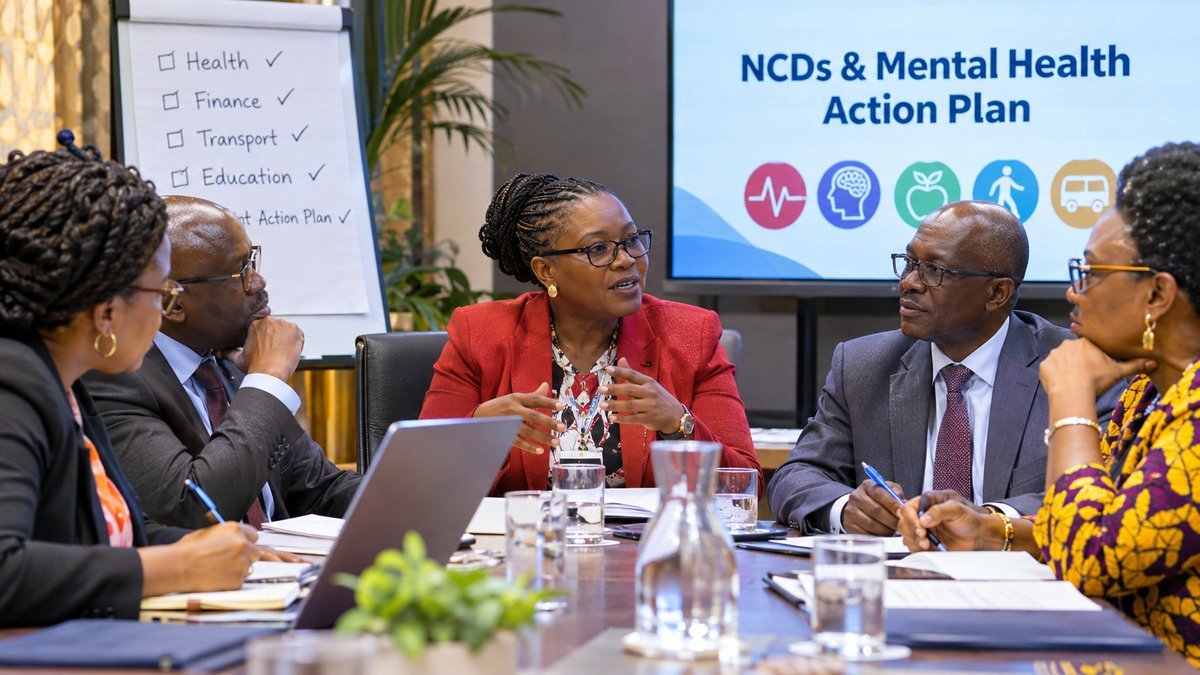
KIGALI, Rwanda, 5 November 2026 — African Union Member States are moving towards a more coordinated response to noncommunicable diseases (NCDs), injuries and mental-health conditions following a technical meeting convened by Africa CDC in Kigali, Rwanda, from 26 to 30 October.
Africa CDC said on 31 October that the meeting finalised technical recommendations for a multisectoral action plan and the Multisectoral Engagement, Coordination and Action (MECA) Framework. The recommendations are intended to guide the finalisation of the framework and support countries to develop national action plans aligned with the African Union Common Position on NCDs, injuries and mental health.
The agency estimates that NCDs accounted for 4.7 million deaths in Africa in 2023. It says prevention and treatment remain constrained by inadequate financing, limited access to care and fragmented responses to risks that extend beyond the health sector. The framework is designed to improve coordination between health ministries and other parts of government whose decisions affect health, including finance, education, transport, agriculture and urban planning.
The proposed approach includes mobilising sustainable financing, setting accountability mechanisms, coordinating interventions and monitoring progress. Representatives of AU Member States, AU institutions, academic institutions, civil society and patient advocates contributed to the technical process.
The announcement should not be interpreted as evidence that the framework has already been adopted by every country or that new funding has been secured. Africa CDC says the technical recommendations will inform the finalisation of the framework and its accompanying action plan. Country-level implementation, budgets and measurable targets remain the next steps.
Why it matters
NCDs such as cardiovascular disease, cancer, diabetes and chronic respiratory disease require prevention, early detection and long-term care. Mental-health conditions and injuries also create significant health and social costs. Health services alone cannot address all the drivers: food systems, tobacco and alcohol regulation, road safety, air quality, physical activity, education and social protection influence exposure and outcomes.
A multisectoral framework can help governments move from isolated programmes to coordinated policies. But coordination requires money, clear institutional responsibilities and public reporting. Without domestic financing and accountability, a framework risks remaining a policy document rather than changing services or reducing preventable deaths.
What happens next?
Africa CDC says the Kigali recommendations will inform the finalisation of the MECA Framework and accompanying Multisectoral Action Plan. Member States will then need to translate the continental guidance into country-owned plans, identify lead ministries, cost interventions, assign budgets and define indicators for monitoring implementation.
What it means for Kenya and the region
Kenya can use the process to examine how national and county plans align NCD prevention, mental-health services, injury prevention and primary healthcare. County health budgets, referral systems, screening programmes and non-health policies all influence outcomes. The framework could also support shared learning across countries, but its value will depend on whether national plans include funded activities and transparent progress measures.
What solutions are available?
Potential measures include integrating NCD and mental-health services into primary healthcare, strengthening early detection and referral, improving access to essential medicines, enforcing tobacco and alcohol controls, supporting healthier food and transport environments, and expanding injury prevention. Financing options include stronger domestic resource mobilisation, budget tagging, pooled planning across ministries and expenditure tracking.
Who is offering them?
Africa CDC is convening the continental process with African Union Member States and partners. National governments will lead country plans, while health ministries, finance ministries, local authorities, civil society, researchers and patient organisations will be needed to implement and monitor them.
Health Signal Africa will continue tracking: the final MECA framework, country adoption, financing commitments and whether national action plans include measurable targets for NCDs, injuries and mental health.
Sources and further reading
- Africa CDC — New multisectoral framework to improve NCDs, injuries and mental health (30–31 October 2026)


Discussion