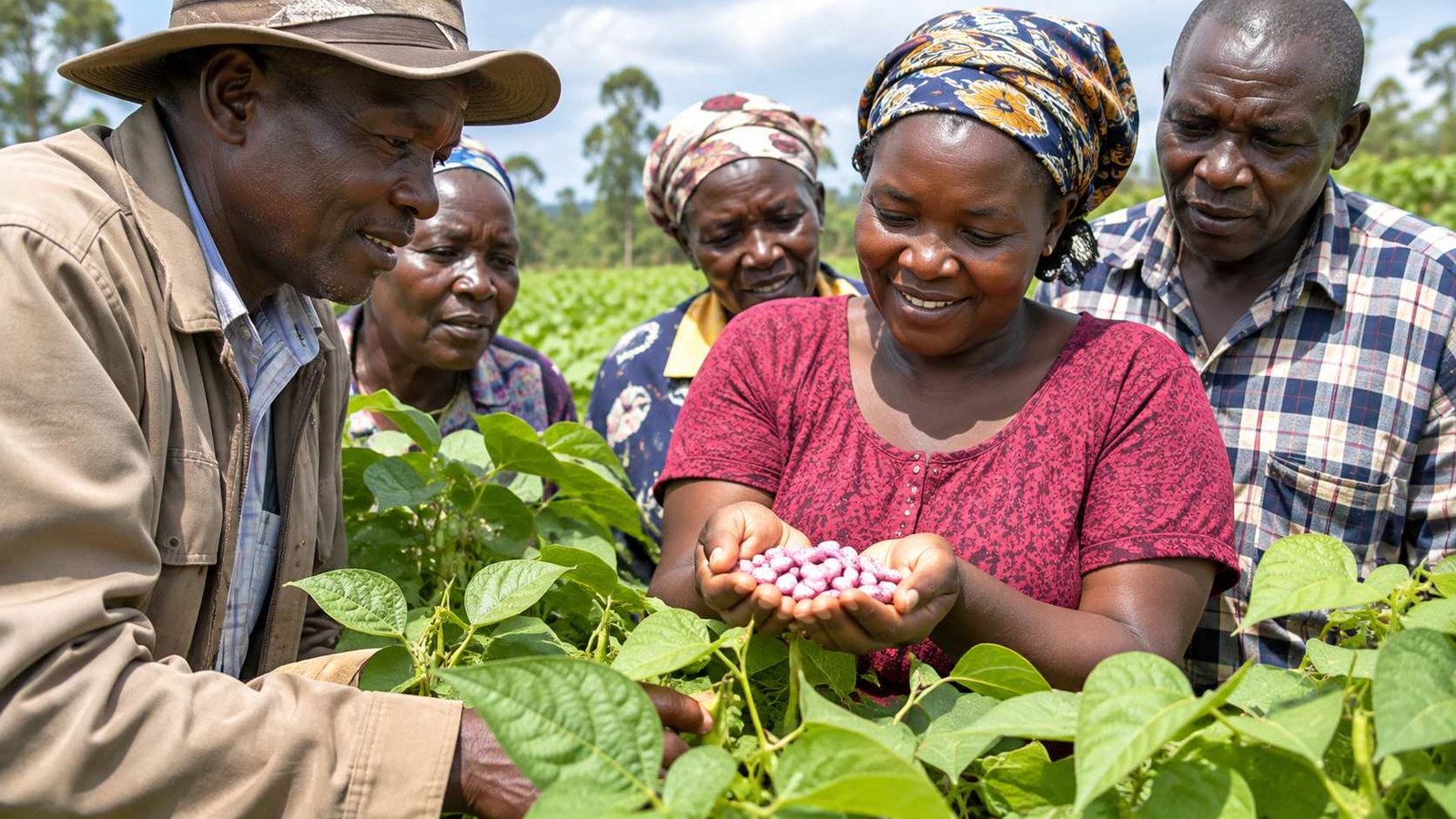
Migori, Kenya — More than 12,400 tobacco farmers in Kenya have moved towards alternative crops under the Tobacco-Free Farms initiative, as health and agricultural partners seek to reduce the health, environmental and economic risks associated with tobacco cultivation. Nearly 8,900 of the farmers are in Migori County, where the programme began in 2021 and where growers are now sharing lessons with farmers from Embu.
A World Health Organization (WHO) photo story published on 14 November described a learning visit by farmers and county officials from Embu to Migori. The visitors examined how former tobacco growers have shifted to food crops including high-iron Nyota beans, soya and groundnuts, and how access to seeds, extension services and markets can support the transition.
From tobacco contracts to alternative crops
The Tobacco-Free Farms initiative was launched in Migori in 2021 through a partnership involving WHO, the World Food Programme (WFP), the Food and Agriculture Organization of the United Nations (FAO), national and county authorities and other development partners. It has since expanded to Busia, Bungoma and Meru counties.
WHO’s Kenya Annual Report 2025 says more than 12,400 farmers across the four counties had transitioned away from tobacco, with over 11,500 acres converted to food crops. The report records 3.9 million kilograms of alternative produce, including high-iron beans, groundnuts, finger millet and other crops. It also says half of the farmers reached were women.
The programme combines farmer training with access to certified seeds and fertilisers, credit and financial inclusion, post-harvest support, aggregation and links to buyers. This matters because farmers who stop growing tobacco may lose access to the credit, inputs and guaranteed purchasing arrangements that were tied to tobacco contracts. Alternative crops need viable markets if households are to sustain the change.
Why tobacco farming is a public-health concern
Tobacco cultivation can expose farmers and their families to nicotine through contact with wet leaves, as well as pesticides, tobacco dust and smoke from curing. Green Tobacco Sickness can occur when nicotine is absorbed through the skin. Tobacco growing is also associated with intensive labour, child labour risks, soil depletion and pressure on trees used for curing.
WHO’s Tobacco-Free Farms programme is linked to Articles 17 and 18 of the WHO Framework Convention on Tobacco Control, which call for support for economically viable alternatives to tobacco growing and protection of the environment. The initiative aims to address supply-side dependence on tobacco, rather than focusing only on reducing tobacco consumption.
The health benefits are not limited to the farmer. Where tobacco cultivation requires children to help with harvesting and processing, a transition to less labour-intensive crops can reduce pressure on school attendance. Food crops can also support household diets and local markets, although these outcomes depend on crop yields, prices, market access and household circumstances.
Evidence on farm income needs careful interpretation
WHO’s 2025 annual report says farmers involved in the initiative reported a threefold increase in income. It also describes improvements in household food security, women’s empowerment, reduced child labour and environmental sustainability. These are programme-reported outcomes and should not be interpreted as results from a randomised evaluation or as guaranteed gains for every farmer.
In the 14 November photo story, WHO referred to a cost-benefit analysis of the October–December 2024 season which found that tobacco recorded a net loss per acre while most alternative crops performed better. The result is relevant to the participating locations and the period assessed; it does not establish that every alternative crop will outperform tobacco in all seasons or markets.
Kenya News Agency reported in June 2026 that the programme had converted more than 11,540 acres and produced over 3.8 million kilograms of food crops. The report also described plans to expand to additional counties. The figures broadly align with WHO’s 2025 annual report, although reporting periods and rounding differ.
Embu visit highlights the importance of local extension services
The visit by Embu farmers and officials illustrates how practical demonstration can support a transition. Farmers need information on which crops are suited to local soils and rainfall, how to manage pests, where to obtain quality seed and how to sell produce at a viable price. County agricultural officers, farmer groups and market organisations can help connect these parts of the value chain.
WHO and partners say the programme is supported through training in sustainable farming, access to finance and inputs, post-harvest management and structured market access. These services are important for reducing the risk that farmers abandon alternative crops because of poor harvests, delayed payments or a lack of buyers.
Lessons for African tobacco-control policy
Kenya’s experience is relevant to other African countries where tobacco growing remains a source of household income despite health and environmental costs. The WHO initiative has also operated in Zambia and Uganda, while partners have discussed expansion to additional countries. Any scale-up will need country-specific evidence on crop suitability, land rights, water availability, market demand and the distribution of costs and benefits.
For health ministries, tobacco control therefore intersects with agriculture, trade, environment, education and rural finance. A transition programme cannot succeed through health messaging alone. Farmers need credible alternatives, access to productive inputs, dependable buyers and support during the period when income from the previous crop is lost.
Health Signal Africa has previously covered Africa’s multisectoral response to noncommunicable diseases and the growing role of food systems in public-health prevention. The Tobacco-Free Farms initiative provides a practical example of how tobacco supply reduction can be connected to livelihoods and nutrition.
Sources and limitations
The latest development is based on WHO’s 14 November 2026 photo story about Migori and Embu. Farmer-transition, land-conversion and production figures are cross-checked against WHO’s Kenya Annual Report 2025 and Kenya News Agency reporting from June 2026. Programme-reported income and health outcomes are not presented as independently established causal effects. This article does not imply that every farmer or county has achieved the same results.
Primary sources: WHO, Migori farmers show Embu how to swap tobacco for beans, 14 November 2026; WHO Kenya Annual Report 2025; WHO Tobacco-Free Farms initiative. Additional reporting: Kenya News Agency, 1 June 2026.
Discussion