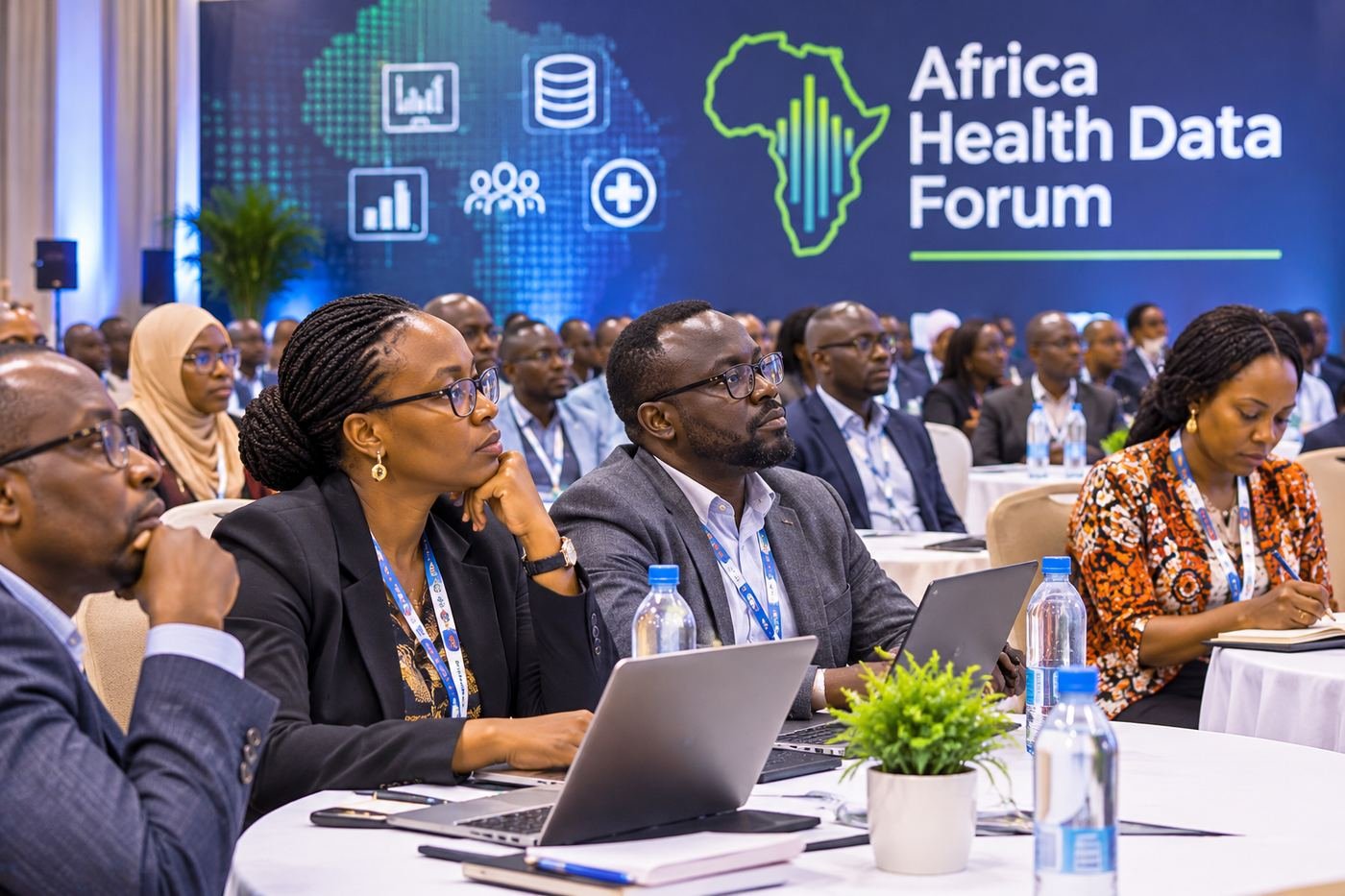
Nairobi, Kenya — Health leaders and government representatives from 51 countries have adopted the Nairobi Health Data Action Agenda, a continental agreement intended to improve the way African health systems collect, connect and use information for policy, investment and patient care. The agenda was adopted on 12 November at the close of the First Africa Health Data Forum in Nairobi, which brought together more than 300 participants from the World Health Organization’s African and Eastern Mediterranean regions.
From collecting data to using it
The three-day forum was convened by WHO in collaboration with Kenya’s Ministry of Health and the Kenya Digital Health Agency. It focused on persistent weaknesses in health information systems, including fragmented platforms, limited financing, shortages of skilled professionals and the inability of many institutions to turn available data into timely decisions.
The Nairobi Health Data Action Agenda sets out eight priorities to help countries move beyond routine reporting towards the use of reliable information to guide policy, direct investment, improve health services and prevent avoidable deaths. Priorities described by WHO include stronger national leadership, sustainable domestic financing, improved data quality, connected information systems, investment in skilled professionals, responsible use of digital health and artificial intelligence, and routine use of evidence in healthcare planning and resource allocation.
WHO assessments show continuing capacity gaps
Two reports launched during the forum underline the scale of the challenge. WHO’s assessment of health-information-system maturity in 40 countries recorded an overall score of 59 out of 100, with gaps in financing, governance and analytical capacity. A separate SCORE 2025 assessment covering 52 countries found that none had reached the highest level of sustainable capacity for using data and evidence effectively in policy and action.
The findings matter because health information systems underpin disease surveillance, immunisation monitoring, laboratory reporting, health workforce planning, medicine supply management and the allocation of resources. When hospital records, laboratory information systems, community health platforms and disease surveillance databases do not communicate, health workers may have to enter information repeatedly and managers may lack a reliable view of service delivery.
Countries are expected to align the agenda with national plans
WHO says countries agreed to identify national priorities and integrate them into existing health strategies and costed investment plans. Governments and partners also committed to aligning technical and financial support with country priorities, reducing duplication and strengthening national ownership.
Implementation will be guided by a continental results, monitoring and accountability framework through 2030, with annual national reviews. The forum is expected to convene every two years, with the next meeting planned for 2028. These arrangements provide a framework for follow-up, but the agenda itself does not guarantee that countries have secured the funding or technical capacity required to implement every priority.
Why the agreement matters for African health systems
Better data can support earlier detection of outbreaks, identify communities missing routine immunisation, improve referral pathways and reveal where medicines or health workers are in short supply. For countries expanding digital health platforms, the challenge is to ensure that systems exchange information securely and that data can be used by frontline teams rather than remaining confined to national reporting dashboards.
Artificial intelligence was included in the agenda as an area requiring responsible use. That does not mean countries have endorsed a single AI platform or that AI tools are ready to replace clinical judgement. Governments will need clear governance, data protection, quality assurance, transparent procurement, local validation and skilled personnel before introducing AI into health services at scale.
For Kenya, the agenda has practical implications for the relationship between national and county health information systems, laboratory networks, digital patient records and health purchasing. Investment will need to reach facilities with weak connectivity and limited technical support so that digital transformation does not widen inequalities between urban and rural services.
Implementation will determine the value of the agenda
The adoption of the Nairobi agenda marks a shift from documenting information-system weaknesses towards a shared framework for action. Its value will depend on whether governments translate the priorities into funded national plans, assign clear institutional responsibilities, strengthen data stewardship and measure improvements in health outcomes. Annual reviews through 2030 will provide an opportunity to assess progress, but they will need transparent indicators and public reporting to support accountability.
Sources and limitations
This article was updated following the WHO news release of 12 November 2026 and WHO Kenya’s forum summary of 13 November. The 59/100 maturity score is based on an assessment of 40 countries; the SCORE 2025 findings cover 52 countries. The eight-priority framework is described by WHO, but this article does not infer a complete numbered list beyond the priorities identified in the release. Adoption of the agenda should not be interpreted as proof that implementation funding has already been secured.
WHO Regional Office for Africa, 12 November 2026 · WHO Kenya, 13 November 2026.

Discussion