CEPI Commits Up to US$8.2 Million to Strengthen West Africa’s Outbreak Research Network
ACCRA/OSLO, 5 November 2026 — The Coalition for Epidemic Preparedness Innovations (CEPI) has announced up to US$8.2 million in additional funding to help establish a connected network of clinical trial sites in West Africa that can generate evidence more quickly when disease outbreaks occur.
The funding, announced on 26 October, will support the International Vaccine Institute (IVI) and the Medical Research Council Unit The Gambia at the London School of Hygiene & Tropical Medicine (MRCG at LSHTM), which are technical coordinating partners for the West Africa component of Africa CDC’s hub-and-spoke clinical trial model. The initiative was launched at an event in Accra on 22 October convened by Africa CDC, the African Medicines Agency, WHO’s Regional Office for Africa and CEPI.
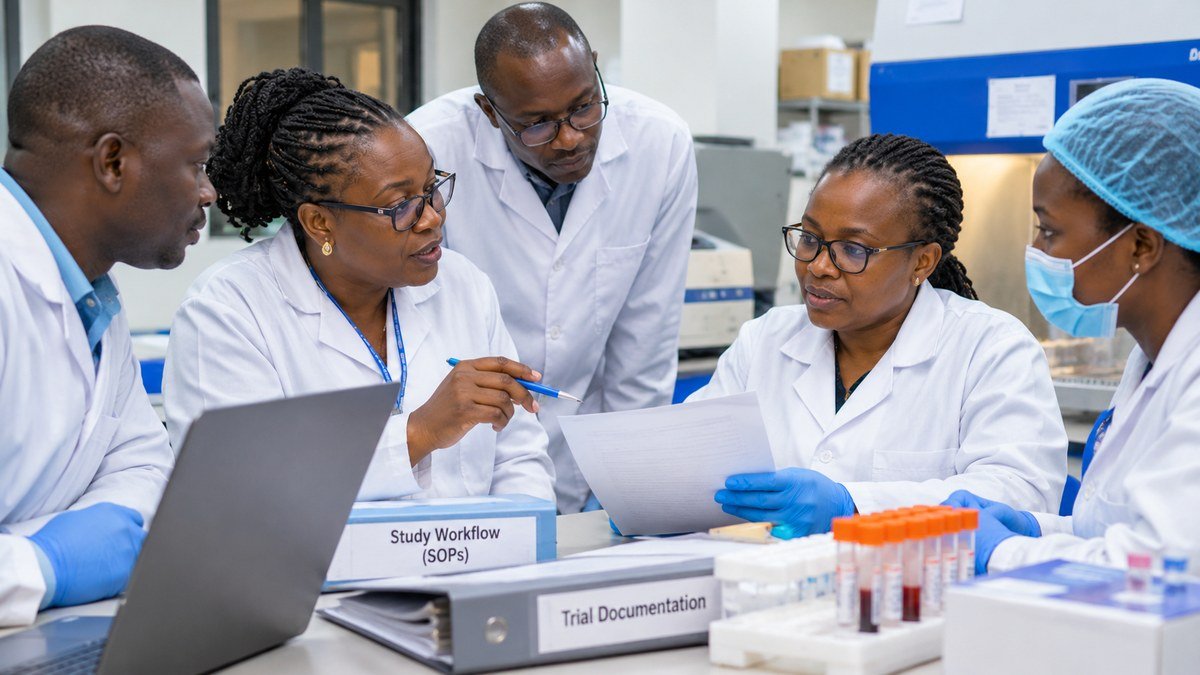
The model connects experienced clinical research centres, or hubs, with a wider network of spoke sites closer to areas where outbreaks are more likely to occur. The aim is to keep sites active and connected between emergencies so they can be rapidly mobilised to conduct studies when a new threat emerges. This may support faster evaluation of vaccines, diagnostics and treatments, subject to scientific, ethical and regulatory review.
CEPI said the initial implementation will focus on West Africa before expanding to other African regions. With the additional funding, CEPI’s total commitment to its Research Preparedness Program is US$28.8 million. The programme also supports a small number of sites in East and Central Africa, with a separate earlier phase involving PATH as an initial technical coordinating partner.
The funding is an announced commitment of up to US$8.2 million; it should not be described as money already disbursed to every participating institution. The announcement also does not mean a vaccine or treatment has been developed. Its purpose is to strengthen the research infrastructure and coordination needed to generate reliable evidence during future emergencies.
Why it matters
During an outbreak, delays in setting up clinical studies can slow the generation of evidence on whether a vaccine, medicine or diagnostic works. Sites that lack trained staff, ethics procedures, laboratory capacity, logistics or regulatory coordination may take months to become operational. Maintaining research readiness before an emergency can shorten that preparation period and strengthen African leadership in evidence generation.
The approach also raises important questions about long-term sustainability: who will fund staff, equipment maintenance and routine research between outbreaks, and how will participating countries retain ownership of data and decisions? CEPI says the model is intended to support open-access principles and broad use of research capacity across partners.
What happens next?
The next phase is implementation in West Africa, including strengthening participating sites, coordinating protocols and regulatory processes, and establishing how hubs and spoke institutions will work together. Expansion to other regions is planned, but the announcement does not provide a confirmed timetable or list of all future sites.
What it means for Kenya and the region
Kenya is not named as a new site in the West Africa funding announcement. However, the model has relevance for East and Central Africa because CEPI says an earlier phase of its Research Preparedness Program already supports sites in those regions. Kenyan research institutions can watch for future calls, partnerships and regional coordination opportunities, while national regulators and ethics bodies remain central to trial readiness.
What solutions are available?
The model proposes maintaining trained research teams, laboratories, ethics and regulatory pathways, clinical-trial protocols, data systems and logistics before an outbreak begins. Regional coordination can help standardise procedures while allowing studies to be adapted to the disease and affected communities.
Who is offering them?
CEPI is providing the additional funding through its Research Preparedness Program. Africa CDC is leading the continental hub-and-spoke model, with IVI and MRCG at LSHTM coordinating the West Africa component. WHO, the African Medicines Agency, national research institutions, regulators and ministries of health are expected to support technical, scientific and regulatory readiness.
Health Signal Africa will continue tracking: the participating research sites, disbursement and implementation milestones, regulatory readiness and the model’s expansion beyond West Africa.
Sources and further reading
- CEPI — Strengthening Africa’s outbreak-ready evidence generation capabilities (26 October 2026)
- Africa CDC — Strengthening Africa’s outbreak-ready evidence generation capabilities (26 October 2026)