NIZI, Democratic Republic of the Congo, 5 November 2026 — Community surveys are helping health teams understand why some families delayed seeking care and resisted safe burial procedures during the Bundibugyo Ebola outbreak in the Democratic Republic of the Congo (DRC), according to a World Health Organization (WHO) feature published on 4 November.
The work took place in Nizi health zone in Ituri Province, one of the early areas affected by the outbreak. WHO reports that the zone recorded 827 confirmed cases and 488 deaths in July, with 59 per cent of deaths occurring in the community. The figures underline the difficulty of reaching people early enough for appropriate care and preventing exposure during home care and funeral practices.
From 10 to 18 August, a rapid survey was conducted in four health areas to understand community deaths and reluctance to seek care. The assessment found that early symptoms such as headache, fever, abdominal pain and vomiting were not always recognised as possible signs of Bundibugyo virus disease. Some people initially treated themselves, sought home care or consulted traditional healers, delaying referral to health facilities.
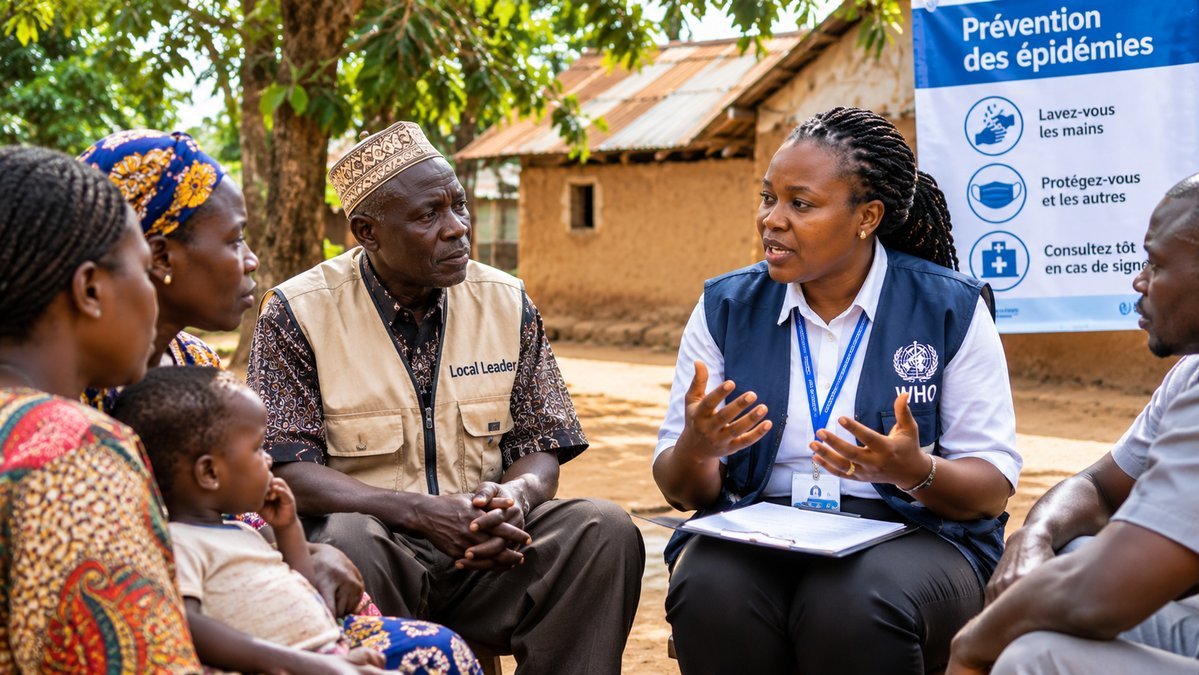
The survey also identified concerns around treatment centres and safe and dignified burials. In some settings, families were reluctant to allow burial teams to handle the bodies of deceased relatives. WHO noted that touching or handling a body after death can expose family members and others to infection. The findings were used to shape awareness sessions involving local leaders and community representatives.
The response illustrates why community engagement is not an optional communication activity during an outbreak. It can provide information about how people interpret symptoms, where they seek help, what makes them distrust official services and which local voices can help explain safer practices.
Why it matters
Ebola response measures depend on people recognising symptoms, seeking care promptly, sharing contact information and accepting safe burial procedures. If health messages do not address local concerns, families may delay care or avoid response teams. This can increase the risk of transmission and contribute to deaths outside treatment centres.
Community surveys also help avoid treating resistance as simple non-compliance. They can reveal practical barriers such as distance, fear of separation from family, previous experiences with health facilities, language gaps and cultural expectations around caring for the sick and honouring the dead.
What happens next?
WHO says awareness sessions began across the surveyed health areas, with local leaders involved in discussions about safer behaviours and referral. The next challenge is to maintain these relationships, monitor whether care-seeking changes and adapt messages as the outbreak and community concerns evolve. The survey is a rapid local assessment, not a nationally representative study of attitudes across the DRC.
What it means for Kenya and the region
Kenya and other countries managing imported or locally linked cases can apply the same principle: listen to communities before designing risk communication. Community health promoters, religious leaders, local administrators and survivor networks can help explain symptoms, referral pathways and infection prevention without stigmatising affected families. Messages should be delivered in locally understood languages and updated as official guidance changes.
What solutions are available?
Useful approaches include rapid community listening exercises, household and focus-group surveys, trusted local spokespersons, culturally informed safe-burial communication, clear referral information and feedback channels through which communities can raise concerns. These approaches should complement—not replace—laboratory testing, clinical care, contact tracing and infection prevention.
Who is offering them?
The DRC Ministry of Public Health leads the national response, with WHO supporting community engagement, technical guidance and outbreak operations. Provincial and health-zone authorities, community leaders, health workers and local volunteers are central to translating the findings into safer practices.
Health Signal Africa will continue tracking: whether community engagement is associated with earlier care-seeking, fewer community deaths and stronger acceptance of safe and dignified burials.
Sources and further reading
- WHO Africa — Community surveys contribute to behaviour change in response to Bundibugyo virus disease (4 November 2026)
- WHO — Bundibugyo virus disease outbreak update (23 October 2026)