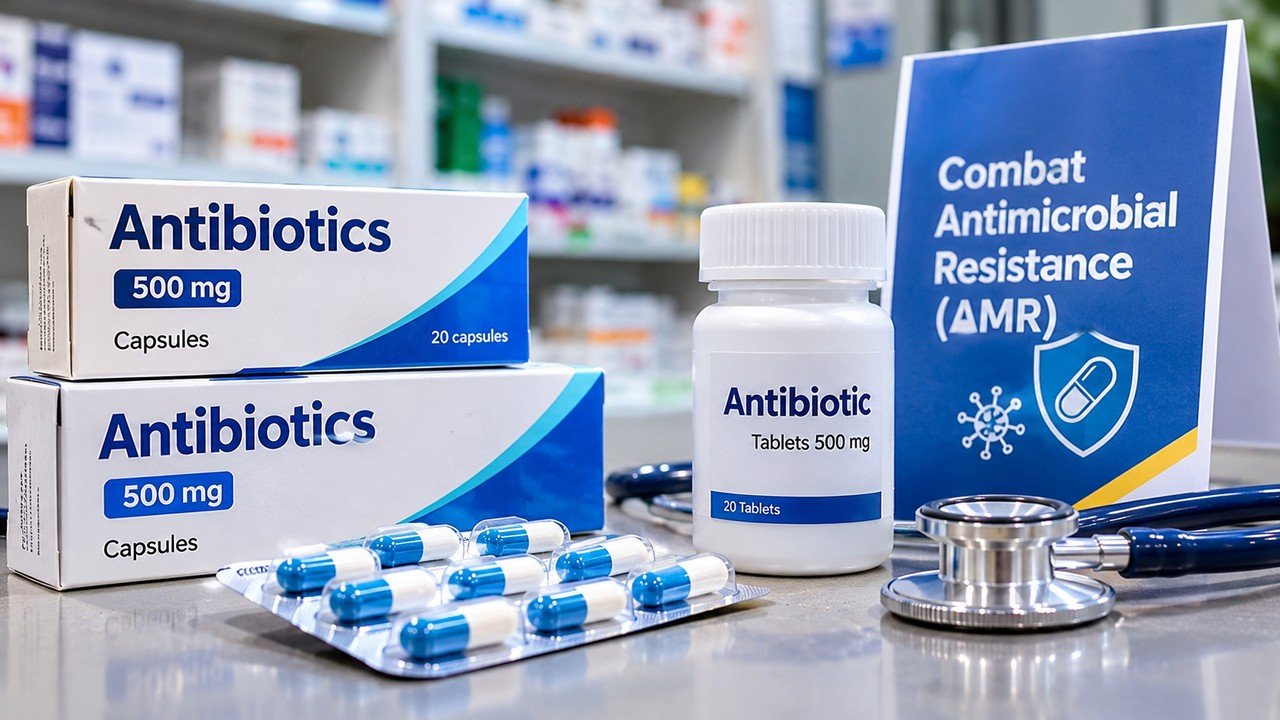
Kenya is exploring a possible partnership to improve access to essential antibiotics while addressing antimicrobial resistance (AMR), a growing threat to the effective treatment of bacterial infections. The Ministry of Health says Principal Secretary for Medical Services Dr Ouma Oluga held discussions on 2 November 2026 with Aranda Chief Executive Officer Dr Angus L. C. O’Shea. The meeting considered approaches that could support access to lifesaving antibiotics, strengthen antimicrobial stewardship and contribute to Kenya’s Universal Health Coverage agenda.
Why antibiotic access and stewardship must go together
Antibiotics are essential medicines for treating many bacterial infections, but their effectiveness can be undermined when they are used unnecessarily, prescribed inappropriately or taken incorrectly. Antimicrobial resistance develops when microorganisms change in ways that make medicines less effective. Resistant infections can be more difficult to treat and may require longer hospital stays, more complex treatment and more expensive medicines. For patients, the consequences can include delayed recovery, complications and a greater risk of severe illness.
The Ministry’s statement emphasises that expanding access to essential antibiotics must be accompanied by stronger diagnostic capacity, surveillance, responsible prescribing and effective antimicrobial stewardship. This balance is important. A policy that improves supply without ensuring appropriate use could increase unnecessary exposure to antibiotics. On the other hand, stewardship measures that restrict use without ensuring access to the right medicine when it is clinically indicated could leave patients undertreated. The health system needs both availability and safeguards.
A scoping process, not a concluded agreement
The discussions followed earlier engagement between the two leaders on the sidelines of the United Nations General Assembly in New York in September 2026. Aranda was undertaking a scoping mission in Kenya, including engagements with the Kenya Medical Supplies Authority (KEMSA), the Social Health Authority (SHA) and county governments in Nairobi, Kiambu and Murang’a. The Ministry encouraged the organisation to prepare evidence-based recommendations tailored to Kenya’s healthcare needs.
Those recommendations are expected to outline possible areas of collaboration, implementation approaches, financing arrangements and anticipated public-health outcomes. The distinction matters: the Ministry’s announcement describes exploratory discussions and a scoping exercise. It does not confirm that Kenya has signed a partnership agreement, approved a financing package, committed to procure medicines through Aranda or decided on a nationwide rollout. Any proposal would still need to demonstrate affordability, sustainability, public-health impact and value for money.
Building on Kenya’s existing health systems
The Ministry also stressed that any proposed collaboration should complement established national and county structures, including KEMSA and SHA, rather than create parallel systems. This is important for procurement, distribution, reimbursement and accountability. A new arrangement that operates outside existing supply chains could create duplication, inconsistent reporting or uncertainty over who is responsible when medicines are unavailable. A well-designed partnership would need to fit within national medicine policies, procurement rules and county service-delivery arrangements.
Diagnostics are another central part of the issue. Clinicians need reliable information to distinguish bacterial infections from viral illnesses and, where possible, identify which antibiotics are likely to work. Laboratory capacity and access to appropriate tests can support better treatment decisions, while surveillance helps authorities understand which organisms are circulating and which medicines are becoming less effective. These functions require trained staff, dependable laboratory supplies, quality assurance and information systems that connect local findings to national decision-making.
What to watch next
For patients, the practical objective is to receive the right antibiotic when it is needed, at the right dose and for the appropriate duration, while avoiding antibiotics for illnesses that they cannot treat. Patients should follow advice from qualified health professionals and should not share leftover antibiotics or use medicines prescribed for someone else. Health facilities, in turn, need clear treatment guidance, access to quality-assured medicines and systems that support review of antibiotic use.
The next public milestone will be whether Aranda’s scoping work produces a proposal that the Ministry and relevant institutions consider feasible. The details will matter: which medicines and services would be included, how supply and financing would work, how AMR surveillance would be strengthened, and how performance would be measured. Kenya’s challenge is not simply to increase antibiotic volumes. It is to make essential treatment reliably available while protecting the medicines’ effectiveness for future patients.


Discussion
Really appreciated the systematic breakdown presented in “kenya antibiotic access partnership antimicro…”. Thank you for sharing such a constructive piece—definitely a valuable reference for anyone following this field.