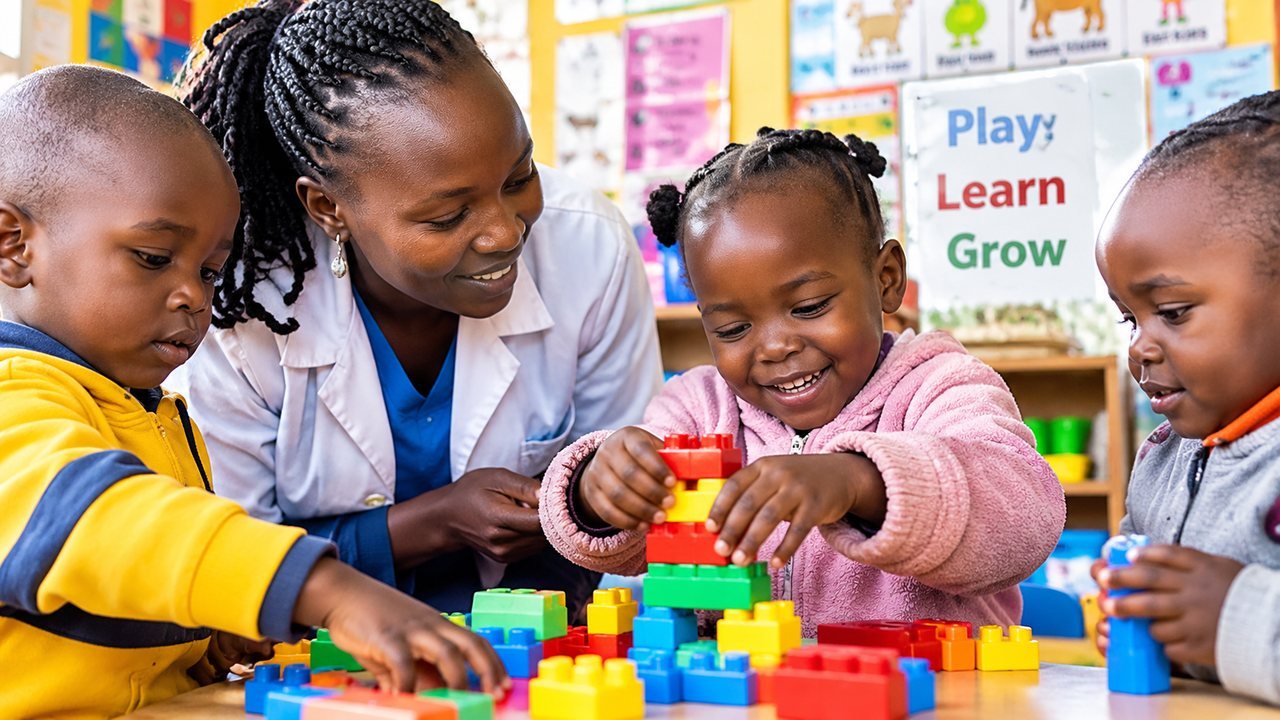
Kenya’s latest household health survey is adding a new dimension to how the country understands the wellbeing of its youngest children. The 2025–26 Kenya Mini Demographic and Health Survey, launched in Nairobi on 3 November 2026, measures whether babies and toddlers are reaching age-appropriate developmental milestones in movement, language and thinking, and social skills. The shift matters because child health is not only about whether children survive or gain weight; it is also about whether they have the care, stimulation and opportunities needed to develop.
New national evidence on child development
According to the survey findings released by the World Health Organization, 85% of children aged 3–23 months and 83% of children aged 24–59 months are developmentally on track. The younger age group was assessed using the World Health Organization’s Global Scales for Early Development tool. Older children were assessed using UNICEF’s Early Childhood Development Index 2030. Together, the measures provide a national snapshot of development across early childhood and create a baseline that can be used to guide policy and services.
The figures are encouraging at national level, but they should not obscure the differences between counties. Among children aged 3–23 months, the proportion assessed as developmentally on track ranged from 52% in West Pokot to 97% in Kakamega. Such variation does not, by itself, explain why children have different outcomes. It does, however, identify places where county health, education and social services can examine whether families have access to adequate nutrition, responsive caregiving, early learning opportunities and support when developmental concerns arise.
County differences point to targeted support
The survey was led by the Kenya National Bureau of Statistics in collaboration with the Ministry of Health and other stakeholders. Fieldwork ran from 5 November 2025 to 10 February 2026 and covered a nationally representative sample of 29,935 households. It is Kenya’s eighth demographic and health survey since 1989 and its first mini survey, designed to provide an interim update between the larger survey rounds that take place approximately every five years. Its findings can help track national health targets, the Sustainable Development Goals and Kenya’s Vision 2030 commitments.
The early-development measures also bring attention to the conditions that shape children’s progress. The WHO release notes that children whose mothers have more education are more likely to be developmentally on track. This association should be interpreted carefully: it does not mean education alone determines development, nor does it identify a single cause for county differences. Early development is influenced by several connected factors, including maternal health, nutrition, responsive interaction with caregivers, household resources, safety and opportunities to learn through play.
How the wider health indicators are changing
The survey also reports improvement in selected indicators since 2022. Under-five mortality was reported at 37 deaths per 1,000 live births, compared with 41 in 2022. Facility-based births increased to 91% in 2025 from 88% in 2022, while 72% of women reported at least four antenatal care visits during their most recent pregnancy, up from 66%. These figures provide useful context because a child’s development is connected to the health and wellbeing of mothers before, during and after pregnancy, as well as the quality of care available during infancy.
However, improvements in national indicators do not automatically mean that every family has equal access to services. A facility birth, for example, is an important contact with the health system, but it does not by itself guarantee that a mother receives every recommended service or that a child has continuing access to nutrition, developmental support and early learning. The survey therefore provides a reason to look beyond headline national percentages and examine whether services are accessible, affordable, respectful and responsive in different communities.
Turning the findings into county action
The immediate opportunity is to connect the survey findings with county planning and frontline service delivery. County health departments can use the data to review where child development support should be prioritised, while working with early-childhood education, nutrition and social protection teams. Community health promoters and facility staff can help caregivers understand the value of talking, singing, playing and responding to young children, while identifying children who may need further assessment or referral. Support should be practical and culturally appropriate rather than framed as blaming parents for developmental differences.
The results are a baseline, not a final verdict on any county. They do not diagnose individual children, rank the quality of particular facilities or prove that a specific programme caused an outcome. The next step is to understand the local factors behind the differences and ensure that children who need additional support can receive it early. For policymakers, the central test will be whether the new evidence changes budgets, services and accountability—and whether future measurements show that children in every county are getting a fairer start.

Discussion