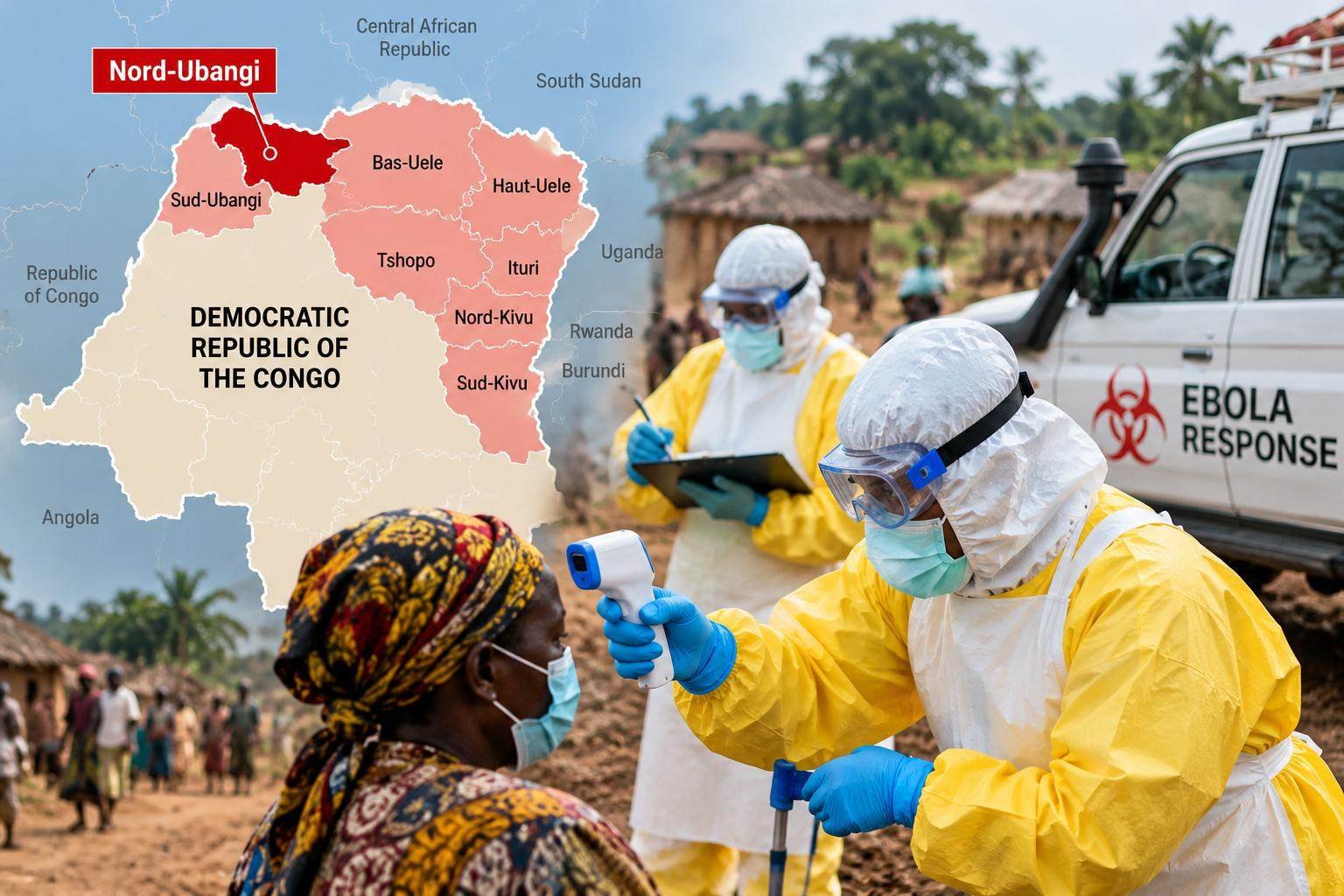
The Ebola outbreak in the Democratic Republic of the Congo (DRC) has spread to North Ubangi province, marking the eighth province affected by the ongoing Bundibugyo Ebola virus disease outbreak.
Health authorities confirmed two cases in North Ubangi, including one death, adding a new challenge to efforts to contain an epidemic that has already caused thousands of deaths. The cases were reported in the Wapinda health zone, an area near the border with Bas-Uele province and close to the Central African Republic.
The development was reported on 18 October 2026, following earlier reports of suspected deaths in a mining area that prompted urgent testing. The confirmation means the outbreak has expanded beyond its original concentration in eastern DRC into another province in the country’s north.
The outbreak, declared in May 2026, is caused by Bundibugyo virus, a rare Ebola virus species for which there is currently no licensed vaccine or specific approved treatment.
According to Reuters, the DRC had recorded 9,415 confirmed cases and 4,536 deaths by 16 October. The latest figures highlight the scale of the emergency and the continuing challenges facing public health authorities.
Why the spread to North Ubangi matters
The expansion into North Ubangi is significant because it creates additional demands on disease surveillance, laboratory testing, contact tracing and emergency response teams.
The province borders the Central African Republic, raising the importance of cross-border coordination and information sharing. Although the neighbouring country had not reported confirmed cases in the latest reports, the movement of people across borders makes timely detection and communication essential.
The Wapinda health zone also presents logistical challenges. Reports indicate that poor roads and limited communication networks can make it difficult for response teams to reach affected communities quickly.
Mining activity and population movement may further complicate surveillance, particularly where people travel between remote settlements and neighbouring provinces.
These conditions can delay the identification of suspected cases, the transport of samples to laboratories and the isolation of people who may be infected.
Eastern DRC remains the outbreak’s epicentre
Despite the spread to North Ubangi, Ituri province in eastern DRC remains the main centre of the outbreak, accounting for the majority of confirmed infections.
North Kivu has also recorded substantial transmission. Other affected provinces include Haut-Uele, Tshopo, South Kivu, Bas-Uele and South Ubangi.
The spread across eight provinces illustrates the difficulty of containing an outbreak across a large country where insecurity, population displacement and gaps in healthcare access can hinder public health operations.
The World Health Organization has identified the outbreak as a public health emergency of international concern, requiring coordinated action across countries and health agencies.
The challenge is no longer limited to controlling transmission in a single area. Authorities must maintain surveillance across multiple affected provinces while ensuring that communities can access testing, isolation and medical care.
What is Bundibugyo Ebola virus disease?
Bundibugyo Ebola virus disease is caused by Bundibugyo virus, a member of the Ebola virus group. It can cause severe illness and death.
Symptoms may begin with fever, headache, fatigue, muscle pain and sore throat. Some patients develop vomiting, diarrhoea and other serious complications.
The virus spreads primarily through direct contact with the blood or other body fluids of an infected symptomatic person, someone who has died from the disease, or contaminated objects and materials.
It does not spread through the air in the same way as measles.
Because the early symptoms can resemble other illnesses, including malaria, prompt clinical assessment and laboratory testing are essential when Ebola is suspected. People who believe they have been exposed should contact public health authorities and disclose their exposure history.
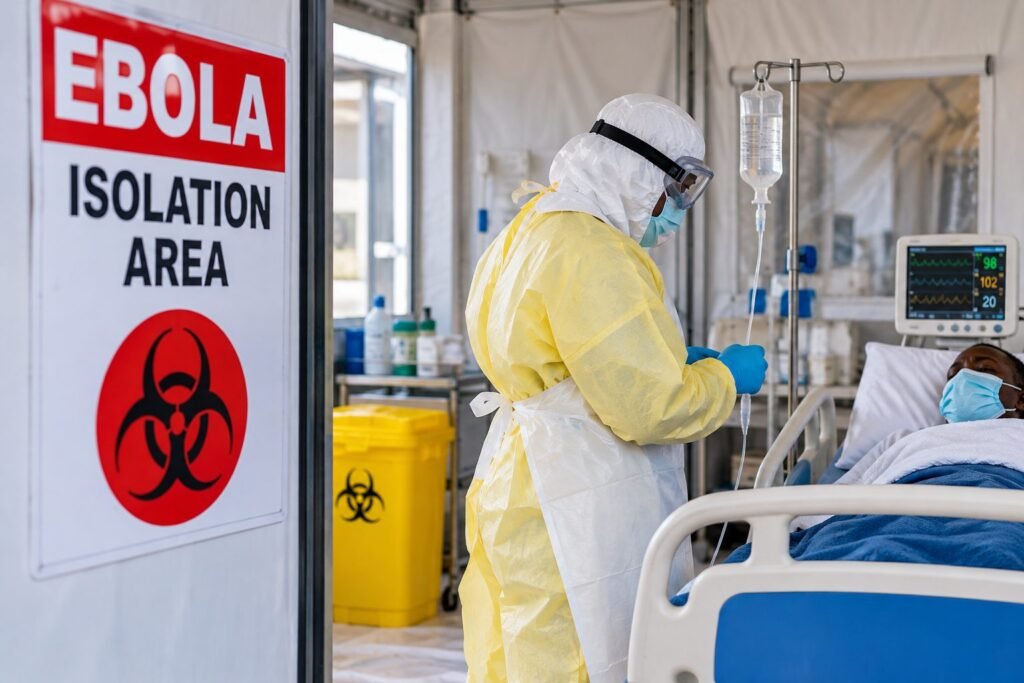
There is currently no licensed vaccine or specific approved treatment for Bundibugyo Ebola virus disease. Clinical management focuses on supportive care, including fluid management and treatment of complications.
What is being done to contain the outbreak?
The response requires coordinated action by the DRC Ministry of Health, the National Institute for Biomedical Research, the World Health Organization and other response partners.
Key measures include:
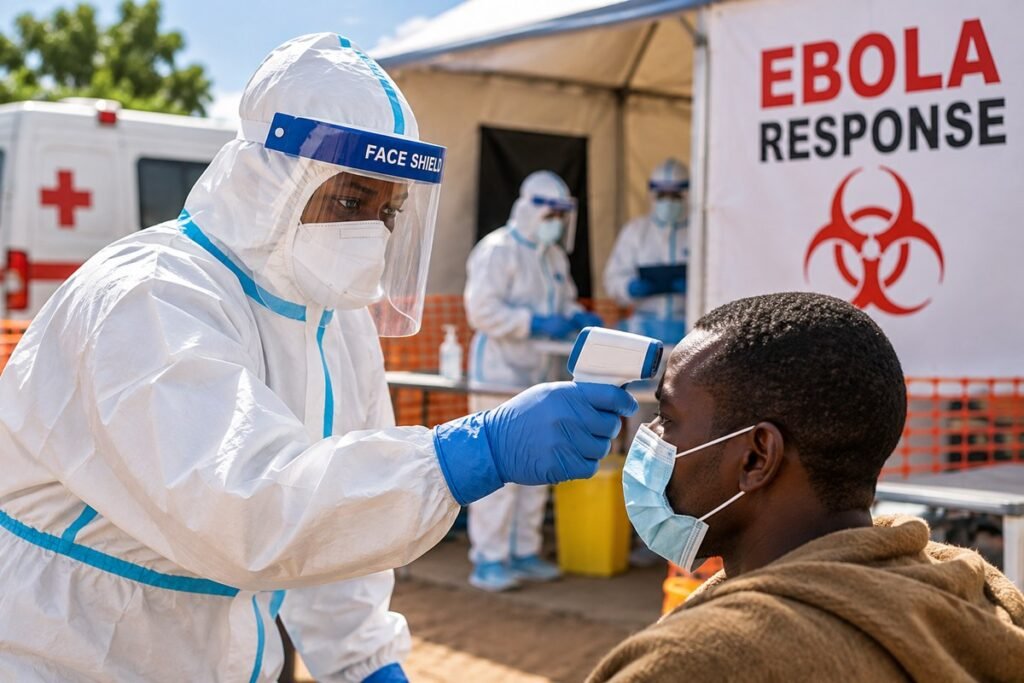
- Surveillance and testing: Identifying suspected cases and confirming infections through laboratory testing.
- Contact tracing: Identifying and monitoring people who may have been exposed.
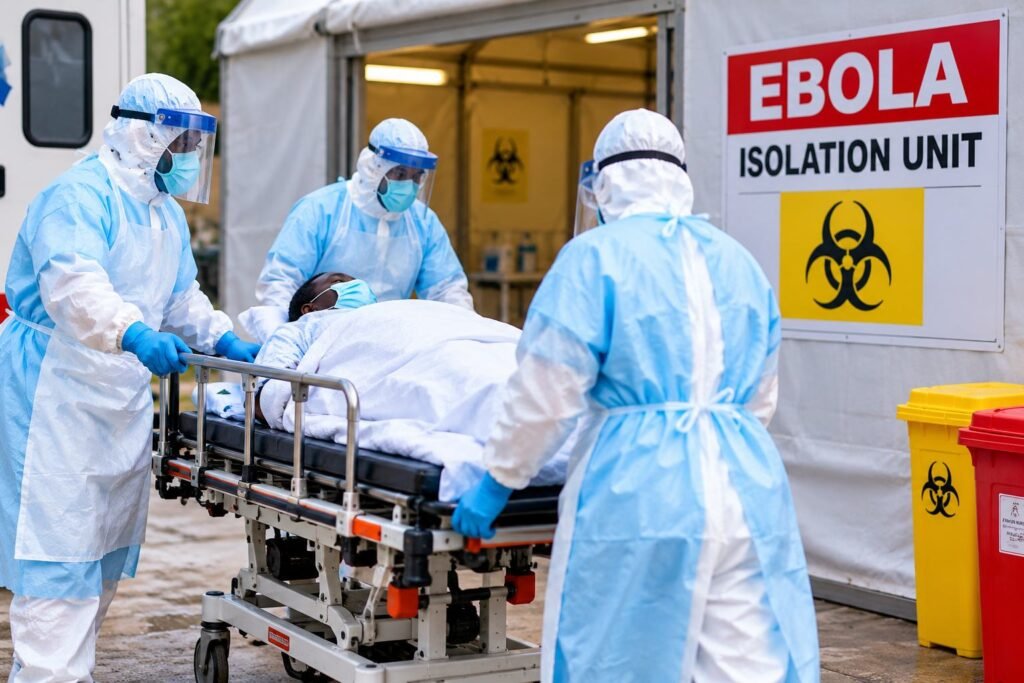
- Isolation and treatment: Separating suspected and confirmed cases from others and providing appropriate supportive care.
- Infection prevention and control: Protecting healthcare workers through appropriate protective equipment, training and safe clinical procedures.
- Community engagement: Working with local leaders and communities to improve trust, encourage early reporting and address misinformation.
- Cross-border coordination: Sharing information with neighbouring countries to support surveillance and rapid response.
The effectiveness of these measures depends on whether response teams can reach affected communities and whether people feel safe seeking medical assistance.
Why community trust and access to care matter
Health authorities face more than a medical challenge. Insecurity, mistrust and limited access to healthcare can undermine efforts to detect and isolate infections.
Some people may avoid treatment because of fear, misinformation or concerns about being separated from their families. Others may live too far from a treatment facility or lack reliable transport.
When people with symptoms remain outside the formal healthcare system, infections may go undetected and contacts may not be identified quickly.
Community engagement is therefore an essential part of outbreak control. Health workers and local leaders need to communicate clearly about transmission, symptoms, available care and the reasons for isolation.
Response teams must also ensure that affected people are treated with dignity and that families receive appropriate information and support.
What does the outbreak mean for Kenya and the region?
The spread to North Ubangi is a reminder that Ebola preparedness cannot be confined to the areas where an outbreak first emerges.
Kenya has separately confirmed seven cases of Bundibugyo Ebola virus disease, including one death, as of 17 October 2026. Those cases have been linked to an imported infection and subsequent transmission among contacts.
The developments in DRC reinforce the importance of regional coordination, travel-related surveillance, laboratory capacity and readiness to identify and isolate suspected cases.
For Kenya and other neighbouring countries, preparedness includes ensuring that health workers recognise possible symptoms, facilities have infection prevention protocols, samples can be transported safely and public health authorities can rapidly investigate suspected exposure.
The expansion of the outbreak does not mean every country faces widespread community transmission. Risk depends on exposure patterns, surveillance capacity and how quickly public health measures are implemented.
The way forward
The spread of Bundibugyo Ebola virus disease to North Ubangi adds another front to an already complex outbreak response.
The confirmation of two cases, including one death, highlights the importance of rapid testing, active surveillance and access to healthcare in remote areas. The province’s proximity to the Central African Republic also makes cross-border coordination a priority.
Containing the outbreak will require sustained investment in laboratories, trained health workers, protective equipment, reliable transport and community engagement. It will also require efforts to overcome insecurity and logistical barriers that can prevent people from receiving timely care.
For public health authorities across Africa, the latest development underscores a critical lesson: early detection and trusted local response systems are essential to preventing outbreaks from spreading further.

Discussion