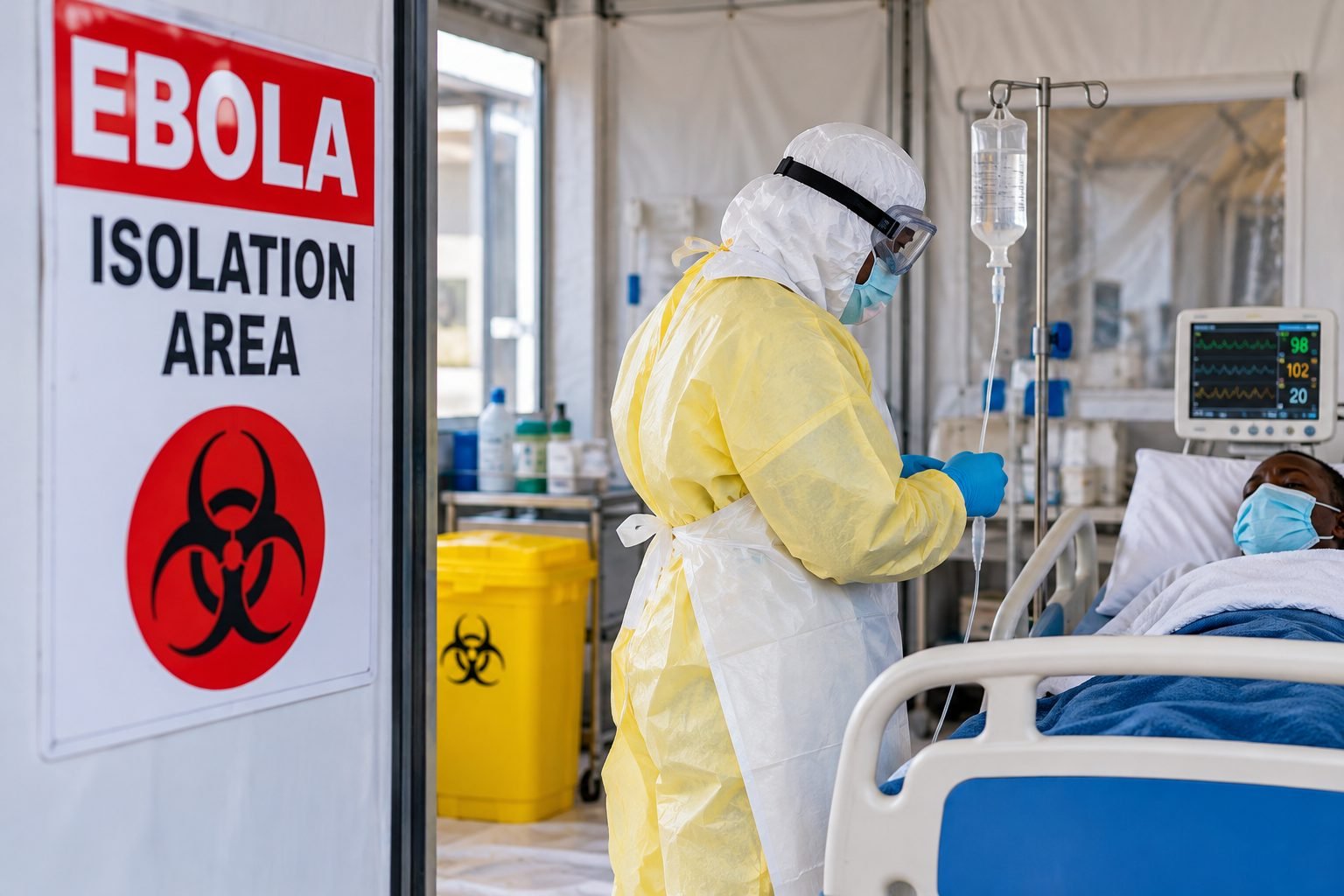
Kenya has confirmed its third case of Bundibugyo Ebola virus disease, raising the importance of continued contact tracing, isolation and surveillance as health authorities work to prevent further transmission.
The Ministry of Health confirmed the case on 16 October 2026, involving a 65-year-old woman who is a close relative of Kenya’s first Ebola patient. According to the World Health Organization (WHO), the woman had already been placed in quarantine and was being monitored when she developed symptoms and tested positive.
She has been transferred to a designated treatment unit and is receiving supportive care. The second confirmed patient, a 39-year-old man from the same family, is reported to be in stable condition and responding to treatment.
Kenya’s first patient, a 40-year-old man who had travelled from the Democratic Republic of the Congo (DRC) through Uganda to Nairobi, died on 5 October.
Health authorities say all three confirmed cases are linked to the first patient and that there is currently no evidence of community transmission.
Sources: WHO Kenya update | Reuters report
Why the third case matters
The latest case highlights the importance of identifying and monitoring people who have been exposed to Ebola, even when they initially appear healthy.
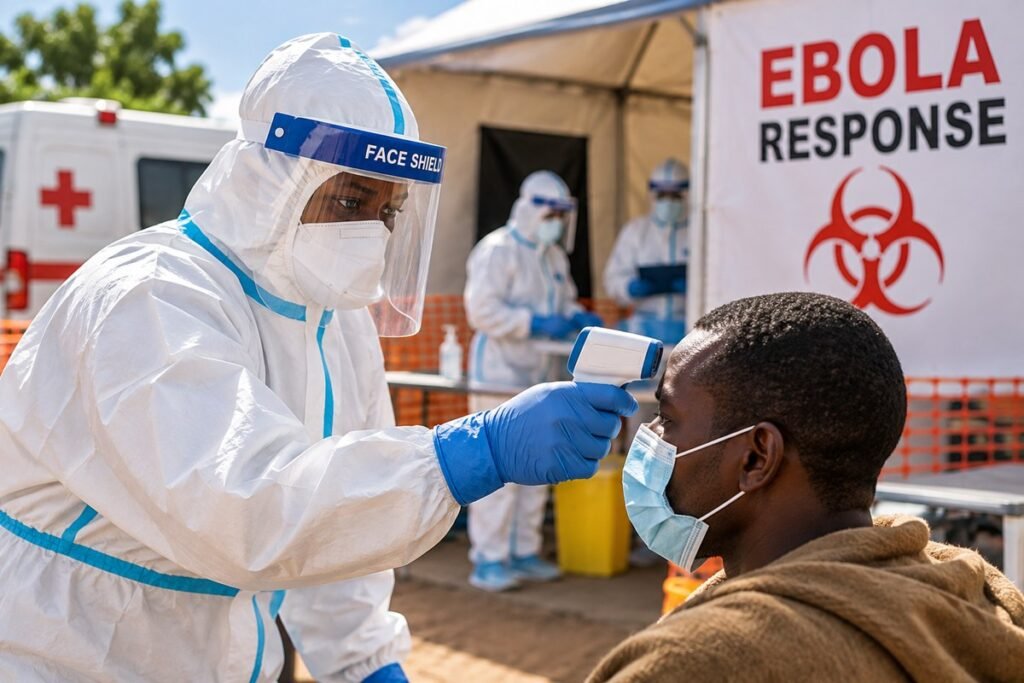
According to WHO, health teams identified 130 contacts linked to Kenya’s first case. By 16 October, 127 were in quarantine and undergoing daily checks for symptoms. The remaining contacts were still being traced.
Contacts are monitored for 21 days after their last possible exposure, reflecting the maximum recognised incubation period for Ebola virus disease. Anyone who develops symptoms requires prompt assessment, testing and isolation where indicated.
The third case was detected after the patient developed symptoms while already in quarantine. This demonstrates how contact tracing and active monitoring can help identify infections before they lead to wider exposure.
However, additional cases among known contacts remain possible until the monitoring period is complete.
What is Bundibugyo Ebola?
Bundibugyo Ebola virus disease is a severe illness caused by Bundibugyo virus, one of the viruses known to cause Ebola disease.
The infection can initially resemble common illnesses such as malaria, making a combination of symptom assessment, exposure history and laboratory testing important.
Early symptoms may include:
- Fever and unusual tiredness.
- Headache and muscle or joint pain.
- Sore throat.
- Vomiting and diarrhoea as the illness progresses.
- Impaired kidney or liver function in severe cases.
Ebola does not spread through the air like measles or influenza. Transmission occurs through direct contact with the blood or other body fluids of a symptomatic infected person, a person who has died from the disease, or objects contaminated with infectious fluids.
People who have been exposed should follow public health instructions and seek immediate assessment if symptoms develop. They should disclose their travel and exposure history to healthcare workers.
Is Kenya facing community transmission?
As of 16 October 2026, WHO reported that Kenya’s three confirmed cases were linked to the first imported case and that there was no evidence of community transmission.
This is an important distinction: three confirmed cases do not, by themselves, mean that the virus is spreading widely within the community.
The situation nevertheless requires continued vigilance. Contact tracing, quarantine, laboratory testing, infection prevention and control, and surveillance at points of entry remain central to limiting transmission.
Kenya’s response is being led by the Ministry of Health, working with the Kenya National Public Health Institute, county health teams and WHO. WHO has provided technical assistance, protective equipment, testing supplies and support for surveillance, risk communication and patient care.
Authorities continue to encourage people to cooperate with contact tracing teams and avoid spreading unverified information about suspected cases.
Treatment and vaccine considerations
There is currently no licensed vaccine or specific approved treatment for Bundibugyo Ebola virus disease. This differs from some other Ebola virus species for which vaccines or targeted treatments are available.
Patients receive supportive care, including fluids to prevent dehydration, management of symptoms and treatment of complications. WHO notes that early supportive care can improve the chances of survival.
Research into vaccines and other countermeasures against Bundibugyo virus is ongoing. Until effective, licensed options become available, early identification, isolation, safe clinical care and prevention of exposure remain essential components of the response.
What should the public do?
The public should rely on updates from the Ministry of Health and WHO rather than rumours or unverified social media posts.
People who have been identified as contacts should comply with quarantine and monitoring instructions. Anyone who believes they may have had direct exposure to an Ebola patient should contact public health authorities for guidance.
Communities should avoid stigma or discrimination against patients, their relatives, healthcare workers and people who have completed quarantine. Support and cooperation help response teams identify cases and contain transmission.
WHO has advised against general border closures or restrictions on trade and travel in response to the outbreak. Kenya’s response continues to focus on surveillance, early detection and targeted public health measures.
Regional outbreak adds to preparedness concerns
Kenya’s cases are linked to the wider Ebola outbreak in the DRC, where Bundibugyo virus disease has caused thousands of infections and deaths.
The European Centre for Disease Prevention and Control reported that, as of 15 October, the DRC had recorded 9,277 confirmed cases and 4,478 related deaths, based on data available through 14 October. The outbreak has placed substantial pressure on affected health systems and response teams.
The regional situation reinforces the need for cross-border information sharing, well-equipped laboratories, trained health workers, effective referral systems and reliable emergency financing.
For Kenya, the immediate priority is to identify all contacts, complete the monitoring period and prevent further transmission while maintaining routine healthcare services.
The way forward
Kenya’s third confirmed case underscores both the risks associated with imported infections and the value of rapid detection.
The patient was already in quarantine when she developed symptoms, allowing health teams to identify the infection and transfer her for care. That is an encouraging sign for the response, but the risk cannot be considered over while contacts remain under monitoring.
The coming days will be important as authorities continue tracing outstanding contacts and assess whether any additional infections emerge.
The public health objective is clear: detect infections early, provide timely care, protect health workers and communities, and prevent the outbreak from spreading beyond known contacts.

Discussion