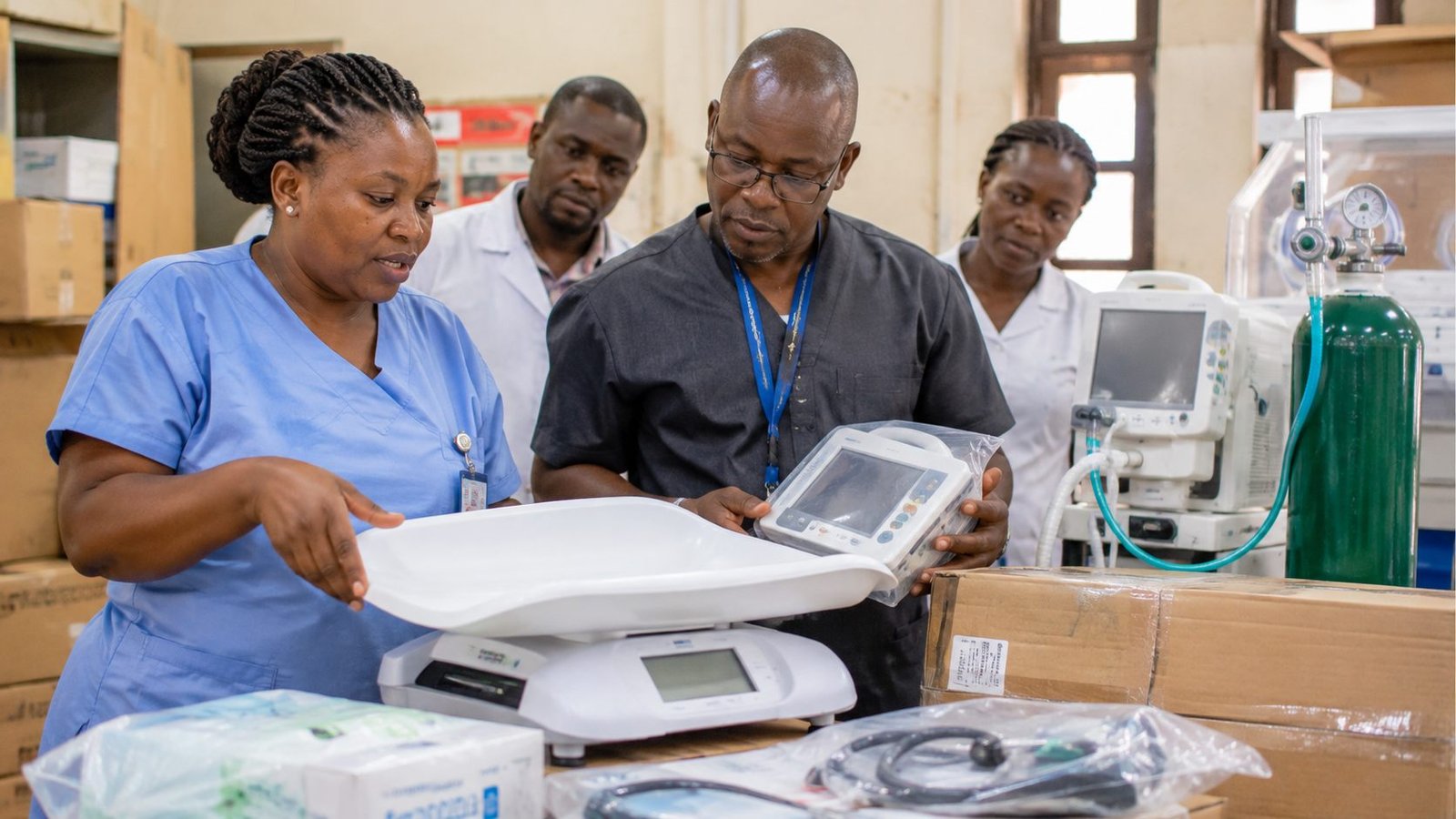
Freetown, Sierra Leone — 16 November 2026 — Medical equipment and supplies supported by China and implemented by UNICEF have been handed over in Freetown under the project “Accelerating Newborn and Child Health in Sierra Leone”, in an effort to strengthen care for mothers and children. The Chinese Embassy says the supplies were handed over on 16 November and will be distributed to health facilities across the country to address gaps in newborn diagnosis and treatment.
Equipment package includes oxygen and emergency-care infrastructure
Local reports describe a package valued at about US$2.6 million and identify the Princess Christian Maternity Hospital and Ola During Children’s Hospital among the recipient facilities. The reported package includes an oxygen plant, a new emergency ward, 7,200 surgical and maternity packs and other medical supplies. The Chinese Embassy’s official handover notice confirms the project and the 16 November ceremony, but does not provide the full equipment list, valuation or hospital-by-hospital allocation.
According to Sierra Leone Today and SwitSalone, the oxygen plant is valued at US$1.2 million and the emergency ward at approximately US$400,000. These figures and details come from local reporting, rather than the embassy’s short notice. The reports say biomedical officers have been trained to operate the oxygen plant, a critical requirement for maintaining equipment and avoiding reliance on external technicians.
Maternal and newborn care requires more than equipment
Oxygen supply, emergency facilities, surgical and maternity packs and reliable medical equipment can support health workers responding to complications during pregnancy, labour, delivery and the newborn period. However, the effect on mortality or morbidity will depend on how the equipment is installed, maintained and used, and whether facilities have adequate staff, medicines, electricity, referral transport and clinical protocols.
The project is part of wider cooperation between Sierra Leone, China and UNICEF to improve newborn and child health. Local reports also mention contributions from Doctors with Africa CUAMM and the Global Fund in the broader package. The official embassy notice says the supplies are to be distributed to relevant medical institutions across Sierra Leone, with the aim of improving the full service chain for newborn and child diagnosis and treatment.
Maintenance and distribution will determine sustainability
Hospitals receiving new equipment need plans for maintenance, spare parts, consumables, quality assurance, staff training and power reliability. Oxygen plants in particular require technical oversight and regular servicing. The availability of equipment is only one part of the care pathway; timely recognition of complications, skilled birth attendance, emergency obstetric care, neonatal resuscitation and referral systems remain essential.
For Sierra Leone, the investment may help address infrastructure gaps, but the government and facility managers will need to publish information on distribution, operational readiness and service use. Monitoring could include equipment uptime, oxygen availability, emergency-care capacity, staff competency, referral delays and patient outcomes. Such information would help determine whether the donation is translating into improved care beyond the handover ceremony.
Handover date differs across local reports
The Chinese Embassy’s notice and Sierra Leone Today and SwitSalone report the handover as taking place on 16 November. TruthMedia’s report gives 2 November as the date of the donation ceremony. The date discrepancy could not be resolved through the sources reviewed, so this article uses the embassy’s 16 November handover date while flagging the conflicting report.
Related Health Signal Africa coverage: Africa Health Briefing, 20 November and the World & Health page.
Sources and limitations
- Chinese Embassy in Sierra Leone, 18 November 2026: official handover notice.
- Sierra Leone Today, 20 November 2026: equipment handover and reported package details.
- SwitSalone, 19 November 2026: hospital equipment report.
- TruthMedia: donation report with a different ceremony date.
Limitations: The official embassy notice confirms the handover and project but not the US$2.6 million valuation or facility-level allocation. Those details are attributed to local reporting. The handover date is inconsistent across reports. No independent evaluation of the equipment’s operational status or impact on maternal and newborn outcomes was identified.
Discussion