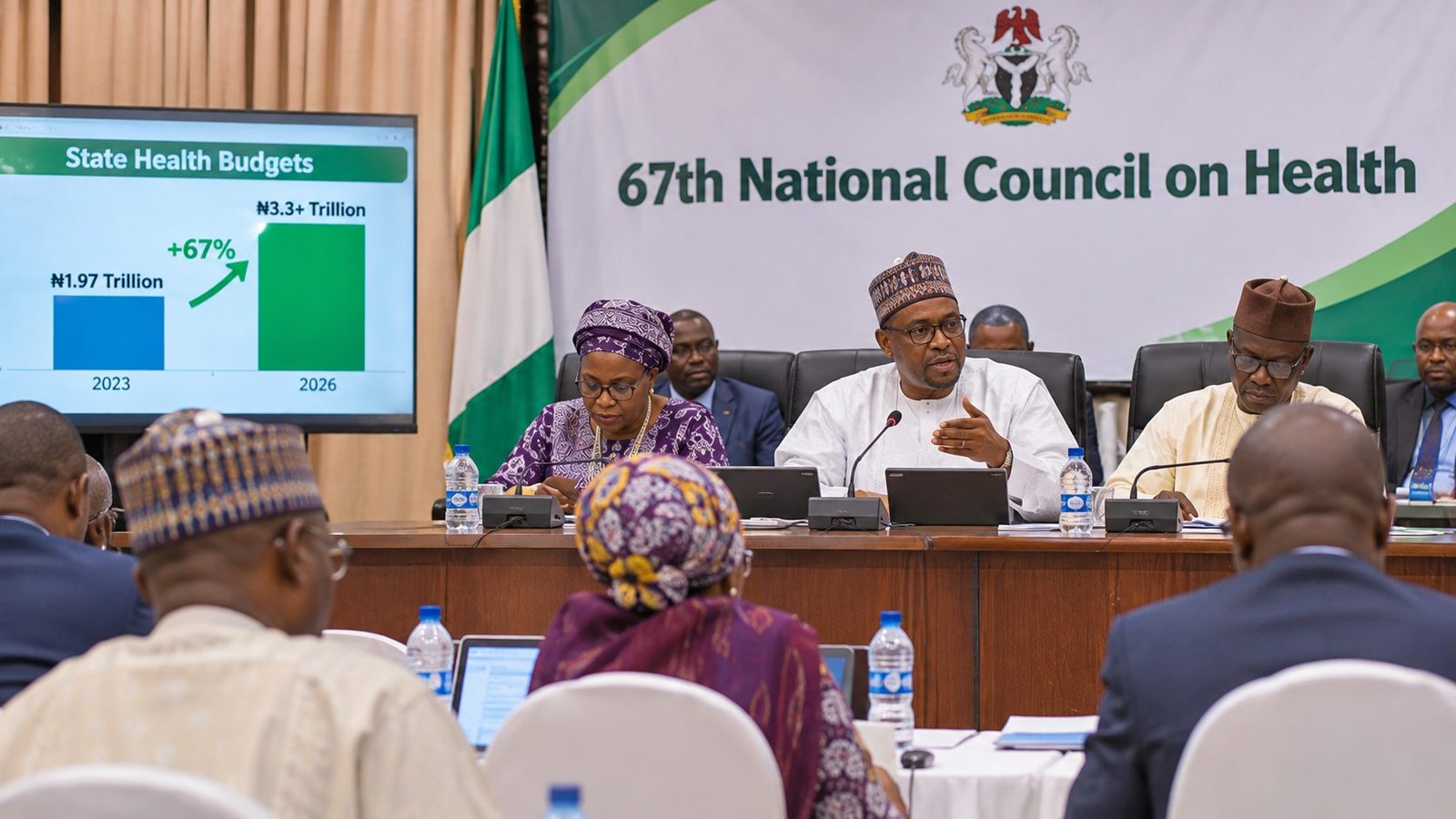
Lafia, Nigeria — 19 November 2026 — State governments in Nigeria have increased their combined health budget allocations from ₦1.97 trillion in 2023 to more than ₦3.3 trillion in 2026, a rise of over 67 per cent, according to Coordinating Minister of Health and Social Welfare Muhammad Ali Pate. The figures were presented at the 67th National Council on Health in Lafia, where officials were urged to focus on implementation and ensuring budgeted resources reach services.
Health financing and insurance coverage have expanded
Pate said health insurance enrolment had risen from 16 million people in 2023 to nearly 24 million. He also reported an increase in skilled deliveries in facilities supported by the Basic Health Care Provision Fund, from 4.8 million in 2023 to nearly eight million by mid-2026, and said fourth antenatal care visits had reached 8.7 million. These are government-reported progress indicators, not an independent evaluation of service quality or outcomes.
The minister also reported that nearly 20,000 skilled birth attendants had been recruited across 22 states, about 5,000 community health workers had been engaged in 10 states and close to 80,000 frontline health workers had been retrained through federal and state interventions. He cited more than 80,000 caesarean sections supported by the Free Emergency Obstetric Care Programme, vaccination of over 100 million children against measles and rubella, and vaccination of more than 17 million adolescent girls against HPV.
Budget growth does not guarantee spending or equitable services
The increase in appropriations is important, but budgets are not the same as funds released, money spent or services delivered. States still need to demonstrate that allocations are executed on time, that spending reaches primary-care facilities and that essential medicines, equipment, staff and referrals are available. Rural and underserved communities may not benefit if investment remains concentrated in urban facilities or if staffing and supply-chain gaps persist.
The minister emphasised this implementation challenge. Of 740 reports expected on the resolutions adopted at the previous National Council on Health, only 412 were received, representing 56 per cent. No state submitted reports covering all 20 resolutions. Pate called for stronger monitoring, clear responsibilities, deadlines and quarterly reporting through the council’s resolutions dashboard.
Local production and health-system reform
Domestic financing is being linked with efforts to expand local manufacturing. Pate said 10 pharmaceutical and medical production facilities had been commissioned, with products including medicines, rapid diagnostic tests, mosquito nets and medical oxygen. The government has also highlighted tax incentives for manufacturers. These claims require continued scrutiny of production volumes, quality assurance, affordability, procurement and the extent to which locally manufactured products are reaching health facilities.
Health insurance growth may improve financial protection, but the impact depends on benefit coverage, provider availability, timely reimbursement and whether households continue to pay out of pocket for medicines and services. Nigeria’s health system must also address noncommunicable diseases, maternal and newborn health, emergency care, mental health and prevention while strengthening primary healthcare.
Accountability is the next test
The National Council on Health provides a forum for federal and state officials to agree priorities. The minister’s call for funded, measurable resolutions reflects a longstanding gap between policy commitments and implementation. Transparent reporting of releases, expenditure, facility readiness, workforce distribution and patient outcomes would help the public assess whether increased budgets are improving access and quality.
For states, the challenge is to protect health allocations amid competing demands and uncertain external assistance. For federal agencies, it is to support states with technical assistance, data, procurement and monitoring. For communities, meaningful accountability requires accessible information on where services are available and how complaints can be resolved.
Related Health Signal Africa coverage: Kenya’s SHA cancer-treatment benefit and approvals and CPHIA 2026 health financing priorities.
Sources and limitations
- Federal Ministry of Health and Social Welfare, 19 November 2026: National Council on Health address.
- Vanguard, 19 November 2026: state health budgets rise 67 per cent.
Limitations: The announcement was published 19 November, slightly outside the strict 24–48-hour window. Budget figures and programme achievements are ministerial statements. State allocations do not establish actual releases or expenditure, and the reported indicators have not been independently audited for this article.


Discussion