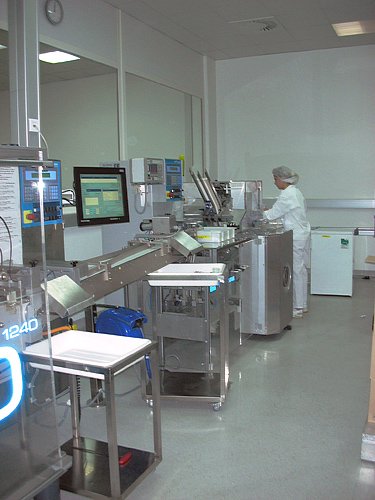
Addis Ababa, Ethiopia — 24 November 2026 — Ethiopia’s domestic pharmaceutical industry is gaining ground, with locally manufactured medicines and health products reported to have increased their share of the national market from 8 per cent to 44 per cent. The figure was announced by Health Minister Mekdes Daba in August and was revisited in a sector feature published by Fana on 23 November.
The reported expansion is part of Ethiopia’s effort to reduce reliance on imported health products, strengthen supply resilience and build local industry. The Ethiopian News Agency reported on 25 August that the minister presented the 8-to-44 per cent increase during the opening of the WHO Regional Committee for Africa session in Addis Ababa.
Regulatory progress and industrial investment are supporting production
Ethiopia’s regulatory system achieved World Health Organization Maturity Level 3 for medicines regulation in September 2025, a designation that reflects a stable, well-functioning and integrated national regulatory system. The World Bank’s May 2026 feature on Ethiopia’s pharmaceutical sector says local production exceeds 40 per cent of medicine supply, and describes regulatory strengthening, the Kilinto Special Economic Zone and research institutions as parts of the manufacturing ecosystem.
Local production can improve resilience when global supply chains are disrupted, support jobs and reduce pressure on foreign exchange. But capacity is not measured only by the percentage of products assembled or manufactured domestically. Manufacturers need reliable inputs, quality-control laboratories, skilled workers, financing, regulatory oversight and buyers willing to procure locally produced products.
Market share and public procurement are different measures
A peer-reviewed analysis published in the Bulletin of the World Health Organization reports that local manufacturers supplied 23 per cent of the Ethiopian Pharmaceuticals Supply Service’s Revolving Drug Fund procurement in 2024, against a 60 per cent target. It also found that 11 manufacturers were operational, six facilities had achieved national good manufacturing practice compliance, and locally produced coverage of the National Essential Medicines List had expanded from 90 to 140 chemical entities across 167 dosage forms.
The 44 per cent figure announced by the health minister refers to the domestic market share of local medicines and health products, while the 23 per cent figure concerns public procurement. The measures have different denominators and should not be treated as directly contradictory or interchangeable. They do, however, show why procurement data and market data need to be published with clear definitions and dates.
Import dependence remains in the production chain
The WHO-reviewed analysis also identified constraints, including foreign-exchange and financing limitations, dependence on imported active pharmaceutical ingredients and other raw materials, and gaps in export, workforce and prequalification targets. These barriers can limit affordability, production continuity and the ability to supply regional markets even as the number of locally produced medicines grows.
What comes next for Ethiopia and the wider region
The next stage will require stable procurement policies, transparent product-quality standards, investment in research and development, and manufacturers able to compete on price and reliability. Local production must translate into medicines that are available, quality-assured and affordable for patients—not only increased factory output.
For other African countries pursuing pharmaceutical resilience, Ethiopia’s experience illustrates both the value of regulatory capacity and the need to track public procurement separately from total market supply. Health Signal Africa has also covered Kenya’s collaboration on local pharmaceutical manufacturing and digital health.
Sources
- Fana Media Corporation, 23 November 2026.
- Ethiopian News Agency, 25 August 2026: health minister’s 44 per cent figure.
- World Bank, 26 May 2026: local production, regulation and manufacturing capacity.
- Peer-reviewed analysis in the Bulletin of the World Health Organization (PubMed record); DOI: 10.2471/BLT.25.295594.
- WHO, 30 September 2025: regulatory maturity milestone.
Limitations: The 44 per cent figure was announced by the health minister in August, not released as a newly audited dataset in November. The 23 per cent metric refers to Ethiopian Pharmaceuticals Supply Service’s Revolving Drug Fund procurement in 2024, not the overall market. The PubMed record was accessible, but the full PMC page returned an access challenge; the procurement figure remains source-reported pending full-text review.


Discussion