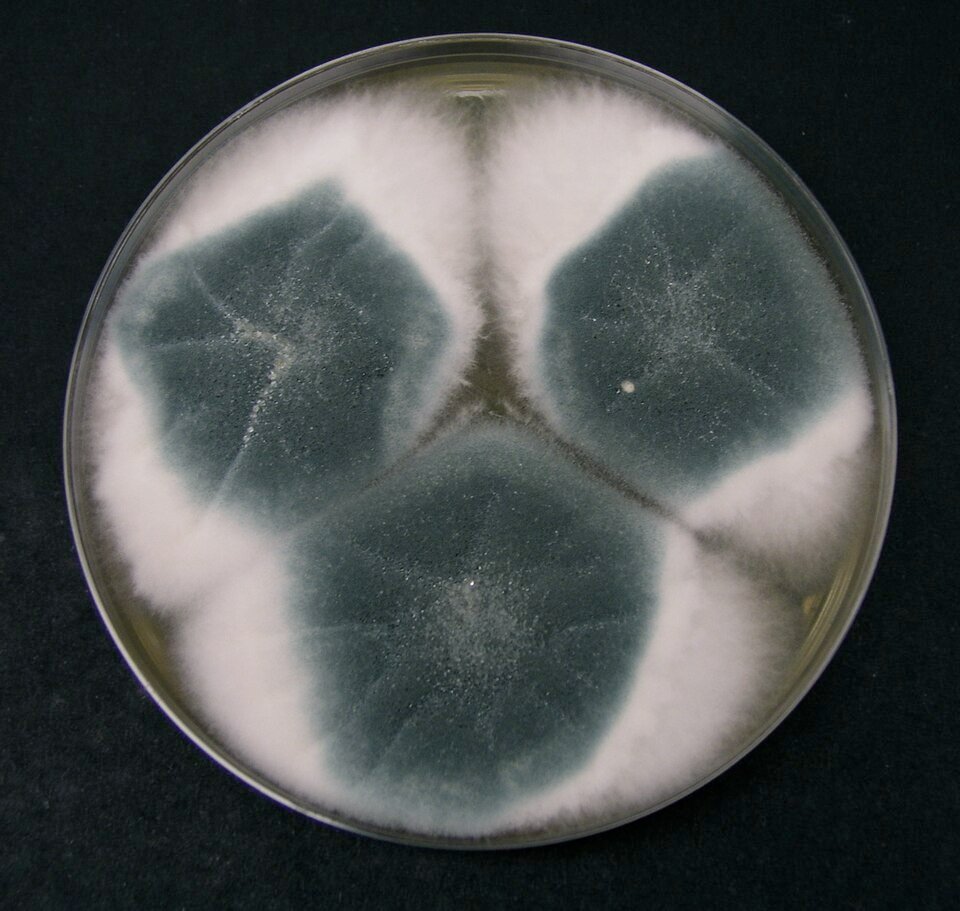
Yaoundé, Cameroon — 24 November 2026 — A study of environmental and human-associated populations of Aspergillus fumigatus in Yaoundé has found widespread resistance to antifungal medicines known as triazoles, raising questions about environmental exposure, treatment options and the need for surveillance in Africa.
Image: A culture of Aspergillus fumigatus grown from soil. Photo: Dr David Midgley, CC BY-SA 2.5. Illustrative; not a sample from the Cameroon study.
The research, published on 17 November in Genes, analysed 136 isolates from five ecological niches—air, soil, humans, corn and groundnuts—in Cameroon’s capital. The researchers tested the samples against two clinical triazoles, itraconazole and voriconazole, and two agricultural triazoles, difenoconazole and tebuconazole.
Resistance was detected across different ecological niches
Forty-two per cent of the isolates were resistant to at least one of the four triazoles tested, while 17 per cent were cross-resistant to two or three. Resistant strains were found in all five ecological populations, although the study reported higher minimum inhibitory concentrations in air samples than in most other groups. The analysis identified 127 multilocus genotypes among the 136 isolates, indicating substantial genetic diversity.
A. fumigatus is a common environmental mould. It usually poses little risk to healthy people, but it can cause serious invasive infection, particularly in people with weakened immune systems or certain underlying conditions. Triazole medicines are important treatment options for aspergillosis, making resistance clinically relevant.
Environmental and clinical exposure may be connected
The researchers discuss the possibility that agricultural fungicide use could select for resistant fungal populations. Some agricultural chemicals use azole compounds related to those used in human medicine. The study found limited genetic separation between ecological populations, which is consistent with movement or connectivity between niches, but it does not establish that farm fungicides caused the resistance observed or that resistant environmental strains are producing a specific burden of human disease.
McMaster University, whose researchers led the study, said the findings add evidence from a region where environmental triazole resistance has been less studied. Its summary also notes that direct comparisons with earlier Canadian and Chinese studies are difficult because those investigations examined soil populations only.
Why surveillance matters for African health systems
Fungal resistance is not limited to hospital laboratories. Environmental sampling can help identify resistance patterns that may be missed when surveillance focuses only on patients. Clinicians need access to appropriate diagnostics and susceptibility testing, while agricultural authorities and public-health agencies need to understand how fungicide use, crop practices and environmental conditions may affect resistant organisms.
Priorities include expanding laboratory capacity, reporting resistance patterns, reviewing agricultural fungicide stewardship and strengthening collaboration between clinical microbiology, agriculture and environmental surveillance. The findings are relevant to Africa’s wider antimicrobial-resistance agenda; Health Signal Africa has previously reported on Kenya’s AMR report and One Health guidelines.
What the study does—and does not—show
The study is a local investigation of isolates collected in Yaoundé, not a national prevalence survey. Its results cannot be extrapolated to all of Cameroon or Africa, and it did not measure treatment outcomes in patients. The authors’ proposed environmental links require further investigation. Nevertheless, finding resistant isolates across multiple ecological niches provides a reason to strengthen surveillance before the burden of resistant fungal disease is better understood.
Sources
- Primary study, Genes, 17 November 2026.
- McMaster University research summary, 23 November 2026.
- Image source and licence: Wikimedia Commons, Dr David Midgley, CC BY-SA 2.5.
Limitations: The sample size is 136 isolates and the study is geographically limited to Yaoundé. It does not establish the cause of resistance, national prevalence or clinical treatment outcomes.




Discussion