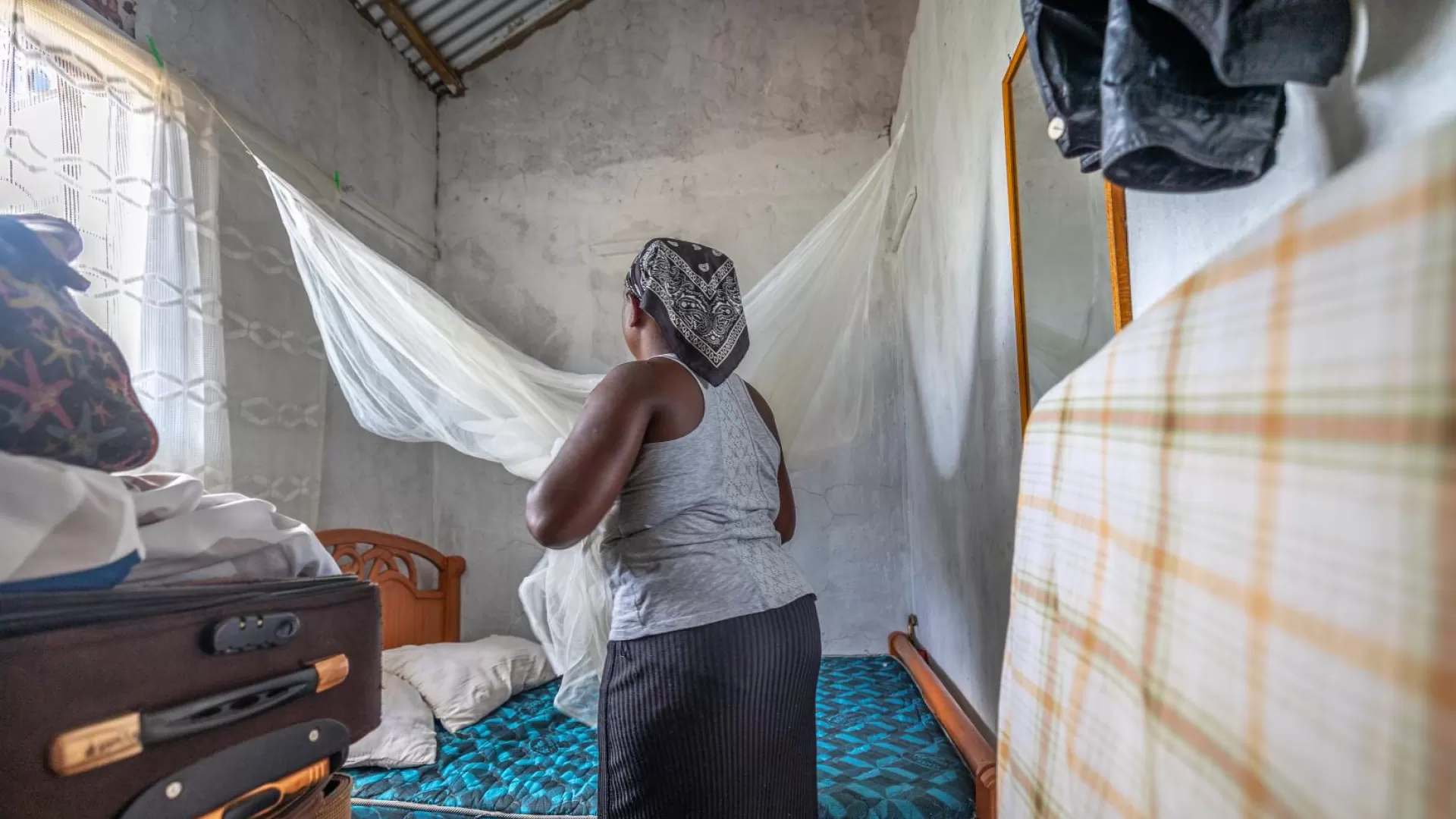
Nairobi, Kenya — 20 November 2026 — Kenya has launched a campaign to distribute almost 10.8 million insecticide-treated mosquito nets across 18 malaria-endemic counties, targeting 99 sub-counties as the country works to protect households from malaria. The campaign began on 19 November at Bayula Stadium in Sirisia Sub-County, Bungoma County, according to the World Health Organization (WHO).
The 2026–2027 campaign is part of Kenya’s malaria prevention strategy. Its immediate task is to reach households with nets, while county teams and community health workers help ensure that families receive, use and maintain the protection. The launch is a start of distribution, not evidence that all planned nets have already reached households.
Coverage gaps leave families exposed
Kenya’s 2025–2026 Mini Demographic and Health Survey found that 41% of households had at least one insecticide-treated net, down from 54% in 2022. The WHO release also reports that only 42% of children under five and 39% of pregnant women slept under a net the night before the survey. These indicators suggest that distribution alone is not enough: households need sufficient nets, nets in usable condition and consistent access to protection.
Children and pregnant women are particularly vulnerable to malaria. In high-transmission settings, infection can contribute to severe illness, anaemia, pregnancy complications and death. The campaign is intended to restore household protection in areas where malaria remains a major public-health burden.
Newer nets and digital tracking are part of the campaign
Kenya is also introducing dual-active-ingredient insecticide-treated nets in areas where resistance to conventional insecticides is a concern. These products are designed to improve mosquito control where resistance has reduced the effectiveness of older insecticide classes. The choice of net type should be guided by local resistance data and national policy, rather than assuming that one product is appropriate everywhere.
WHO says the campaign will use Digimal KE for household verification, distribution tracking and real-time monitoring. KBC refers to the platform as DigiMO. The sources use different names, and we could not confirm whether they refer to the same system; this article therefore describes the campaign’s digital tracking platform without assuming the names are interchangeable. The system could help programme managers identify missed households, but no performance data have been published.
What counties and communities need to do next
County and community teams will need to ensure that distribution is transparent, that households receive the correct number of nets and that people understand how to hang and use them every night. Nets should be maintained according to manufacturer guidance and replaced when no longer usable. Community health workers can help identify families that were missed and reinforce malaria prevention messages.
Net campaigns are one part of malaria control. They must be accompanied by access to rapid diagnosis, effective treatment, prevention in pregnancy, seasonal or perennial chemoprevention where recommended, indoor residual spraying in selected settings and surveillance that detects changes in transmission. People with fever should seek testing and appropriate treatment rather than rely on nets alone.
Delivery will determine whether the campaign restores coverage
The Ministry of Health and county governments are responsible for planning and monitoring the distribution, with community health teams and partners supporting implementation. The priority is to reach all eligible households, including remote and mobile communities, and to report delivery against the 10.8 million-net target transparently. County-level allocation, distribution progress and post-campaign use surveys will be important measures of whether the campaign improves protection.
Sources
WHO Africa: Kenya launches 10.8 million-net campaign; KBC: Campaign targets 99 sub-counties and reports DigiMO digital tracking.
Limitations: Distribution has only begun. County-level delivery figures, net-use outcomes and the digital platform’s performance have not yet been reported.


Discussion