Bunia, Democratic Republic of the Congo — The Bundibugyo Ebola outbreak in the Democratic Republic of the Congo (DRC) remains widespread six months after it was declared, as new warnings from Africa’s public-health agency and Médecins Sans Frontières (MSF) describe attacks on responders, gaps in surveillance and shortages affecting frontline care. The latest European Centre for Disease Prevention and Control (ECDC) update records 11,114 confirmed cases and 5,433 deaths, while health authorities say insecurity is making it harder to trace contacts and reach affected communities.
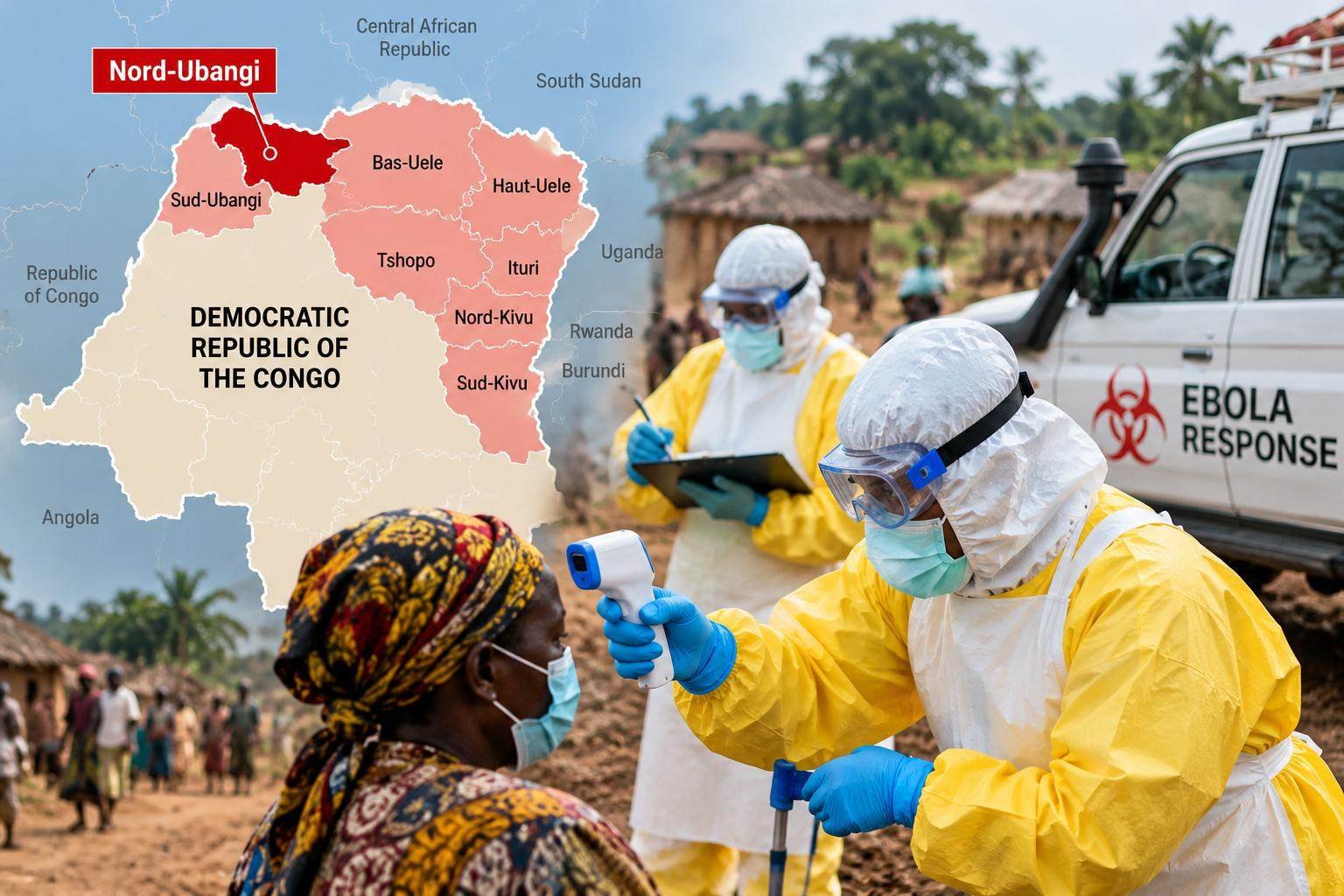
Illustrative image: Ebola outbreak surveillance and contact tracing in the Democratic Republic of the Congo. Not a photograph of the current outbreak.
Confirmed cases exceed 11,000 across eight provinces
ECDC’s update of 12 November says the DRC had reported 11,114 confirmed cases and 5,433 related deaths as of 11 November, using data through 10 November. The report recorded 981 patients hospitalised in isolation, 3,031 recoveries and 85.5% of identified contacts under follow-up. A further 72 confirmed cases and 46 deaths were recorded between the latest reporting cut-offs. The figures remain subject to review and harmonisation by Congolese authorities.
The outbreak has affected 67 health zones across eight provinces. Ituri remains the most affected province, with 7,728 confirmed cases and 3,655 deaths, while North Kivu had 2,761 cases and 1,523 deaths. Smaller totals have been recorded in Haut-Uélé, Tshopo, South Kivu, Bas-Uélé, South Ubangi and North Ubangi. ECDC’s figures describe confirmed cases and should not be interpreted as a complete count of all infections, particularly in areas where surveillance teams cannot operate consistently.
Africa CDC reports attacks on responders and health facilities
At a press briefing on 12 November, Africa CDC warned that violence was increasingly obstructing the Ebola response in eastern DRC. The agency reported four armed attacks, 16 assaults on responders and 11 health facilities that had been burned or otherwise targeted. It said the incidents had become more deadly since late September.
A particularly serious attack on Cantine-Aloya in North Kivu the previous week killed 66 people, including three health workers, according to Africa CDC. More than 1,000 contacts were subsequently lost to follow-up and three confirmed Ebola cases remained unaccounted for. The figures were reported by Africa CDC through Reuters and are operational security information, not a new epidemiological case count.
WHO Director-General Tedros Adhanom Ghebreyesus also described insecurity as one of the greatest obstacles to the response, warning that attacks restrict humanitarian access, interrupt operations and make it harder to reach communities quickly. When teams cannot safely investigate alerts or follow contacts, suspected cases may remain undetected and transmission chains become more difficult to reconstruct.
MSF says resources are not consistently reaching frontline teams
In a statement released on 12 November, MSF said that substantial international resources had been mobilised for the response but were not consistently reaching patients, health workers and communities. The organisation described personnel who were unpaid or inadequately trained, some staff on strike, ambulances and vehicles without fuel, surveillance teams that were absent from the field, and community workers without phones or mobile data to transmit alerts.
MSF said close to two-thirds of reported Ebola-related deaths in the previous month occurred in communities rather than treatment centres. In Ituri, only 9% of Ebola patients treated by MSF teams had previously been identified as contacts by the surveillance system. The organisation also reported that close to three-quarters of Ebola patients in Beni health zone, North Kivu, were believed to have acquired infection in a healthcare facility. These are MSF’s operational observations from its own work, not national surveillance estimates.
MSF said its response covered five of the eight affected provinces in early November, with eight Ebola treatment centres and three rapid-response teams operating. It reported that about 1,500 confirmed patients had been admitted to MSF-supported facilities and that nearly 2,900 people were working directly for or financially supported by the organisation, about 90% of them locally recruited. MSF said it had allocated €64.6 million to its response, funded almost entirely through private donations. These figures describe MSF’s own programme, not the total DRC response.
Vaccine candidates remain under clinical evaluation
There is currently no licensed vaccine or specific approved treatment for Bundibugyo virus disease. WHO says the Tumaini Phase 2/3 vaccine trial was launched in Bunia on 23 October. Expert groups have recommended adding two candidates developed specifically for Bundibugyo virus — ChAdOx1, developed by the University of Oxford with the Serum Institute of India, and Moderna’s mRNA-1469 — to the trial for further evaluation, subject to national approvals.
The candidates are not licensed vaccines and have not been proven to prevent infection or improve outcomes in this outbreak. Their addition to a trial is a research step, not a replacement for immediate response measures. Early detection, supportive clinical care, isolation, contact tracing, safe burials, infection prevention and control, and trusted community engagement remain central to reducing transmission and deaths.
Health Signal Africa has previously covered the regional Ebola response and Kenya’s recovery milestone. The WHO’s 6 November outbreak update provides additional background on the virus, cross-border preparedness and the ongoing clinical research.
Regional preparedness remains essential
The outbreak has implications beyond the DRC. Kenya discharged its final Bundibugyo patient on 11 November and began the 42-day monitoring period required before an outbreak can be declared over, provided no new case is detected. Nigeria’s imported case was medically evacuated to Switzerland, where the patient has since recovered and been discharged. Nigerian authorities have continued monitoring contacts.
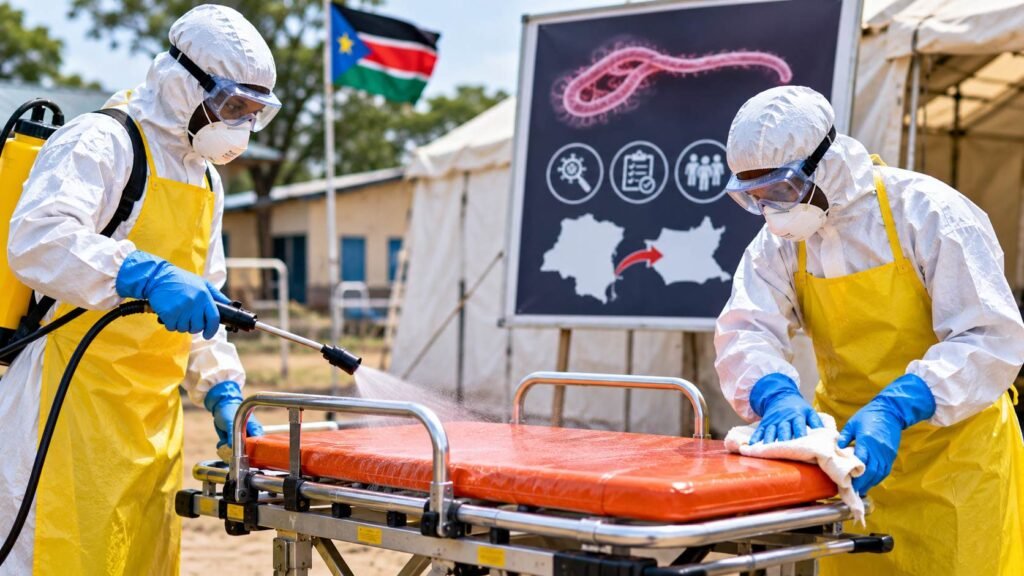
South Sudan has not reported a confirmed case, but WHO estimated the risk of virus importation at 99% in October, up from 67% in June. The country’s national readiness assessment stood at 72.5% at the end of October. A full-scale simulation exercise found that South Sudan could detect the virus but could not yet contain it safely, highlighting gaps in safe referral, infection prevention supplies, contact management and coordination between response pillars.
These developments show why neighbouring countries need sustained surveillance, laboratory capacity, trained clinical teams and clear cross-border information-sharing arrangements even when individual clusters appear contained. Preparedness scores and border screening are useful only when suspected cases can be safely isolated, tested and referred without delay.
What the response needs next
Immediate priorities include restoring safe access for response teams, protecting health workers, paying and training frontline personnel, replenishing essential supplies and ensuring that health facilities can safely triage and isolate suspected cases. Surveillance must reach beyond major treatment centres and include private clinics, pharmacies and traditional providers that may be the first point of contact for people seeking care.
Authorities and partners also need transparent oversight of how resources are allocated and used, with funding translated into functioning teams, transport, mobile data, laboratory services and infection prevention supplies. Routine healthcare must continue alongside outbreak operations so that maternal, child, HIV, TB and other essential services are not disrupted.
For the DRC, ending the outbreak will require more than increasing the number of treatment beds. Safe access, trusted community engagement, reliable surveillance, effective infection prevention and a supported local workforce must operate together. Without those foundations, the confirmed case count may continue to understate the scale of transmission and the epidemic may spread into areas with limited capacity to respond.
Sources and limitations
This article draws on the ECDC multi-country outbreak update, 12 November 2026; Reuters reporting on Africa CDC’s security briefing, 12 November; the MSF statement, 12 November; and the WHO Disease Outbreak News report, 6 November. ECDC’s confirmed totals use data through 10 November and remain subject to harmonisation. Africa CDC’s attack figures are attributed to its press briefing as reported by Reuters. MSF’s service and surveillance figures describe its own operational observations. Candidate vaccines remain under clinical evaluation and are not licensed countermeasures.

Discussion