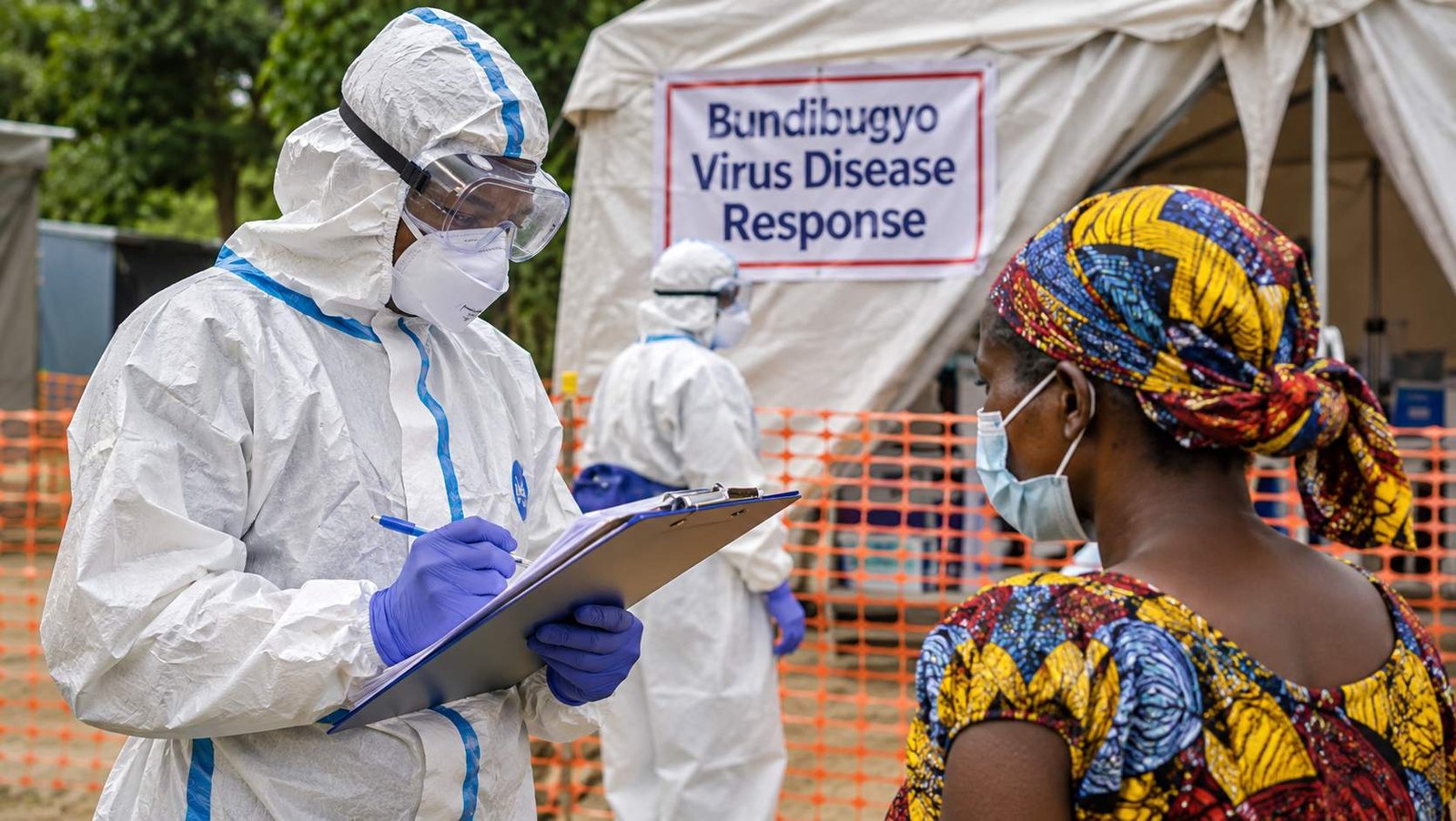
KINSHASA, 8 November 2026 — The Democratic Republic of the Congo continues to face sustained transmission of Bundibugyo virus disease, with the World Health Organization reporting 10,668 confirmed cases and 5,198 deaths across eight provinces as of 3 November. The latest WHO Disease Outbreak News, published on 6 November, says the outbreak remains active in 51 of the 67 health zones that have reported confirmed infections.
The figures show the scale of a prolonged emergency, but the distribution of deaths is particularly concerning. Of 512 deaths reported in the DRC since 21 October, 335 occurred in communities and 177 in treatment centres. WHO says the high proportion of community deaths, especially among young children, continues to highlight challenges in early case detection and timely access to appropriate care.
Community deaths point to gaps before patients reach treatment
A death recorded in a community does not, by itself, explain why a patient did not reach a treatment centre. It may reflect delays in recognising symptoms, difficulty travelling to a facility, fear of isolation, insecurity, limited access to health services or other barriers. The WHO report does not assign a single cause to the 335 community deaths. It does, however, identify the pattern as a warning that the response must reach people earlier and closer to where they live.
The outbreak is also geographically extensive. Ituri remains the most affected province, with 7,485 cumulative confirmed cases and 3,532 deaths as of 3 November. North Kivu had recorded 2,593 confirmed cases and 1,422 deaths. In the preceding 21 days, Ituri reported 710 new confirmed cases and North Kivu 640. WHO says transmission has also continued in Haut-Uélé, Tshopo and several less-affected provinces.
These figures should be read with their reporting cut-off in mind. They are not a live count for 8 November and should not be presented as cases newly detected on the date of publication. WHO reported an additional 964 confirmed cases and 511 confirmed deaths in the DRC since its previous Disease Outbreak News of 23 October.
Contact follow-up remains below the operational target
Surveillance teams must identify and monitor people who have been exposed to confirmed cases so that symptoms can be detected quickly and further transmission limited. WHO reported that the average proportion of contacts seen daily during the 14 days before 3 November was 86%, below the 95% operational threshold used in the response.
Performance differed between provinces. Bas-Uélé, North-Ubangi and South-Ubangi were at or above the 95% threshold, while Haut-Uélé recorded 85%, Ituri 91%, Tshopo 71% and North Kivu 82%. WHO specifically called for stronger follow-up in provinces below the target. The percentages describe daily contact monitoring performance over a defined period, not the proportion of all exposed people ever identified.
Improving this measure requires more than adding contact-tracing teams. Investigators need reliable transport, secure communications, community trust, adequate staffing and practical arrangements for people who must remain available for daily monitoring. Local leaders and health workers also need to explain why follow-up matters and how information will be used.
The regional response must continue
WHO reported no new cases from Kenya or Nigeria since its previous Disease Outbreak News. That is an encouraging development, but it does not remove the need for surveillance. Kenya’s response remains under monitoring, while Nigeria has continued follow-up after its imported case. The DRC’s ongoing transmission means neighbouring countries still need the capacity to recognise, test and respond to suspected infections.
WHO has advised against restrictions on travel or trade with countries responding to the event. The organisation instead calls for cross-border surveillance, monitoring at points of entry, timely case detection and coordinated preparedness. Such measures are more targeted than broad restrictions and can protect public health while limiting unnecessary disruption to families, transport and commerce.
The central challenge in the DRC is therefore not only reducing the number of new infections. It is ensuring that people with symptoms can be identified and reach appropriate care before their condition deteriorates, while every identified contact receives timely follow-up. The latest figures show why that work remains urgent.

Discussion