Published in PLOS One on 2026-08-28, this study is presented as an attributed evidence briefing. The excerpts below are the original researchers’ words, reproduced under their Creative Commons Attribution licence. Health Signal has selected the abstract and, where needed, opening background paragraphs; the complete methods, results, limitations and references remain in the linked paper.
Original authors: Dessie Kassew, Jemal Yimer, Marcela Claudia Pagano, Fassil Assefa, Laith Khalil Tawfeeq Al-Ani, Kemachew Ayele, Belay Berza Beyene
Source: PLOS One • DOI 10.1371/journal.pone.0356876
Read the complete primary study ↗ · Creative Commons Attribution licence
From the researchers
Abstract
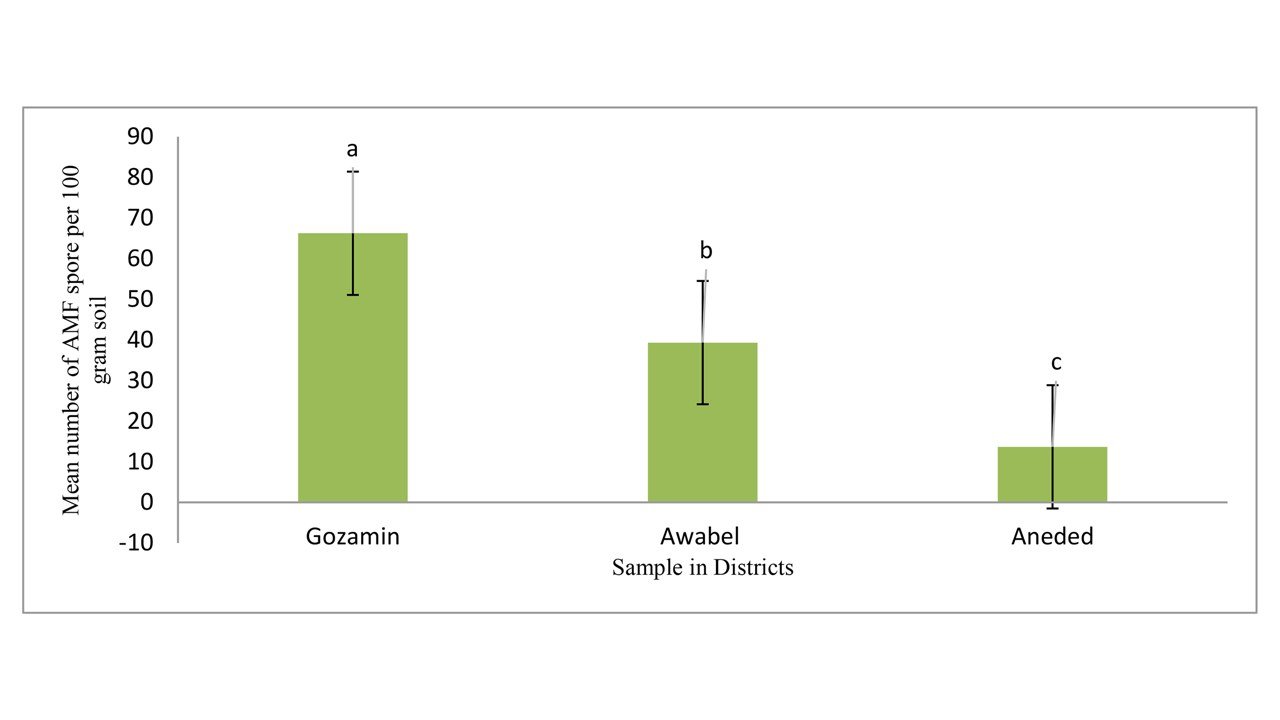
AMF play critical function in soil fertility and plant nutrition, especially in absorption and translocation of immobile nutrients. Farm and soil fertility management activities enhance crop yield; however, they either positively or negatively impact the AMF population and diversity. This study was aimed at assessing effects of farm and soil fertility management activities on AMF population density, species diversity and richness in North West Ethiopia. Soil samples were obtained from teff (Eragrostis tef) and maize (Zea mays) croplands. AMF spores were extracted, quantified, and identified. Average AMF spore population was varied significantly (p < 0.05) across districts, among specific sampling locations, and between crop types. Controls exhibited a higher average AMF population density (63.33 spores per 100 g dry soil) as compared to the average AMF population density of croplands (47.59 spores per 100 g dry soil). Maize croplands exhibited the highest average spore densities, up to 112.67 spores per 100 g dry soil and harboring a higher average AMF population density (66 spores per 100 g dry soil) as compared to the teff croplands (30 spores per 100 g dry soil). A total of 14 AMF morphotypes belonging into three genera were identified. Acaulospora and Pacispora were found dominant, while Acaulospora myricarpa and Pacispora franciscana were dominant species. Farm and soil fertility management practices decreased AMF population density and species diversity. Maintaining AMF population density and species diversity is needed to enhance soil health and crop productivity in the era of climate change to promote sustainable agriculture.
1. Introduction
Arbuscular mycorrhizal fungi (AMF) establish a mutual association with the roots of terrestrial plants. They play a critical role in enhancing health and productivity of agricultural ecosystems. These fungi also establish symbiotic associations with important cereal crops including economically vital crops such as teff (Eragrostis tef) and maize (Zea mays) [1]. The AMF-plant partnerships significantly enhance plant nutrient acquisition, particularly weakly mobile soil nutrients like phosphorus, nitrogen, potassium, and magnesium in agricultural ecosystems [2–5]. In addition to improving nutrient uptake, AMF enhance soil water retention capacity, improve plant health, and enhance resilience to numerous environmental stressors including drought, acidity and salinity stresses, and the presence of harmful soil compounds [1,2,6–8]. Moreover, the AMF contribution to the formation of stable soil structures, via glomalin synthesis is well established [1,6]. AMF often lead to healthier and more vigorous plant growth, increased biomass and yields even on nutrient-poor soils [9].
The AMF hyphae extend far beyond the plant’s root system, providing extensive surface area for nutrition absorption and translocation. AMF are more efficient in absorption and translocation of phosphorus (P), especially when it exists in less available forms in the soil. This is done by secreting enzymes and acidifying the plant rhizosphere [1,5]. More importantly, AMF form a common mycorrhizal network among nearby plant species which may be the same or different species and thereby share limiting nutrients among the nearby plants [10].
Reading this evidence
Use the full paper to check the study design, participant selection, comparator and outcome definitions before drawing a practical conclusion. An association does not by itself show cause and effect. A reported performance measure needs its denominator and uncertainty. A finding from a particular facility, sample or time period should retain that scope when it is discussed elsewhere.
This briefing makes the source accessible within the wider public health desk. It does not assess an individual patient or certify a product. When considering relevance to another health system, examine the original authors’ account of context and limitations, then seek local implementation evidence. The related reporting below provides other studies to read alongside this one; it is a topic connection, rather than a claim that their results are directly comparable.
© 2026 Dessie Kassew, Jemal Yimer, Marcela Claudia Pagano, Fassil Assefa, Laith Khalil Tawfeeq Al-Ani, Kemachew Ayele, Belay Berza Beyene. Excerpts reproduced under CC BY. Selection, formatting and contextual notes by Health Signal. The researchers are the authors of the source study, not members of Health Signal’s staff.
Explore connected evidence
- Evidence brief: Nutritional value of hora and mineral-enriched soil for cattle: Evaluation of mineral composition and physicochemical properties in southwestern Ethiopia
- Evidence brief: Optimizing nitrogen fertilizer via liquid bio-slurry equivalent ration for hot pepper (Capsicum annum L.) and soil productivity in Amhara Region, Ethiopia
- Evidence brief: Garlic (Allium sativum L.) yield and quality as affected by different integrated fertilizer levels in Wachemo University, southern Ethiopia


