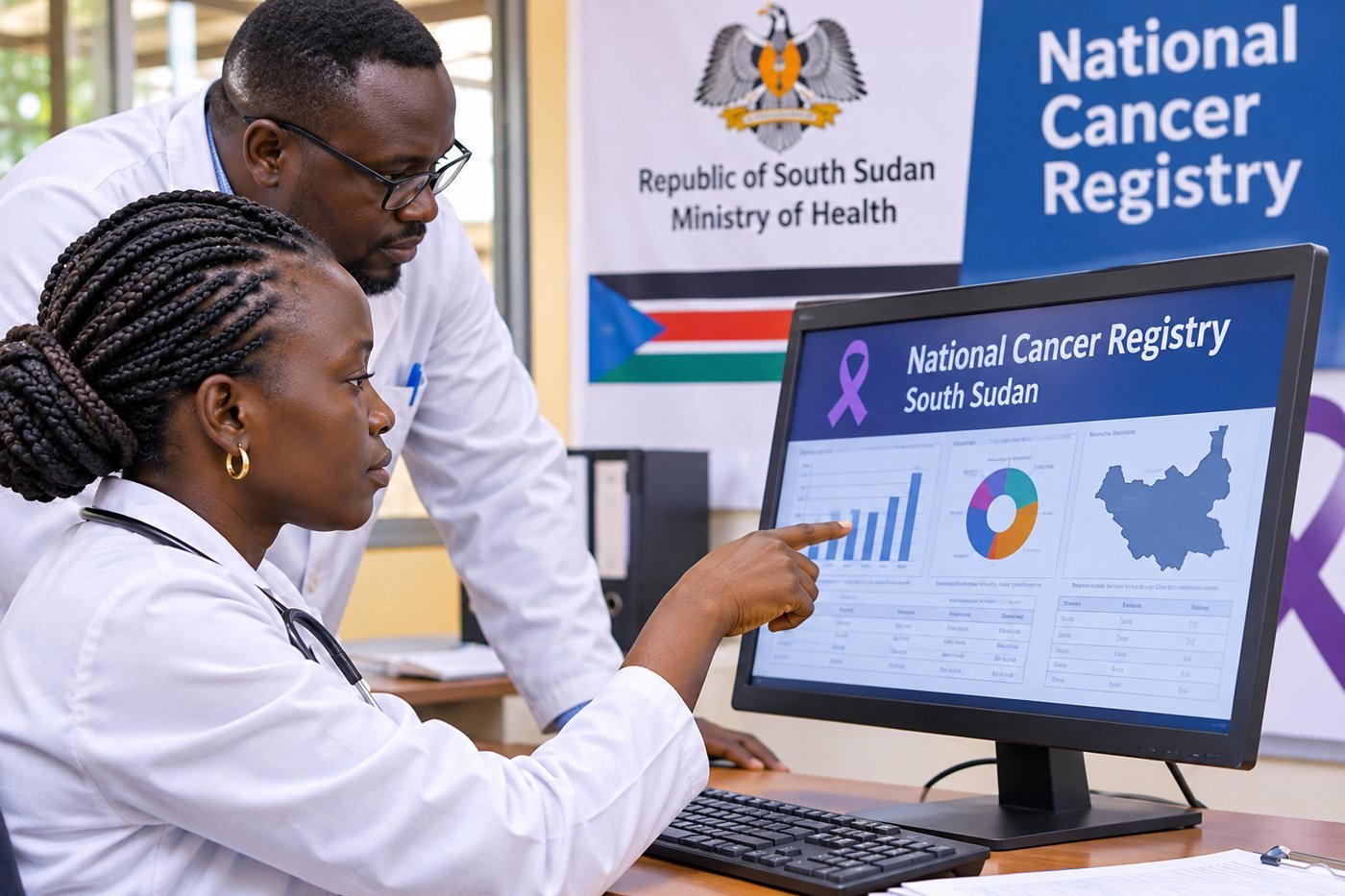
Juba, South Sudan – The country has established its first population-based cancer registry, marking an important development in efforts to strengthen cancer surveillance, improve disease planning and expand evidence-based healthcare services.
The registry was inaugurated at Juba Teaching Hospital on 5 November through collaboration between the Ministry of Health, South Sudan Cancer Network, WHO, the International Agency for Research on Cancer and the African Cancer Registry Network. WHO published its account on 9 November.
Moving from estimates to observed data
The International Agency for Research on Cancer estimated that South Sudan recorded more than 8,000 new cancer cases and over 5,000 cancer deaths in 2024. The country has faced substantial difficulties collecting, organising and reporting information on diagnosed cancer cases.
The new registry is expected to strengthen population-level information, helping authorities understand the most common cancers, the populations most affected and geographic differences in disease burden. Rather than relying predominantly on modelled estimates, health authorities can progressively build a more detailed picture using documented cases and verified information.
A registry does not immediately eliminate uncertainty. Its usefulness depends on how many facilities report cases, whether records are complete, how duplicates are identified and whether data are consistently reviewed. It should be viewed as a foundation for stronger surveillance rather than an instant census of every cancer case in the country.
Why cancer registries matter
Cancer registries provide information that supports national cancer-control programmes. They can help identify disease patterns, assess screening programmes, guide resource allocation and strengthen decisions about diagnostic and treatment services.
For countries with limited oncology infrastructure, this information can help determine where pathology services, imaging equipment, specialist treatment facilities and palliative care investments are most urgently needed. It can also help planners assess whether services are reaching rural communities and groups facing barriers to timely diagnosis.
WHO has supported the establishment of the registry through essential office equipment, computers, printers and technical guidance, including support for data-collection software. The next stage will require trained registrars, standard procedures for collecting and validating records, and sustained cooperation from hospitals and diagnostic centres.
A wider lesson for Africa
Many African countries continue to face gaps in cancer registration and reliable national cancer statistics. South Sudan’s initiative demonstrates the importance of building information systems alongside investments in hospitals and treatment equipment.
Establishing a registry is only the first step. Its long-term value will depend on sustainable financing, trained cancer registrars, standardised reporting, links with healthcare facilities and consistent data quality. Authorities will also need safeguards that protect patient confidentiality while allowing appropriately governed analysis for public health planning.
Turning cancer information into better services
Reliable data should ultimately inform practical decisions: where to strengthen pathology networks, which cancers require earlier detection strategies, how to plan referral pathways and where treatment capacity is most urgently needed. The registry will be most valuable when its findings are regularly analysed and used in national cancer-control planning.
Source: WHO Regional Office for Africa, “A landmark step for public health: South Sudan launches first-ever cancer registry”, 9 November 2026. WHO African Region.