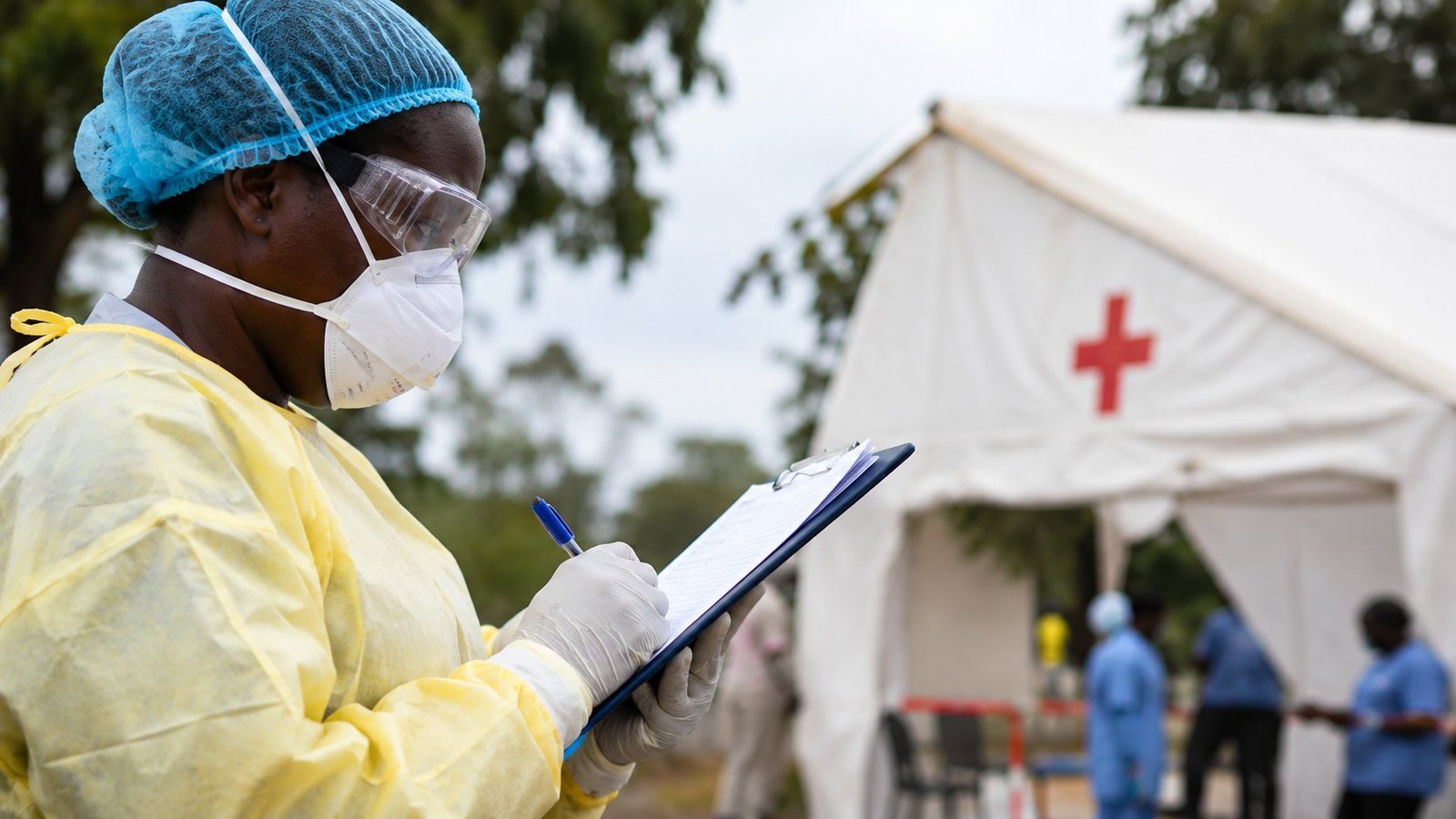
Nairobi, Kenya — 20 November 2026 — African health developments over the past 24–48 hours include Kenya’s launch of a large malaria-prevention campaign, new antimicrobial-resistance guidance, expansion of oral health services, a research-capacity agreement between WHO and EDCTP, and artificial intelligence tools for polio surveillance. Research presented in Mali raises questions about combining malaria prevention tools for infants. The briefing also tracks the continuing Bundibugyo Ebola outbreak in the Democratic Republic of the Congo (DRC), the closing day of the Union World Conference on Lung Health in Rio, and next week’s continental public-health meeting in Addis Ababa.
Kenya launches campaign to distribute 10.8 million mosquito nets
Kenya launched a campaign on 19 November to distribute almost 10.8 million insecticide-treated mosquito nets across 18 malaria-endemic counties and 99 sub-counties. The campaign began in Sirisia, Bungoma County. The target is significant because Kenya’s 2025–2026 Mini Demographic and Health Survey found that 41% of households had at least one treated net, down from 54% in 2022. Only 42% of children under five and 39% of pregnant women reportedly slept under a net the night before the survey. Distribution is beginning; the campaign has not yet reached its target. WHO identifies the digital tracking platform as Digimal KE, while KBC calls it DigiMO. The name discrepancy has not been resolved, so the two names should not be assumed to refer to the same system.
Read the WHO campaign announcement and KBC report.
Kenya releases new AMR report and One Health guidance
Kenya launched its National Antimicrobial Resistance Report 2026, a national communication strategy, guidelines for antimicrobial-resistance surveillance in meat at slaughter facilities and farm biosecurity guidance for poultry, pigs and dairy production. The release comes during World AMR Awareness Week, 18–24 November. Surveillance has expanded from two sites in 2017 to more than 30; participating sites reported 64% carbapenem resistance among Acinetobacter isolates. This figure applies to the isolates reported by the surveillance network, not to the national population. The new guidance links hospitals, laboratories, veterinary services, food production and environmental health, but implementation will require supplies, staff, funding and measurable action.
Sources: WHO Kenya; ILRI World AMR Awareness Week.
Kenya, Tanzania and Zambia expand primary-care oral health
WHO reports progress in bringing oral health into primary care. Tanzania says 45% of primary-care facilities now offer oral health services, up from 7% in 2024. Zambia has trained 202 health workers in eight provinces and added two products to procurement lists. Kenya has trained 265 workers and submitted a costed proposal to include oral health in its essential benefit package. Across the Region, WHO estimates 42% of people live with oral diseases, while only 17% are entitled to essential oral-health services. The workforce is also thin—0.37 oral-health workers per 10,000 people against a target of 1.33. Training, reliable supplies, financing and referral pathways remain central to sustaining the service expansion.
WHO’s regional oral-health update.
WHO and EDCTP agree to strengthen African clinical research
WHO’s Regional Office for Africa and the EDCTP Association signed a memorandum of understanding on 19 November to strengthen research capacity, clinical-trial infrastructure, safety surveillance, regulatory systems and evidence-to-policy pathways. The agreement builds on long-standing European-African research cooperation and extends the partners’ framework into 2026–2030. It is not a new grant announcement: the release did not specify a funding amount, country allocation or new trial. African institutions will need sustained investment in investigators, laboratories, ethics and regulatory review, data systems and research careers if the agreement is to translate into stronger locally led studies and health-policy decisions.
WHO announcement and EDCTP Association.
AI tools added to WHO polio-surveillance dashboards
WHO Africa says its GIS Centre has integrated artificial-intelligence functions into operational polio dashboards. Programme officers can use plain-language queries to generate maps, charts, tables and summaries from surveillance and campaign data reported weekly by 47 countries. A described use case asks for circulating vaccine-derived poliovirus type 2 detections by district since January 2026. The tools are intended to help staff explore data and identify operational gaps. WHO has not published independent accuracy, time-saving or coverage-impact results; the technology remains a decision-support tool that requires quality data and human verification.
WHO Africa’s AI and polio-surveillance update; DNE Africa.
WHO updates the health-worker recruitment Code
WHO published the second edition of its Global Code of Practice on the International Recruitment of Health Personnel on 18 November. It consolidates the 2010 Code and amendments adopted in May 2026, including stronger emphasis on co-investment and shared responsibility between source and destination countries. The framework encourages investment in education, employment, retention and health-system capacity while protecting health workers’ rights to mobility. It is voluntary and does not itself create a binding funding obligation or a country-specific compensation package. For African countries facing shortages, implementation will depend on ethical recruitment, workforce planning, bilateral cooperation and sustained domestic investment.
Mali malaria trial reports infant protection, but vaccine interaction needs study
Results from a Phase 1b trial presented at the ASTMH meeting report that the monoclonal antibody L9LS was safe and provided 78% protection against malaria infection among infants during a six-month transmission season. Researchers also reported a 20–30% lower antibody response to R21 among infants who received L9LS five months before vaccination. The finding has prompted a pause in plans for a larger infant trial while investigators consider the interaction. These are meeting results reported through an ASTMH press release, not a peer-reviewed paper. The 78% endpoint is infection protection—not a demonstrated reduction in severe malaria or deaths—and further studies are needed to assess timing, safety, duration and vaccine compatibility.
ASTMH press release mirrored by Mirage News; STAT News independent reporting, 19 November; ClinicalTrials.gov trial record.
Cabo Verde shares digital-health experience at regional forum
A WHO Africa report published on 18 November describes Cabo Verde’s contribution to the first Africa Health Data Forum, where the country shared experience in digital-health governance, interoperability and building a connected national health-information ecosystem. The discussion is relevant to countries trying to reduce fragmentation across surveillance, clinical records, vital statistics and programme databases. The forum is not evidence that all systems are interoperable or that a new platform has been deployed; the key issues remain governance, data quality, sustainable financing, standards and staff capacity.
WHO Africa: Cabo Verde’s digital-health experience.
DRC Ebola outbreak remains a major health-security concern
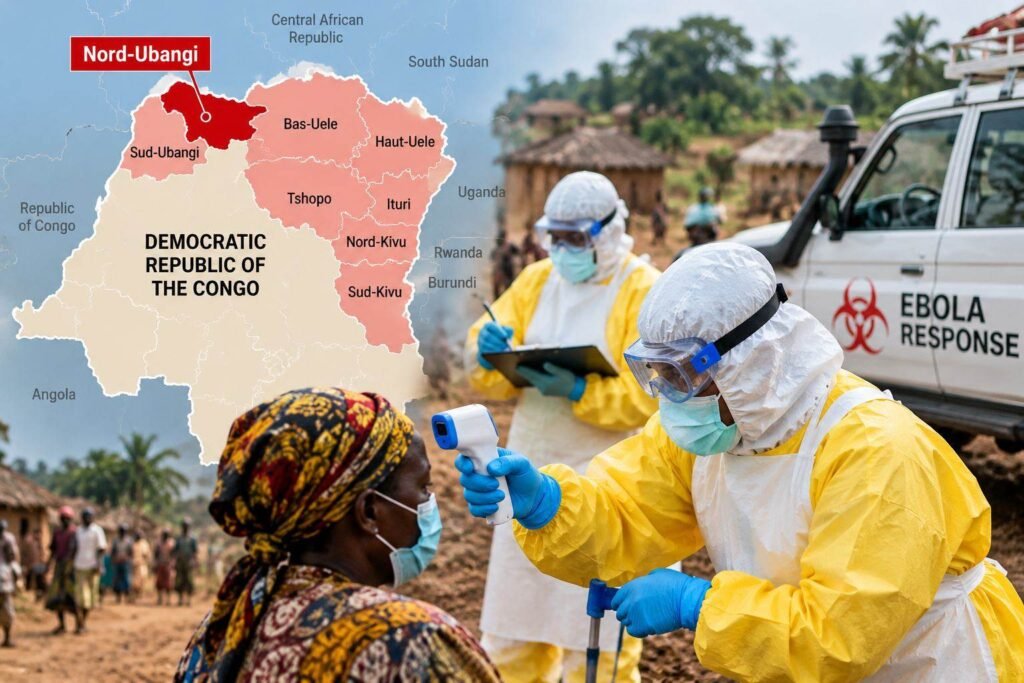
The latest European Centre for Disease Prevention and Control (ECDC) update, published on 19 November using data through 17 November, records 11,504 confirmed Bundibugyo virus disease cases and 5,630 deaths in the Democratic Republic of the Congo (DRC), with eight provinces affected. ECDC also reports 20 cases in Uganda, nine in Kenya and one in Nigeria; secondary transmission associated with imported cases has been reported in Uganda and Kenya. These figures use different national reporting cut-offs and should not be treated as a single harmonised cross-border dataset. WHO’s Director-General said on 17 November that 400–500 new cases were still reported weekly and two-thirds of confirmed deaths were occurring outside Ebola treatment centres, underscoring delayed identification and access barriers.
WHO says therapeutic trials have enrolled more than 900 people and vaccine research is progressing. A trial using Ervebo, which is approved against Zaire ebolavirus but not Bundibugyo virus, began in October; two Bundibugyo-specific candidates were recommended for evaluation. The vaccines and treatments remain investigational, and no efficacy results are available. Kenya’s last patient was discharged and a 42-day countdown began, but that milestone does not mean the regional outbreak is over.
Sources: ECDC update, 19 November (data through 17 November); WHO Director-General, 17 November; Health Signal Africa’s DRC outbreak coverage.
Rio conference closes; CPHIA begins next week
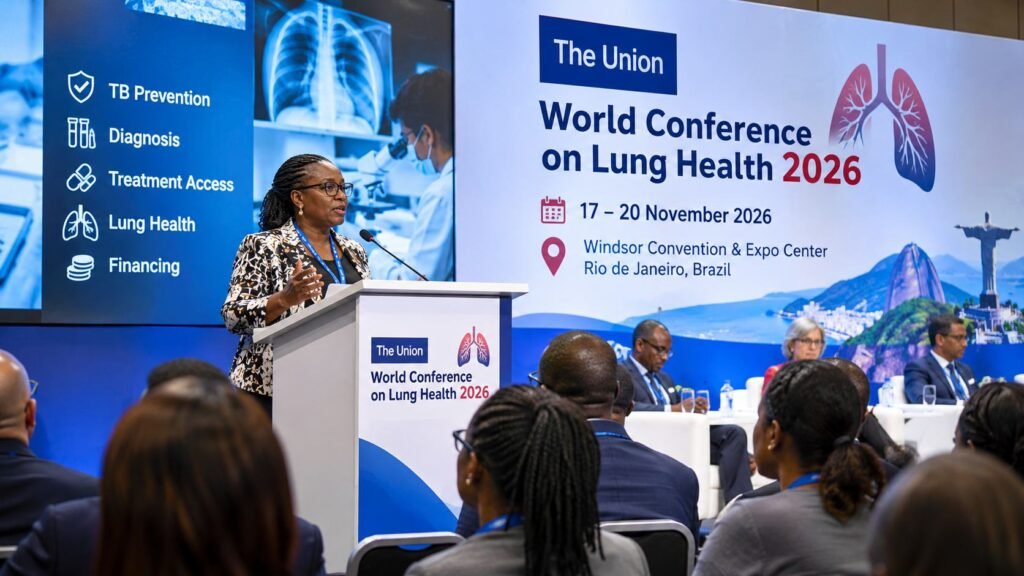
The Union World Conference on Lung Health in Rio de Janeiro reaches its final day on 20 November. WHO and research groups have used the meeting to discuss TB evidence, post-2030 strategy, diagnostics and clinical research. Scheduled trial presentations are not proof that investigational treatments are ready for routine care. Follow our conference article and the official programme.
Next week, the fifth International Conference on Public Health in Africa (CPHIA 2026) convenes in Addis Ababa, 23–27 November. Africa CDC and Ethiopia expect more than 30,000 participants for discussions on health sovereignty, health security, financing, local manufacturing, digital health and climate resilience. The sessions are planned; specific decisions and funding announcements will be reported only when confirmed. Africa CDC preview.
Health opportunities
The Opportunities archive has 25 active health-related jobs, consultancies and tenders, plus four general career and funding portals. New this week is the International Vaccine Institute Senior Research Scientist I pipeline position in Nairobi, open until 31 December. It requires a PhD and extensive international vaccine-development experience; it is a pipeline role and does not guarantee immediate hiring. UNICEF Madagascar’s National SBC Consultant listing closes today, 20 November, at 23:55 EAT. Check each issuer’s page before applying.
Browse verified health opportunities on Health Signal Africa.
What was not verified in this window
No major new African climate-and-health financing announcement or NCD financing decision was verified within the last 24–48 hours. Ongoing issues—including TB financing, health workforce shortages, maternal and newborn health, humanitarian access and climate-related risks—remain important, but older developments are not presented as new announcements.
Sources and editorial limitations
This briefing prioritises official WHO, Africa CDC, ECDC and programme sources, with independent reporting used where available. Kenya’s net-tracking platform is named Digimal KE by WHO and DigiMO by KBC; the identity of the system could not be resolved. The AMR resistance percentage applies to surveillance-site isolates. Mali’s L9LS findings are meeting/press-release results, not peer-reviewed results. The latest precise DRC Ebola figures found are dated 15 November, and Phase 2 vaccine timing is secondary reporting. ReliefWeb pages for some opportunities returned access errors; issuer pages were used where accessible. Programme announcements and conference schedules do not establish implementation or outcomes.
Related coverage: 18 November Africa Health Briefing; Union World Conference on Lung Health 2026; WHO Global TB Report 2026.

Discussion