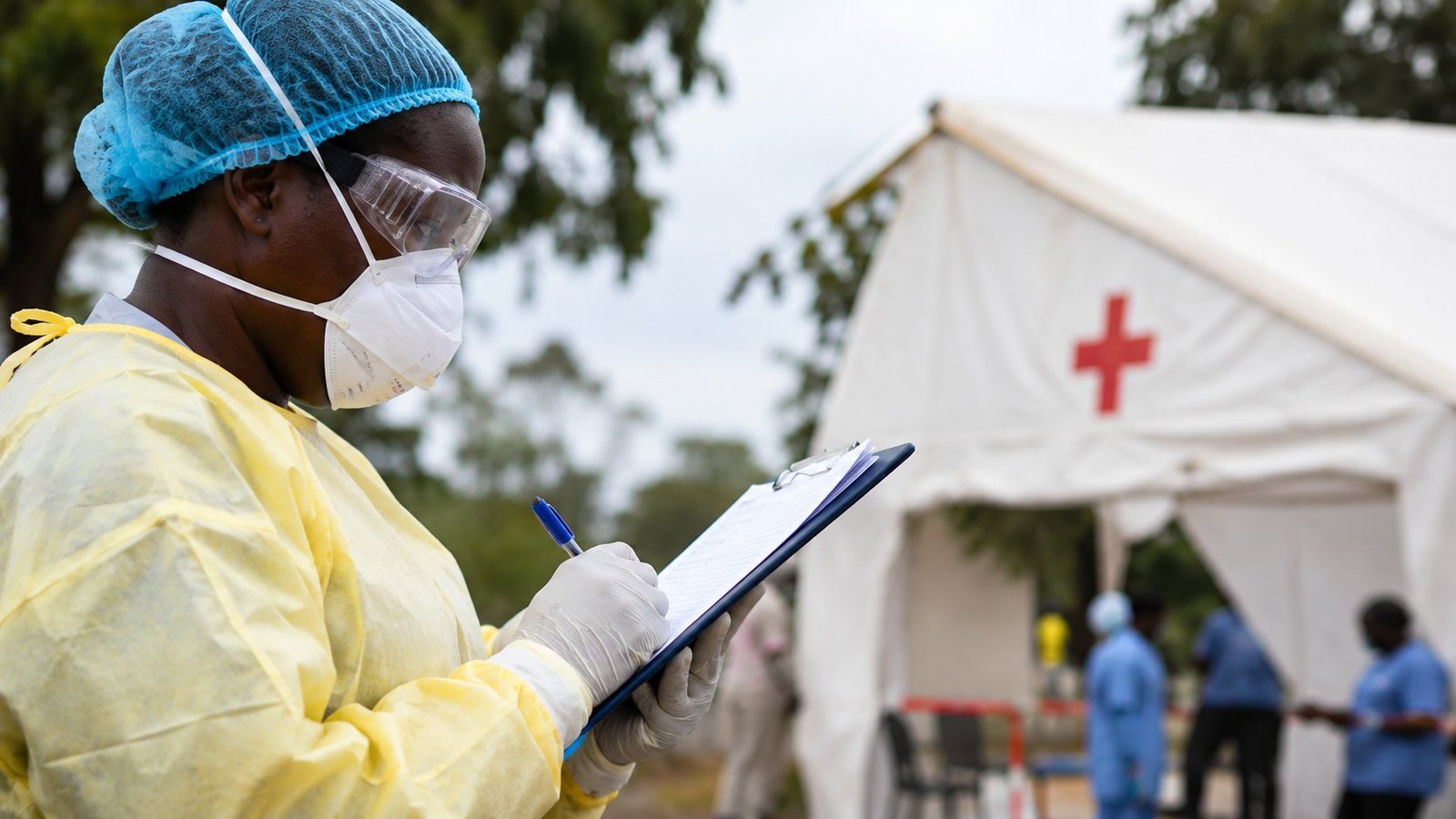
13 November 2026 — The Bundibugyo Ebola outbreak in the Democratic Republic of the Congo (DRC) remains widespread as Africa CDC and Médecins Sans Frontières warn that attacks and frontline shortages are obstructing the response. South Sudan, which has not reported a confirmed case, is strengthening preparedness after WHO raised its estimated risk of virus importation to 99%. WHO’s Global Tuberculosis Report 2026 estimates that 2.61 million people developed TB in its African Region in 2025 and identifies major 2026 funding gaps in Kenya and Nigeria. In West Africa, a patient evacuated from Nigeria has recovered and been discharged in Switzerland, while Ghana has reported progress in emergency referral planning, pandemic preparedness and community-led mental-health support. UNICEF has also advertised new health innovation, nutrition, WASH and emergency-response consultancies in Liberia, Madagascar, Mozambique and Sierra Leone.
This briefing covers the most significant verified African health developments published on 11–12 November 2026. Figures are tied to their reporting cut-offs, and planned interventions are distinguished from completed results.
Central Africa: DRC Ebola response faces fresh warnings
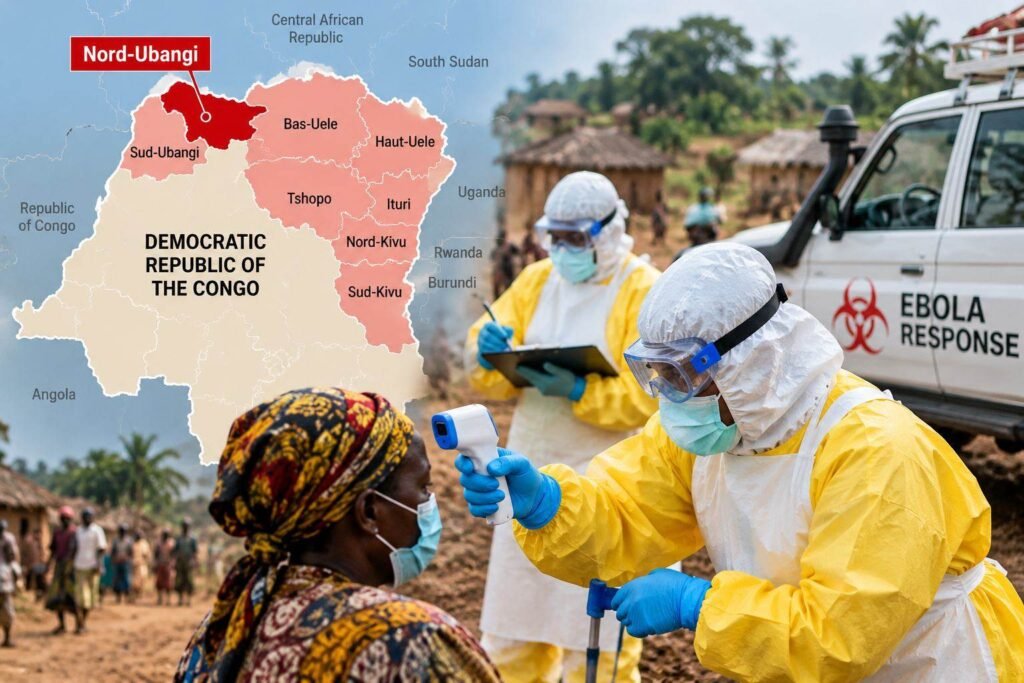
The DRC had reported 11,114 confirmed Bundibugyo virus disease cases and 5,433 related deaths as of 11 November, using data through 10 November, according to the European Centre for Disease Prevention and Control (ECDC). Its 12 November update recorded 981 patients hospitalised in isolation, 3,031 recoveries and 85.5% of identified contacts under follow-up. A further 72 confirmed cases and 46 deaths were recorded between the latest reporting cut-offs. The figures remain subject to review and harmonisation.
Ituri remains the most affected province, with 7,728 cases and 3,655 deaths; North Kivu had 2,761 cases and 1,523 deaths. The outbreak has affected 67 health zones across eight provinces.
At a 12 November press briefing, Africa CDC reported four armed attacks, 16 assaults on responders and 11 health facilities burned or otherwise targeted. It said an attack on Cantine-Aloya in North Kivu killed 66 people, including three health workers. More than 1,000 contacts were lost to follow-up and three confirmed cases remained unaccounted for. These are security and operational figures reported by Africa CDC through Reuters, not a new epidemiological tally.
In a statement issued on 12 November, MSF said that response resources were not consistently reaching patients and frontline workers. It cited unpaid or inadequately trained personnel, vehicles without fuel, absent surveillance teams and community workers without phones or mobile data. MSF said close to two-thirds of reported Ebola-related deaths in the previous month occurred in communities rather than treatment centres. In Ituri, only 9% of patients treated by its teams had previously been identified as contacts. MSF also reported that close to three-quarters of Ebola patients in Beni health zone, North Kivu, had contracted the disease in a health facility. These are MSF’s operational observations, not national surveillance estimates.
MSF also reported that its response covered five of the eight affected provinces in early November, with eight Ebola treatment centres and three rapid-response teams. It said it had allocated €64.6 million to its response and supported nearly 2,900 workers, about 90% locally recruited. The figures describe MSF’s own operations, not the total DRC response.
There is no licensed vaccine or specific approved treatment for Bundibugyo virus disease. WHO says the Tumaini Phase 2/3 vaccine trial is under way and that two Bundibugyo-specific candidates have been recommended for further evaluation, subject to national approvals. They remain investigational. Early detection, supportive care, isolation, contact tracing, safe burials and infection prevention remain essential.
Sources: ECDC outbreak update, 12 November; Reuters reporting on Africa CDC’s security briefing, 12 November; MSF statement, 12 November; WHO outbreak update, 6 November.
East Africa: South Sudan raises Ebola readiness but containment gaps remain
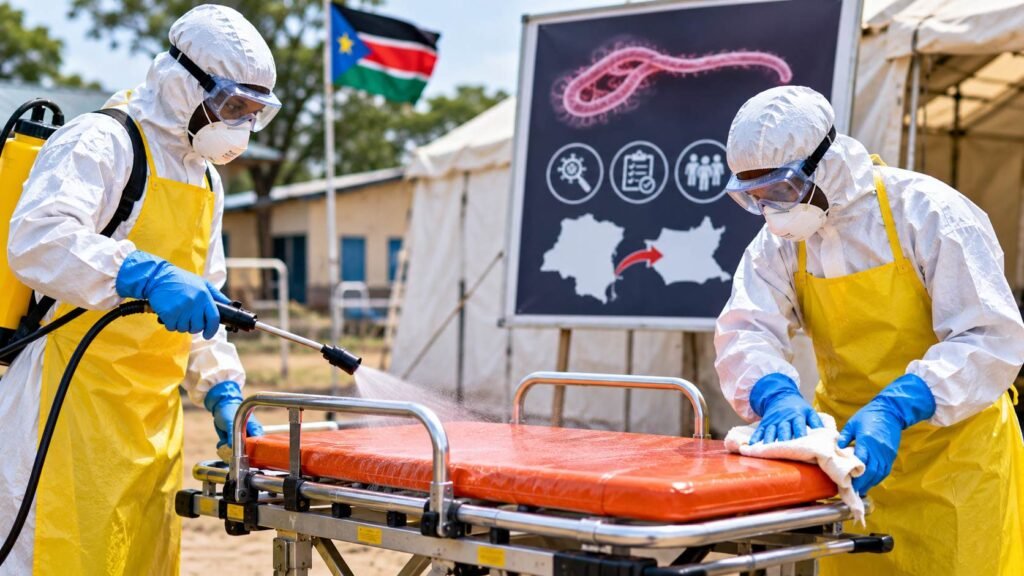
South Sudan has not reported a confirmed Bundibugyo virus disease case, but WHO estimates the risk of importation from the DRC at 99%, up from 67% in June. The estimate was made in October and reflects porous borders, trade, population movement, humanitarian displacement and transport links. It is a risk-of-importation assessment, not a claim that an outbreak is already occurring or that 99% of travellers are infected.
WHO said national readiness stood at 72.5% at the end of October across 11 preparedness pillars. Sub-national mean readiness scores improved from 41% in June to 56% in September. Surveillance had recorded 76 alerts by 30 October; all were investigated, 33 tested negative by RT-PCR and the remainder were discarded. Between May and October, 150 health workers were trained in Ebola case management in 15 priority counties, and temporary infectious-disease units were established in eight counties.
A full-scale simulation conducted from 19 to 24 October in Juba, Yei and Yambio found that South Sudan could detect Bundibugyo virus disease but could not yet contain it safely. WHO identified remaining needs in local alert management, contact management, sample packaging, patient flow, safe referral, chlorination, mobile laboratory deployment and personal protective equipment. Nearly half a million people in Yambio were reached with community information on symptoms and prevention.
The findings show why readiness scores must be read alongside operational tests. Early detection is only useful if a suspected patient can be safely isolated, a specimen transported, a result returned and contacts followed up without delay. WHO says further investment and coordination are needed before the country can safely contain an imported case.
Sources: WHO South Sudan news release, 12 November; WHO simulation exercise report, 26 October; Eye Radio reporting on preparedness gaps.
West Africa: Nigerian-linked Ebola patient discharged in Switzerland
Geneva University Hospitals confirmed that a woman infected with Bundibugyo virus disease was discharged on 11 November after doctors confirmed her full recovery. She had been medically evacuated from Nigeria to Switzerland on 26 October. Her husband, a close contact, was transferred separately to University Hospital Zurich for monitoring and was not reported as a confirmed case.
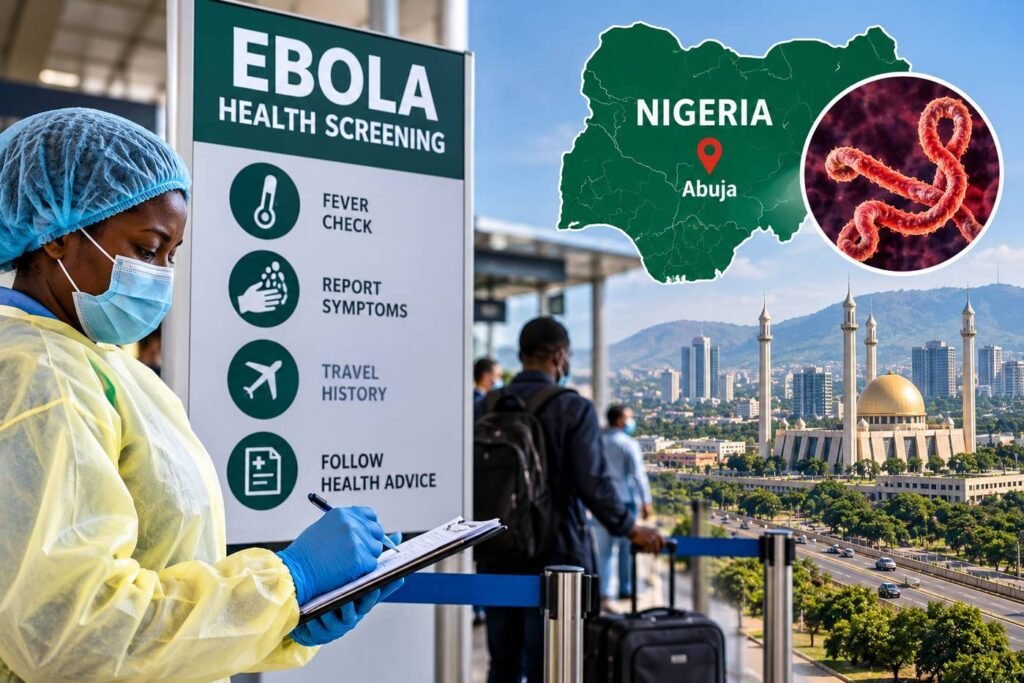
Nigeria’s Centre for Disease Control and Prevention dashboard, updated for 11 November, continued to list one confirmed case and no deaths. Of 62 identified contacts, 52 had completed their 21-day follow-up and 10 remained under monitoring. The dashboard also listed seven negative cases. The source of the patient’s infection has not been publicly established; Reuters reported that she had spent two weeks in Uganda before returning to Abuja.
The discharge is an important recovery milestone, but it does not end Nigeria’s monitoring activities or the wider regional outbreak response. Authorities still need to complete follow-up of the remaining contacts and investigate new alerts. The patient’s travel history does not establish where she became infected.
Sources: Geneva University Hospitals discharge statement, 11 November; Nigeria CDC Ebola dashboard, 11 November; Reuters, 12 November.
West Africa: Ghana advances emergency referral and bed-management plans
WHO has reaffirmed support for Ghana’s efforts to strengthen emergency care and referral coordination. The announcement followed discussions at the Ghana Medical Association’s 68th Annual General Conference, where the “no bed syndrome” and delays in emergency transfers were central issues.
The Ministry of Health showcased the Integrated Bed Management and Referral Coordination System (IBMRC), a digital initiative designed to improve visibility of hospital capacity and support referrals. The pilot involves Korle Bu Teaching Hospital, Komfo Anokye Teaching Hospital, Tamale Teaching Hospital, Greater Accra Regional Hospital, the 37 Military Hospital, the University of Ghana Medical Centre and the National Ambulance Service. The system is intended to help referring facilities identify available capacity and coordinate transfers; the announcement does not provide published performance results.
Government plans include expanding emergency units with a target of raising emergency beds to at least 10% of functional bed capacity at selected hospitals. At Korle Bu, the announced plan would increase emergency beds from 65 to at least 150. The government is also pursuing procurement of 100 new ambulances and spare parts to return another 100 to service. These are announced plans, not completed procurements or verified improvements in referral times.
WHO also said Ghana’s National Referral Policy is at an advanced stage of review and finalisation. The policy is expected to clarify responsibilities between facilities and improve continuity of care. The wider challenge is to ensure that digital bed visibility is matched by staffed beds, equipment, transport, stabilisation capacity and clear referral protocols.
Source: WHO Ghana news release, 11 November.
West Africa: Ghana reviews Pandemic Fund-supported preparedness
Ghana and its partners have reviewed progress under a Pandemic Fund-supported project designed to strengthen disease surveillance, laboratory systems and the public-health workforce. A mission by the Pandemic Fund Secretariat took place from 5 to 9 October and brought together WHO Ghana, the Food and Agriculture Organization, Ghana Health Service, Veterinary Services, academic institutions and civil-society partners. WHO published its account on 11 November.
A key development was the training of 10 laboratory personnel in bioinformatics at the West African Centre for Cell Biology of Infectious Pathogens. The training is intended to strengthen local capacity for genomic surveillance, pathogen detection and analysis. The project also includes Geographic Information Systems training, workforce-development materials and a One Health approach that links human, animal and environmental health.
The review identified implementation challenges, including limited cross-border activities, fragmentation between project pillars and unclear roles among some implementing partners. These are important findings because investments in surveillance and laboratories require clear governance, routine financing and coordination to remain useful beyond a project period. The review is an implementation progress assessment, not evidence that Ghana’s surveillance system has already achieved a measured improvement in outbreak detection.
Source: WHO Ghana news release, 11 November.
West Africa: Ghana links local government funding with mental-health support
A feature published by WHO on 11 November describes how Daffiama-Bussie-Issa District in Ghana’s Upper West Region has used part of the District Assemblies Common Fund allocation for persons with disabilities to provide seed capital to members of mental-health self-help groups. The initiative has operated for nearly five years through collaboration between the District Assembly, District Health Directorate and Department of Social Welfare.
WHO estimates that more than 2.3 million people in Ghana live with mental-health conditions and that the treatment gap is about 98%. These are longstanding WHO estimates, not a new national survey released this week. The district model is intended to address some of the economic barriers that can make treatment difficult to sustain, including medication costs, limited income and social exclusion.
One beneficiary described by WHO, Fati Suglo, lives with epilepsy and uses income from goat rearing and shea-butter production to help meet daily needs and buy medicines when facility supplies are unavailable. Epilepsy is a neurological condition and should not be conflated with mental illness. WHO’s feature describes individual experience but does not provide a beneficiary count, funding amount or formal impact evaluation. Livelihood support can complement clinical care, but it cannot replace reliable medicine supply or accessible mental-health services.
Source: WHO Ghana feature, 11 November.
Pan-African: WHO estimates 2.61 million TB cases in Africa
The WHO Global Tuberculosis Report 2026, released on 12 November, estimates that 2.61 million people developed TB in the WHO African Region in 2025, accounting for 25% of the global total. The regional incidence rate was 201 per 100,000 people, 30% lower than in 2015, although 11 countries still had rates above 300 per 100,000. WHO estimates 296,000 deaths among people without HIV and 99,000 deaths among people with HIV in which TB was a contributory cause; the latter are classified as HIV deaths under international mortality rules. The estimated total number of TB deaths in the African Region fell by 50% between 2015 and 2025, although this remained short of the End TB Strategy’s 75% reduction target.
WHO says the African Region’s total TB deaths fell by 50% between 2015 and 2025, but diagnosis and financing gaps remain. Across low- and middle-income countries, international TB donor funding declined by 14% in 2025. For 2026, 54 countries reported a combined funding gap of US$1.7 billion, with the largest gaps in the African and Western Pacific regions. Kenya reported a US$121 million gap and Nigeria US$85 million among high-burden countries.
The figures are modelled estimates and reported planning gaps, not a count of all diagnosed cases or proof that services have already stopped. Read the WHO Global Tuberculosis Report 2026 and Health Signal Africa’s full analysis.
Technology and innovation watch
- Digital emergency referrals: Ghana’s IBMRC pilot is designed to give participating hospitals better visibility of bed capacity and support emergency transfers. Evidence on referral time, occupancy accuracy and patient outcomes has not yet been published.
- Genomic surveillance: Training 10 laboratory personnel in bioinformatics is intended to strengthen Ghana’s ability to analyse pathogen genomic data. The next measure is whether the skills are retained and integrated into routine surveillance.
- Outbreak alert systems: South Sudan’s 76 alerts, 33 negative RT-PCR results and discarded alerts show the importance of laboratory and alert-management capacity. The October simulation indicates that detection must be linked to safe containment.
- Bundibugyo vaccine research: WHO says two candidate vaccines developed specifically for Bundibugyo virus have been recommended for evaluation. They remain candidates and are not licensed vaccines.
- TB diagnostics and treatment: WHO’s new report says 59% of newly diagnosed patients globally received a recommended rapid diagnostic test as their initial test in 2025, while only 42% of people estimated to have rifampicin-resistant TB received treatment. These are global indicators; country-level data are needed to assess African programmes.
- Health-data governance: The first Africa Health Data Forum concluded in Nairobi on 12 November after three days of discussions on country-led information systems, interoperability and responsible AI. WHO’s 2024 assessment covered 40 of 47 countries in its African Region and reported a 59/100 maturity score. A final Nairobi Agenda or formal commitments had not yet been published at the time of this review.
Health opportunities across Africa
The following listings were checked against the available issuer or ReliefWeb notices on 13 November. Deadlines and eligibility can change; applicants should confirm the latest terms on the original application page.
- Programme Consultant – RISE Project, Light for the World Kenya: Nairobi and project locations; deadline 13 November 2026. Health Signal listing and application route.
- National and International Consultant – Kenya Gavi 6.0 and Ebola Country Application, UNICEF: Nairobi; deadline 15 November. View listing.
- Health Specialist – Adolescent Health, P-4, UNICEF: Nairobi; deadline 18 November at 23:55 EAT. View listing.
- Project Coordinator – TB and HIV Health Inside the Walls Project, CEFA: Nairobi with travel to Kiambu, Mombasa and Kilifi; deadline 20 November. Applications are by email and may close early. View listing.
- Health Supply Chain Specialist, International Rescue Committee: ReliefWeb identifies Kenya, while the official IRC Workday page is hosted under London, UK; deadline 25 November. Confirm the eligible duty station and local compensation with IRC. View listing and official application.
- Health Specialist – Health Economics and Financing, P-4, UNICEF: Nairobi; deadline 26 November. View listing.
- Ebola Health Advisor, Medair: Bunia, Ituri, with travel to North Kivu; deadline 27 November. View listing.
- Public Health and Humanitarian Medicine Director, MSF: Nairobi; deadline 27 November. View listing.
- Regional Ebola Coordinator, Medair: Bunia and response locations in Ituri; deadline 4 December. The employer notice contains an inconsistent start-date reference, which applicants should clarify. View listing.
- MHPSS Intervention Development and Evaluation Consultant, UNICEF: Nairobi-listed, remote with travel; 11-month consultancy supporting BLOOM research and EASE implementation; deadline 22 November at 23:55 EAT. Applicants need a PhD in Clinical Psychology or a related field and at least 10 years’ relevant experience. View listing and official application.
- Health Innovation Consultant, UNICEF Office of Innovation: eight-month consultancy, Stockholm-listed and remote with travel; focuses on AI-enabled community health workers, childhood NCDs, sustainable financing and AI diagnostics. Requires an advanced degree and five years’ relevant experience, including frontline innovation deployment and resource mobilisation. Deadline 26 November, 09:55 AEDT (01:55 EAT). View listing.
- National Consultant – First Foods Action Plan, UNICEF Sierra Leone: four-month national consultancy, Freetown/remote with travel, developing a plan for nutritious complementary foods for children aged 6–23 months. Requires a master’s degree and 10 years’ relevant experience, including five years in nutrition-sensitive food systems. Deadline 24 November, 10:55 AEDT (02:55 EAT). View listing.
- Construction Supervision Consultant, UNICEF Mozambique: 11-month, nationals-only consultancy based in Pemba, Cabo Delgado, covering WASH infrastructure and construction or rehabilitation of health facilities. Requires an engineering degree, four years’ supervision experience, Portuguese and working English. Deadline 17 November, 23:55 CAT (18 November, 00:55 EAT). View listing.
- WASH Specialist, P-3, UNICEF Liberia: six-month temporary appointment in Monrovia supporting WASH, climate resilience and humanitarian preparedness. Requires an advanced degree and at least five years’ WASH programme experience. Deadline 23 November, 10:55 AEDT (02:55 EAT). The official page title and job header show different reference numbers; both are recorded in the listing. View listing.
- National SBC Consultants, DEFIS Nutrition Programme, UNICEF Madagascar: two 12-month assignments in Ambovombe and Fort-Dauphin supporting nutrition-sensitive behaviour-change interventions and community implementation. Requires a relevant bachelor’s degree, two years’ experience, and fluency in French and Malagasy. Deadline 20 November, 23:55 EAT. View listing.
- WASH Emergency Response Consultant Roster, UNICEF Mozambique: three-year roster for Mozambican nationals with at least five years’ WASH emergency experience, covering cholera response, WASH in health facilities, infection prevention and control, emergency water supply and sanitation. Inclusion does not guarantee an assignment. Deadline 29 November, 23:55 CAT (30 November, 00:55 EAT). View listing.
Editorial notes and evidence limitations
No new high-confidence developments in North Africa or Southern Africa met the publication threshold in this 11–12 November review. No new African clinical-trial efficacy results or licensed Bundibugyo countermeasures were identified. The briefing does not repeat Kenya’s 11 November discharge announcement, which was covered in the 12 November edition; the 42-day countdown is already under way. The first Africa Health Data Forum concluded on 12 November, but a final Nairobi Agenda or formal commitments had not been verified by publication time.
DRC case totals are confirmed cases and deaths based on data through 10 November and remain subject to harmonisation. Africa CDC’s attack figures are attributed to its 12 November briefing as reported by Reuters; MSF’s service and surveillance figures are its own operational observations, not national surveillance totals. South Sudan’s 99% figure is a risk-of-importation estimate, while 72.5% is a readiness assessment across preparedness pillars. TB incidence and mortality figures are WHO estimates with uncertainty intervals; the African Region is a defined group of 47 Member States, not the entire continent. TB funding gaps are reported planning shortfalls, not confirmed service interruptions. Ghana’s emergency referral expansions are plans and its IBMRC is a pilot without published outcome data. The Ghana mental-health treatment-gap figures are longstanding WHO estimates.
Previous coverage: Read the 12 November Africa Health Briefing and Health Signal Africa’s previous coverage of Africa CDC’s multisectoral mental-health and NCD agenda.
Discussion