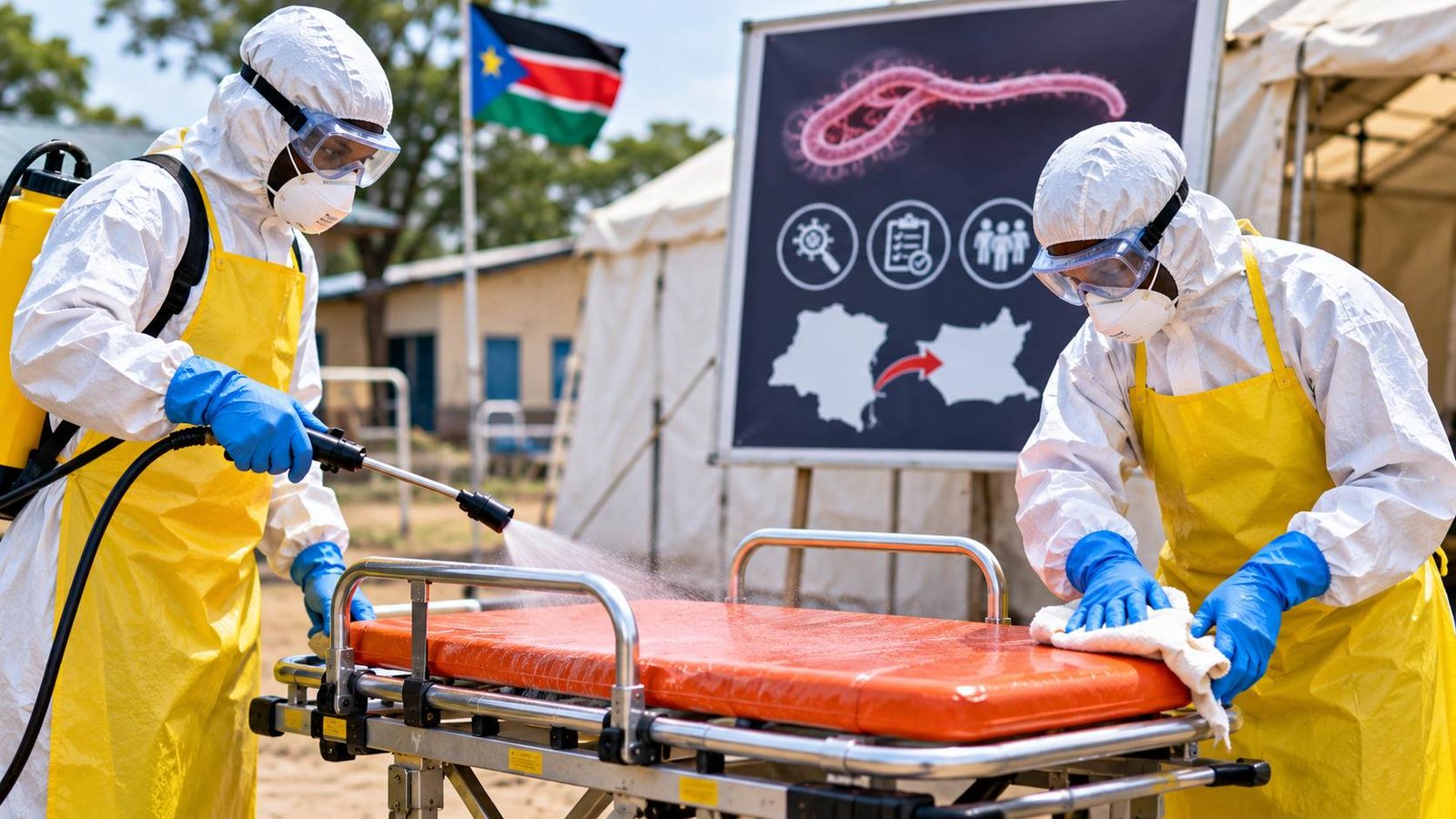
Juba, South Sudan — South Sudan has raised its national preparedness for Bundibugyo virus disease to 72.5%, but the World Health Organization (WHO) says the country is not yet able to contain an imported case safely. The warning comes as WHO estimates the risk of the virus being imported from the Democratic Republic of the Congo (DRC) at 99%, up from 67% in June, despite no confirmed case having been reported in South Sudan.
High cross-border movement keeps the risk elevated
A joint assessment by South Sudanese health authorities and partners identified 3,450 people who had crossed from the DRC into South Sudan in September. The movement was recorded amid continuing concern in border communities about the outbreak in eastern DRC. WHO says porous borders, cross-border trade, population movement, humanitarian displacement and major transport corridors contribute to the importation risk, particularly along western and southern border areas.
The 99% figure is WHO’s estimated risk of virus importation, not a statement that an outbreak is already occurring or that 99% of people crossing the border are infected. As of the WHO release published on 12 November, South Sudan had not reported a confirmed case of Bundibugyo virus disease.
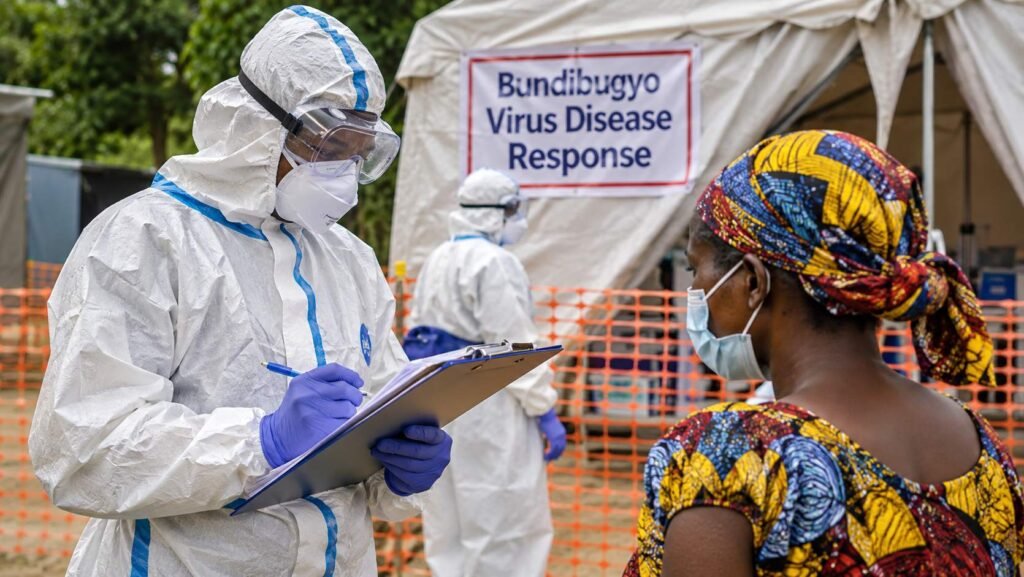
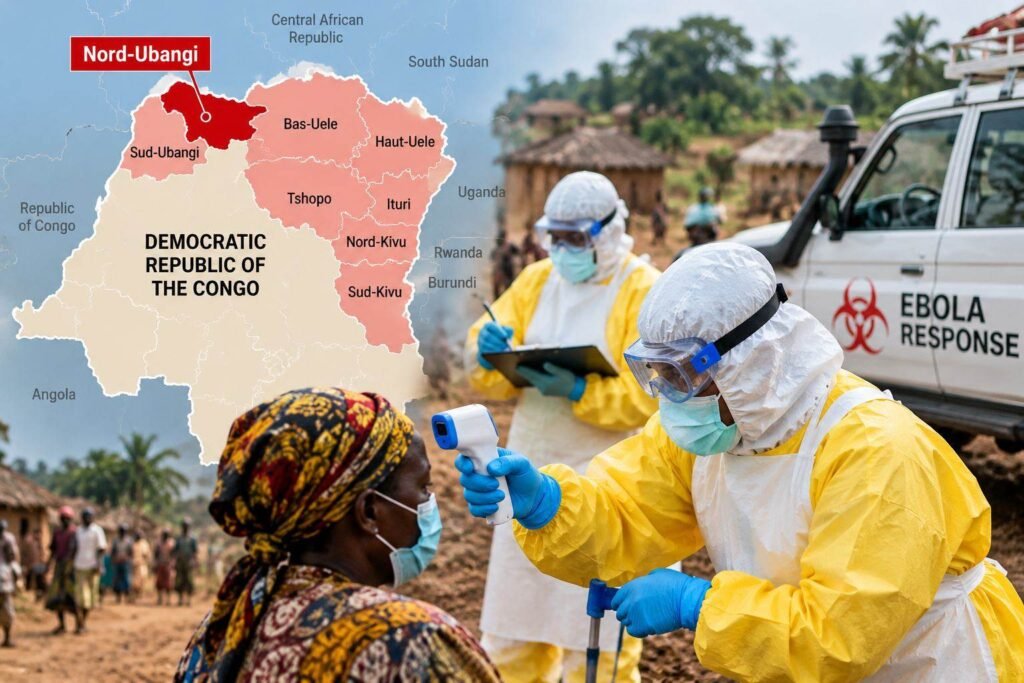
The latest detection of the virus in Nagero, within Dungu Health Zone in the DRC, brings the threat closer to Western Equatoria. WHO says early warning may come from border health agents, community health workers or nurses who identify a person with compatible symptoms. Those workers need clear procedures to report an alert, safely separate a suspected case and arrange transfer to an established isolation or care facility.
Readiness has improved, but capacity varies between counties
WHO said South Sudan’s national readiness level stood at 72.5% at the end of October across 11 preparedness pillars. Sub-national assessments using the same WHO tool showed the mean readiness score rising from 41% in June to 56% in September. The figures indicate progress, but also show that county-level capacity remains uneven and below the national score.
Surveillance systems recorded 76 Bundibugyo virus disease alerts by 30 October. All were investigated. Thirty-three tested negative by reverse-transcription polymerase chain reaction (RT-PCR) at the molecular centre of the National Public Health Laboratory; the remaining alerts were discarded following investigation. These were suspected alerts, not confirmed cases.
Between May and October, 150 health workers were trained in Ebola case management across 15 priority counties. Temporary infectious-disease units were established in eight of those counties, while screening, isolation and referral capacity was strengthened at priority points of entry. WHO and partners also reached nearly half a million people in Yambio with information on symptoms, prevention and when to seek care.
Simulation exposed weaknesses in the response chain
A full-scale simulation exercise held from 19 to 24 October in Juba, Yei and Yambio tested how national and local teams would respond to a potential importation. WHO said the exercise demonstrated that South Sudan could detect Bundibugyo virus disease but could not yet contain it safely. The assessment matters because detection is only the first stage of outbreak control: suspected patients must be isolated, samples safely collected and transported, referrals completed and infection prevention maintained at facilities.
WHO identified remaining needs in sub-national alert management, contact management, sample packaging, patient flow and discharge procedures, chlorination, mobile laboratory deployment, personal protective equipment and safe referral of suspected cases. It also called for sustained screening and community engagement, including communication that informs people without encouraging discrimination against those arriving from the DRC.
What needs to happen before a case is detected
The next phase is to close the gaps between preparedness pillars so that an alert can move smoothly from a community report to investigation, laboratory confirmation and safe care. Counties need clear referral routes, adequate infection prevention supplies, trained teams and reliable transport. Laboratory systems must be able to receive specimens safely and return results quickly, while contact-management arrangements need to be ready before a confirmed case is identified.
Preparedness also requires public trust. WHO describes how local leaders, religious leaders, radio discussions and local-language materials have helped communities in Yambio understand symptoms and prevention. Clear communication can reduce fear and encourage early reporting, while protecting people who cross the border from stigma or exclusion.
South Sudan’s readiness score is a measure of assessed capacity, not proof that all response functions are operational in every county. The simulation findings show why the remaining gaps matter. With no confirmed case reported, the country still has an opportunity to strengthen safe referral, laboratory readiness and infection prevention before the virus is detected.
Sources and limitations
This article draws on the WHO South Sudan news release of 12 November 2026, the WHO account of the October simulation exercise and Eye Radio’s reporting on preparedness gaps. The 99% figure is WHO’s October estimate of importation risk. The 72.5% national readiness score is an assessment across 11 pillars, not a probability of preventing an outbreak. Alert totals are surveillance notifications; none of the 76 alerts recorded by 30 October was reported as a confirmed case.

Discussion