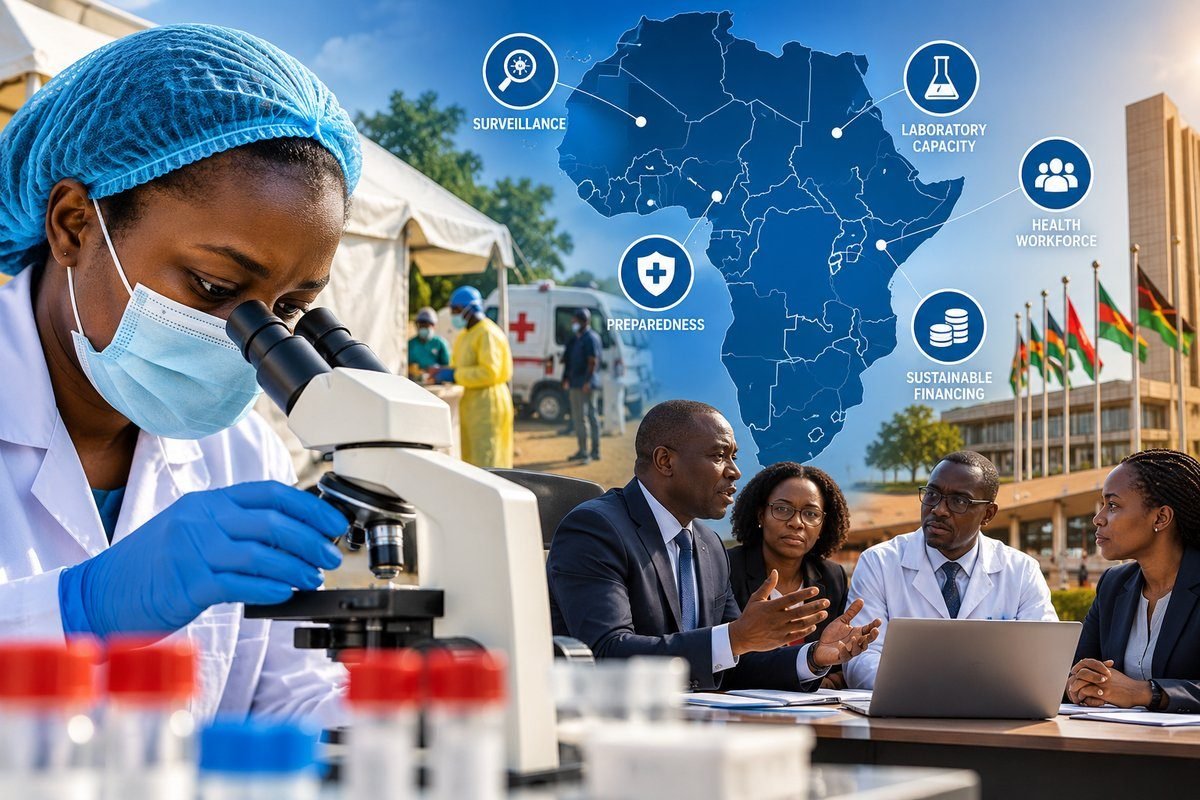
African governments and international health security leaders are calling for more targeted, sustainable investment in disease preparedness, biosecurity and resilient health systems as changes in global development assistance put pressure on public health programmes.
The call followed a high-level discussion hosted by the Nuclear Threat Initiative (NTI) on 7 October 2026, where officials, diplomats, health security experts and philanthropic leaders examined how evidence from the 2026 Africa Health Security Index could help governments and partners direct resources towards the continent’s most urgent vulnerabilities.
In a report published on 15 October, NTI highlighted progress in Africa’s preparedness over the past five years but warned that significant weaknesses remain in biosecurity, biosafety, emergency response, health workforce development, financing and health system resilience.
Africa has made progress, but major gaps remain
The 2026 Africa Health Security Index indicates that the continent’s average score has increased by approximately 30 per cent since 2021. Despite this improvement, the gains have not eliminated critical weaknesses that could undermine the response to future disease outbreaks and other public health emergencies.
The Index provides a framework for assessing countries’ health security capacities and identifying areas requiring additional attention. Its findings are intended to help governments, development partners and funders prioritise investments according to specific national needs rather than rely on uniform approaches across countries.
NTI President and Chief Executive Officer Christine E. Wormuth noted that although the overall trend is encouraging, substantial gaps persist in several areas.
Biosecurity and biosafety are particular concerns. Weak laboratory safety systems, inadequate policies and limited technical capacity can increase the risk of accidental or deliberate release of dangerous pathogens. Strengthening these safeguards is therefore essential to preventing biological threats before they escalate into emergencies.
Declining donor funding raises concerns over preparedness
The changing global health financing environment is creating new pressure to sustain the systems built after the COVID-19 pandemic. Declining official development assistance could affect countries’ ability to maintain disease surveillance, laboratory capacity, emergency response teams and other essential preparedness functions.
Wormuth cautioned that the urgency governments felt during the pandemic risks fading as the crisis recedes from public attention. However, maintaining readiness requires continuous investment, even when there is no major outbreak dominating the headlines.
Preparedness involves more than establishing facilities or training personnel. Countries must also ensure that these capacities remain operational, adequately funded and ready to be activated when threats emerge.
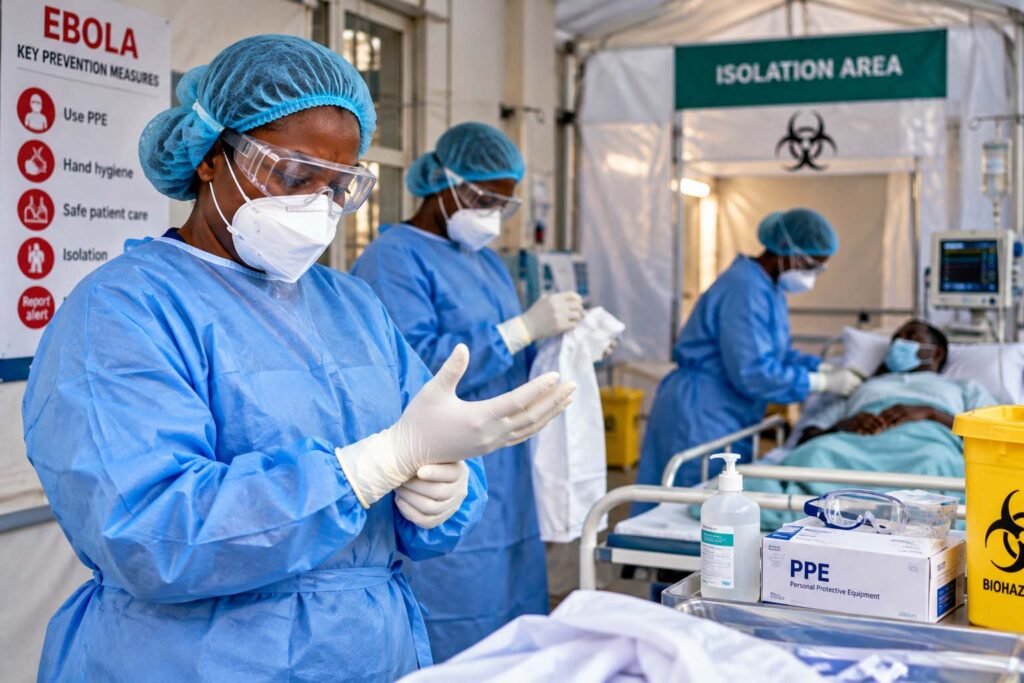
The ongoing Ebola outbreak in the Democratic Republic of the Congo illustrates why these investments remain important. Disease threats can intensify rapidly, requiring effective surveillance, coordination, laboratory systems and timely response across affected communities and borders.
African countries urged to strengthen domestic health financing
A central message from the NTI discussion was the need for African governments to strengthen domestic resource mobilisation and take greater ownership of health security financing.
Ambassador Mark Green, president and CEO of the ONE Campaign, emphasised that donor partners should support countries in mobilising their own resources and encourage co-investment in health systems.
Co-investment can help governments and development partners share the responsibility for funding preparedness, rather than leaving essential programmes dependent on unpredictable external assistance. It can also create opportunities for countries to direct resources towards priorities identified through their own health security assessments.
The shift towards greater domestic financing is not simply about replacing foreign aid. It also requires governments to improve budget allocation, strengthen accountability and ensure that funding reaches the systems responsible for preventing, detecting and responding to health threats.
For countries facing competing demands on public finances, the challenge will be to protect long-term health security investments while continuing to fund essential services such as primary healthcare, immunisation and treatment for infectious diseases.
Health security investment could support economic growth
The discussion also highlighted the relationship between health security and economic development.
Green argued that stronger health security performance could help countries attract investment by contributing to stability and reducing the risks associated with public health emergencies.
Effective disease surveillance, safe laboratories, trained health workers and functioning emergency response systems are not only public health assets. They can also help protect trade, travel, business continuity and regional economic activity.
However, attracting investment will require more than improving an index score. Countries must demonstrate that policies are implemented, institutions are adequately resourced and preparedness capacities can function during an actual emergency.
The Index can help identify areas where targeted investment may produce meaningful improvements, but its value ultimately depends on whether governments and partners translate the findings into funded action.
What this means for Africa’s health systems
For African countries, the next phase of health security development will depend on whether progress in preparedness can be sustained amid financial uncertainty and changing disease risks.
Several priorities emerge from the discussion:
-
Protect preparedness budgets: Maintain funding for surveillance, laboratory safety, emergency response and workforce development even when outbreaks are not in the headlines.
-
Use evidence to guide spending: Apply country-level health security assessments to identify gaps and direct limited resources towards high-priority interventions.
-
Strengthen domestic financing: Improve government investment and explore co-financing arrangements that support long-term national ownership.
-
Build regional cooperation: Strengthen information sharing, cross-border surveillance and coordinated responses to emerging threats.
-
Measure real-world readiness: Assess whether systems can be activated effectively during emergencies, rather than relying solely on the existence of policies, facilities or training programmes.
These priorities are particularly relevant for countries managing recurring infectious disease threats while trying to expand access to routine healthcare.
The way forward
The 2026 Africa Health Security Index offers governments and development partners a framework for identifying weaknesses and measuring progress. But the central challenge is financing the improvements that the evidence identifies.
African countries have demonstrated that health security capacity can improve. Sustaining those gains will require political commitment, reliable domestic resources, carefully targeted external support and stronger accountability for results.
As international funding arrangements evolve, the question is no longer simply how much money is available for health security. It is whether governments and their partners can direct that money towards the systems that prevent outbreaks, detect threats early and protect communities when emergencies occur.
For Africa, stronger health security will depend on turning measurable progress into sustained investment and operational readiness.
Discussion