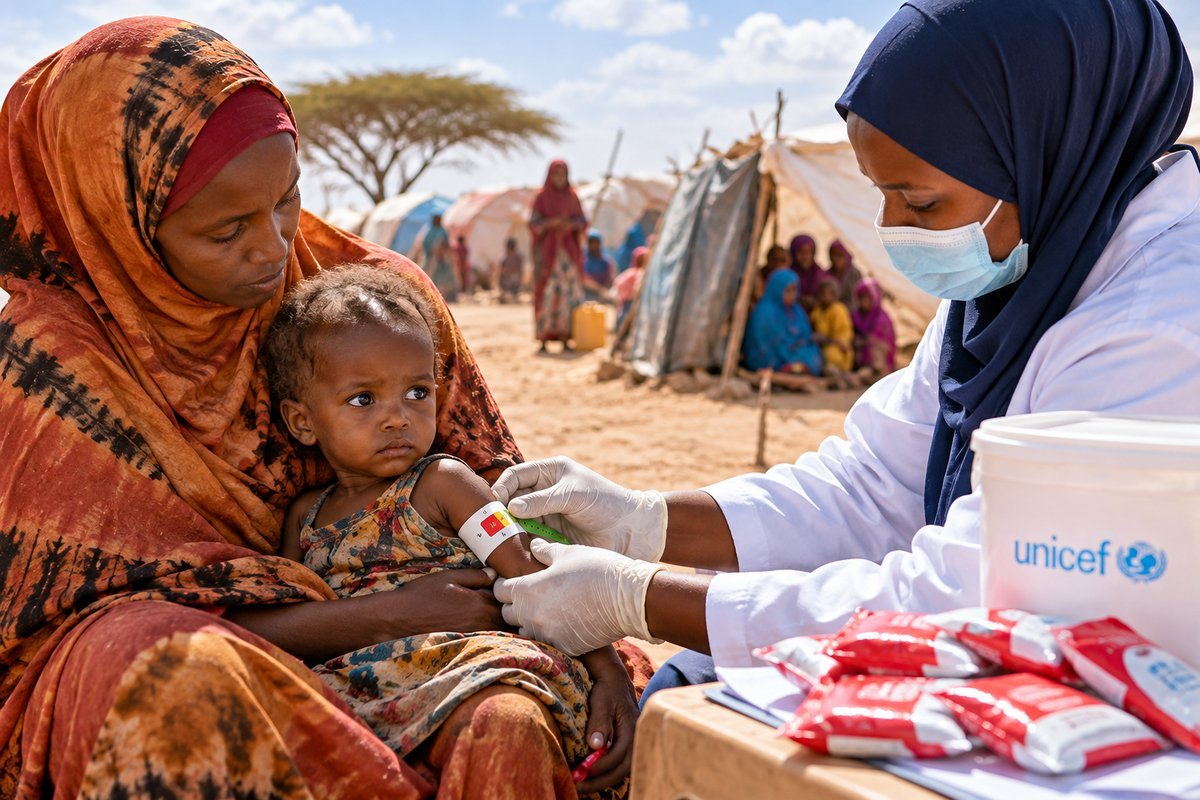
Standfirst: Nearly 1.92 million children aged 6–59 months in Somalia are projected to experience acute malnutrition between July 2026 and June 2027. With severe food insecurity, anticipated flooding and shrinking humanitarian support threatening access to essential services, urgent action is needed to protect vulnerable children.
Integrated Food Security Phase Classification
A growing emergency for children
Somalia is facing a worsening child nutrition emergency, with the effects of food insecurity, displacement, disease and limited access to healthcare converging on some of the country’s most vulnerable families.
According to the latest analysis by the Integrated Food Security Phase Classification (IPC), approximately 1.92 million children aged 6–59 months are suffering, or are expected to suffer, from acute malnutrition over the July 2026–June 2027 period. This includes an estimated 433,000 children facing severe acute malnutrition, the most life-threatening form of the condition.
The crisis is particularly concerning in southern Somalia, where many families face barriers to food, safe water, sanitation and healthcare. Children displaced by conflict or climate shocks are especially vulnerable when their families lose access to livelihoods and essential services.
Flooding could worsen an already fragile situation
Forecast heavy rains associated with the anticipated El Niño conditions during the October–December 2026 rainy season could deepen the emergency.
Flooding can destroy crops, kill livestock, disrupt markets and force families to leave their homes. It can also damage roads and cut off communities from health facilities and nutrition treatment centres.
Poor access to safe water and sanitation increases the risk of diarrhoeal diseases and other infections, which can worsen malnutrition. Children who are already undernourished are particularly vulnerable to these overlapping threats.
The IPC analysis projects that 5.4 million people in Somalia could face crisis-level food insecurity or worse between October and December 2026, including approximately 1.5 million facing emergency levels of hunger.
The cost of delayed treatment
Severe acute malnutrition requires timely identification and appropriate treatment. Without it, children face increased risks of complications, infections and death.
A report published by the Associated Press on 12 October illustrated the challenges families face in reaching care. It described a mother who carried her three-year-old daughter for three days to reach a referral hospital nearly 90 kilometres away. The child was diagnosed with oedema, a sign associated with severe acute malnutrition.
The account highlights the importance of accessible community-based screening, early referral and functioning nutrition services. For families living far from health facilities, distance, transport costs and insecurity can delay treatment until a child’s condition becomes critical.
Humanitarian funding shortages threaten essential services
The crisis is being compounded by shortages of humanitarian funding. The IPC and Somalia’s food-security analysis partners warn that declining assistance is limiting the ability of organisations to respond as needs rise.
Funding constraints affect more than food distribution. They can also reduce the availability of nutrition screening, therapeutic foods, healthcare, safe water and sanitation support.
When nutrition centres close or services become harder to reach, families may lose access to early diagnosis and continued treatment. Maintaining these services is essential to prevent children with moderate nutritional problems from deteriorating into severe cases.
What needs to happen now?
The response must combine immediate lifesaving support with measures that strengthen resilience over the longer term.
-
Expand nutrition screening: Identify children at risk through health facilities, mobile teams and community outreach.
-
Maintain treatment services: Ensure therapeutic nutrition supplies and qualified health workers are available.
-
Improve food security: Provide targeted food and cash assistance to vulnerable households.
-
Protect water and sanitation: Improve access to safe drinking water, hygiene supplies and sanitation facilities to reduce infection risks.
-
Prepare for flooding: Protect health facilities and nutrition supplies, plan alternative referral routes and support communities at risk of displacement.
-
Mobilise sustained funding: Enable humanitarian organisations and local health authorities to maintain services throughout the projected emergency period.
UNICEF has also warned that anticipated flooding and funding shortfalls could push more children into extreme food insecurity and acute malnutrition.
Beyond emergency relief: protecting child health
Somalia’s crisis demonstrates that child nutrition depends on more than food availability. Access to healthcare, safe water, sanitation, appropriate infant and young child feeding, and stable household livelihoods all influence whether children can survive and grow.
Emergency assistance must therefore be linked to stronger local health and nutrition systems. Community health workers need the capacity to identify malnutrition early, refer children for care and support follow-up after treatment.
The coming months will be critical. Timely funding and coordinated action could prevent further deterioration, particularly in communities threatened by flooding and displacement.
HealthSignal Africa takeaway: Somalia’s projected child malnutrition burden is a warning that the window for preventive action is narrowing. Protecting children requires sustained nutrition services, reliable food assistance, safe water and rapid intervention before vulnerable children develop life-threatening complications.
Discussion