Published in PLOS One on 2026-07-23, this study is presented as an attributed evidence briefing. The excerpts below are the original researchers’ words, reproduced under their Creative Commons Attribution licence. Health Signal has selected the abstract and, where needed, opening background paragraphs; the complete methods, results, limitations and references remain in the linked paper.
Original authors: Winifred Maduko, Emmanuel Olamijuwon, Mike Kesby, Jo Mhairi Hale
Source: PLOS One • DOI 10.1371/journal.pone.0353762
Read the complete primary study ↗ · Creative Commons Attribution licence
From the researchers
Abstract
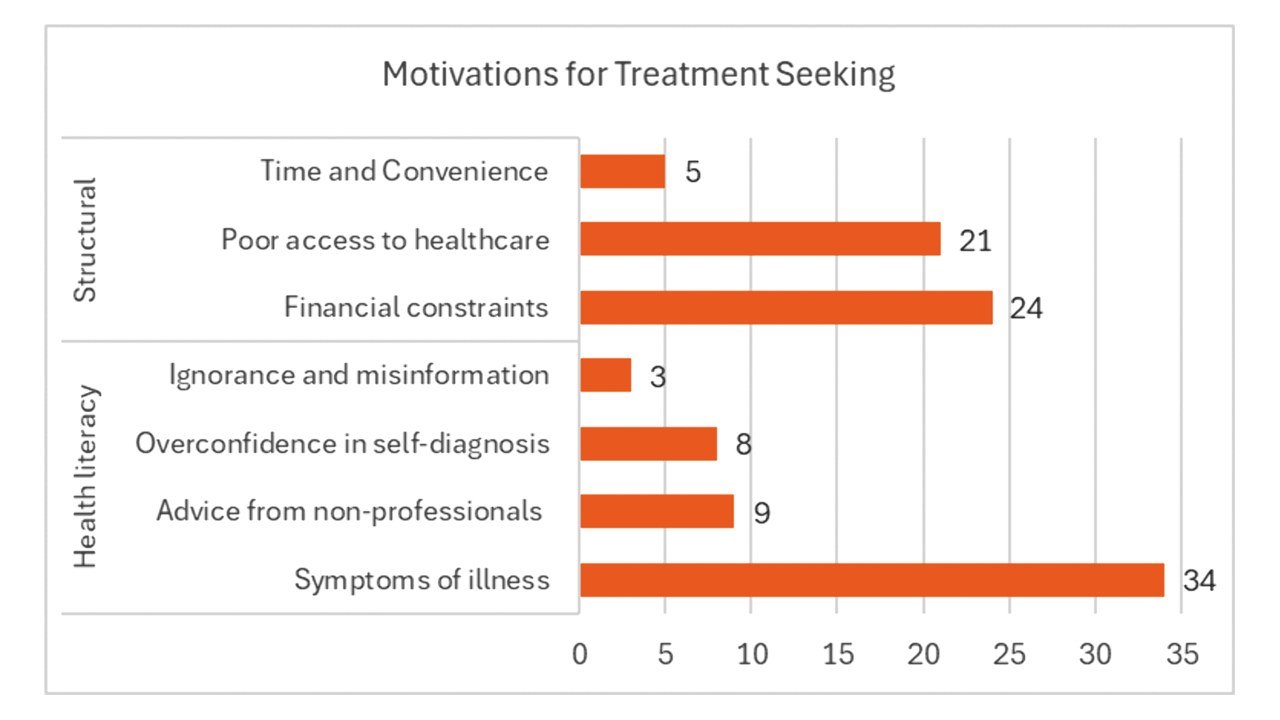
Antimicrobial resistance (AMR) is a growing global health crisis, especially in low-and middle-income countries where antibiotic access is insufficiently regulated and health systems are under-resourced. In Sub-Saharan Africa, the community is often the primary site of antibiotics decision-making, shaped by informal markets, structural barriers, and cultural norms. This study investigates antimicrobial use behaviours, perceptions of AMR, and motivations for inappropriate antibiotics use and what might motivate future change, among diverse communities in Nigeria. Using a mixed-methods design, data were collected from a baseline survey (n = 1,281), 20 interviews, and 4 focus group discussions (n = 24). Antibiotic use was widespread, with 57.7% of respondents reporting use within six months, often without prescriptions and for conditions like malaria (32.3%), cough (7.6%), and fever (4.5%), many of which are non-bacterial in origin. Of those who reported antibiotic use, 48% self-medicated, sourcing antibiotics primarily from chemist shops. Misconceptions were common; only 15.7% had heard of AMR, and many confuse it with fake drugs or allergic reactions. Novel trends such as the use of antibiotics for pregnancy termination and preventive “cleansing” emerged. Structural challenges such as poverty, poor healthcare access, and lack of regulation reinforced these behaviours. Qualitative findings highlighted a deep trust in antibiotics as a “cure-all”, low health literacy, and the central role of informal drug vendors in care delivery. Participants also offered culturally embedded recommendations, including using radio jingles, community education through religious leaders, and stronger enforcement of drug regulation. This study argues that antibiotic misuse in Nigerian communities is not solely a function of ignorance but a rational response to systemic healthcare limitations, cultural logics, and informal care networks. Tackling AMR in this context requires inclusive, community-informed interventions that address both behavioural and structural determinants of misuse. The study offers actionable insights for AMR policy, communication strategies, and community engagement in Sub-Saharan Africa.
Introduction
Antimicrobial resistance (AMR) is one of the most pressing global public health threats of our time. The World Health Organization warns that without urgent and coordinated action; we may be entering a ‘post-antibiotic era’ in which common infections and minor injuries may become difficult to treat or even fatal [1]. While AMR is a global concern, its implications are particularly serious in Low-and Middle-Income countries (LMICs), especially in Sub-Saharan Africa, where health systems are often under-resourced, health and diagnostic infrastructures are weak, and antibiotics are frequently (mis)used [2–5]. In many African settings, communities often become a primary site for decisions about accessing and using antibiotics, largely because informal markets, cultural beliefs, economic pressures, and mistrust in healthcare providers limit reliance on formal health facilities [6]. Antibiotics are frequently purchased from chemist shops or street vendors, often without prescriptions, sometimes in therapeutically inappropriate ways, and/or used for viral and parasitic infections for which they are ineffective [7–10]. Such practices, coupled with the largely unregulated availability of antibiotics, create fertile ground for the emergence and spread of resistant pathogens, leading to adverse drug reactions, economic losses, and prolonged illness.
Reading this evidence
Use the full paper to check the study design, participant selection, comparator and outcome definitions before drawing a practical conclusion. An association does not by itself show cause and effect. A reported performance measure needs its denominator and uncertainty. A finding from a particular facility, sample or time period should retain that scope when it is discussed elsewhere.
This briefing makes the source accessible within the wider financing & policy desk. It does not assess an individual patient or certify a product. When considering relevance to another health system, examine the original authors’ account of context and limitations, then seek local implementation evidence. The related reporting below provides other studies to read alongside this one; it is a topic connection, rather than a claim that their results are directly comparable.
© 2026 Winifred Maduko, Emmanuel Olamijuwon, Mike Kesby, Jo Mhairi Hale. Excerpts reproduced under CC BY. Selection, formatting and contextual notes by Health Signal. The researchers are the authors of the source study, not members of Health Signal’s staff.
Explore connected evidence
- Evidence brief: Gaps in knowledge and use of artemether-lumefantrine among university students in Southwestern Nigeria: A cross-sectional study
- Evidence brief: The association of maternal education with access to maternal care and child mortality in Nigeria: A secondary data regression-based analysis
- Evidence brief: Minding the knowledge-action gap: Results from a mixed-methods study of antimicrobial use among dairy farmers in central Uganda


