Published in PLOS One on 2026-09-25, this study is presented as an attributed evidence briefing. The excerpts below are the original researchers’ words, reproduced under their Creative Commons Attribution licence. HealthSignal has selected the abstract and, where needed, opening background paragraphs; the complete methods, results, limitations and references remain in the linked paper.
Original authors: Celestin Mutuyimana, Andreas Maercker
Source: PLOS One • DOI 10.1371/journal.pone.0358482
Read the complete primary study ↗ · Creative Commons Attribution licence
From the researchers
Abstract
Many people who have experienced trauma feel that PTSD criteria do not describe their experiences. They report culturally specific symptoms, in our new theory referred to as Cultural Scripts of Trauma, yet no study has systematically mapped these experiences or developed tools to measure them.
This study aims to map cultural scripts of trauma suffering and to develop and validate the Cultural Scripts of Trauma Inventory (CSTI) across Eastern African countries, including Rwanda, Uganda, Tanzania, and Kenya.
A qualitative study involving 115 participants across nine focus groups of trauma survivors and experts was conducted to map the main cultural scripts of trauma experiences and generate initial pool of items. This was followed by a quantitative validation study involving 1,208 participants from Rwanda, Uganda, Tanzania, and Kenya. In an online survey, participants completed the pre-CSTI and additional measures for convergent and divergent validity, such as the International Trauma Questionnaire, Clinical Aspects of Historical Trauma, Purpose in Life Questionnaire, Subjective Vitality, and General Self-Efficacy.
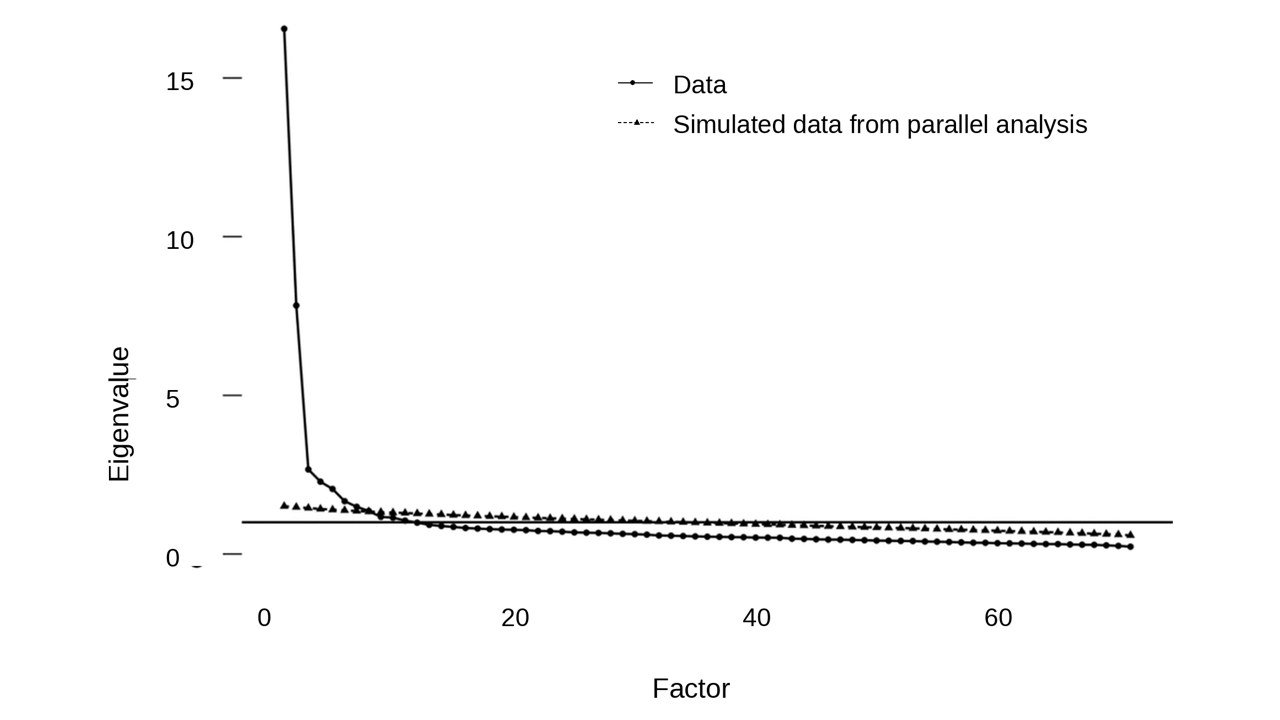
The results yield 71 Cultural Scripts of Trauma Sufferings (CSTs). The confirmatory factor analysis confirms 15 most relevant CSTs regrouped in five factors such as cognitive, body related, frame of mind, meaning disruption and family stress demonstrating excellent model fit. Those constitute 15 item-inventory that showed strong overall reliability and validity. Additionally, the model exhibited configural, metric, and partial scalar invariance, confirming its consistency across various groups.
This study is advancing culturally informed diagnosis and treatment of post traumatic sequelae by identification of culturally specific post trauma suffering and development and validation of CSTI in East African countries. It provides clinicians and researchers with a resource to adopt a model of beyond and including PTSD by offering a deeper understanding of post-traumatic stress in diverse cultural contexts.
Introduction
Globally, over 70% of people are exposed to a traumatic event; however, only about 3.9% meet the criteria for Post-Traumatic Stress Disorder (PTSD) [1,2]. In Sub Saharan Africa more than 80% of the population have faced a series of cumulative, collective, and repetitive traumatic experiences [3,4]. As result around 15% are suffering from PTSD and Complex PTSD (CPTSD) [5,6]. However, help-seeking behavior among trauma survivors remains low despite the high prevalence of trauma related disorders [7,8]. A crucial issue is that survivors, in this context, often fail to recognize their experiences within the established symptom pattern of PTSD [9,10]. For example survivors in East Africa suffered from feeling of unspeakable sufferings, body pains, mistrust, bitterness and heart wounds [11]. Survivors in Namibia perceived their suffering as something standing inside them [12].These forms of suffering was conceptualized in a new theoretical framework as Cultural Scripts of Trauma (CST) [10,13–15].
Reading this evidence
Use the full paper to check the study design, participant selection, comparator and outcome definitions before drawing a practical conclusion. An association does not by itself show cause and effect. A reported performance measure needs its denominator and uncertainty. A finding from a particular facility, sample or time period should retain that scope when it is discussed elsewhere.
This briefing makes the source accessible within the wider research & evidence desk. It does not assess an individual patient or certify a product. When considering relevance to another health system, examine the original authors’ account of context and limitations, then seek local implementation evidence. The related reporting below provides other studies to read alongside this one; it is a topic connection, rather than a claim that their results are directly comparable.
© 2026 Celestin Mutuyimana, Andreas Maercker. Excerpts reproduced under CC BY. Selection, formatting and contextual notes by HealthSignal. The researchers are the authors of the source study, not members of HealthSignal’s staff.
Explore connected evidence
- Evidence brief: Implementation bottlenecks of near point of care HIV viral load monitoring for children and young people in Tanzania: A Qualitative Study
- Evidence brief: Spatial distribution and factors associated with co-occurrence of anemia and undernutrition among children aged 6–59 months in East Africa
- Evidence brief: Patient perceptions and preferences during a community-based telehealth care model for moderate-to-severe hypertension in rural communities in Kenya and Uganda


