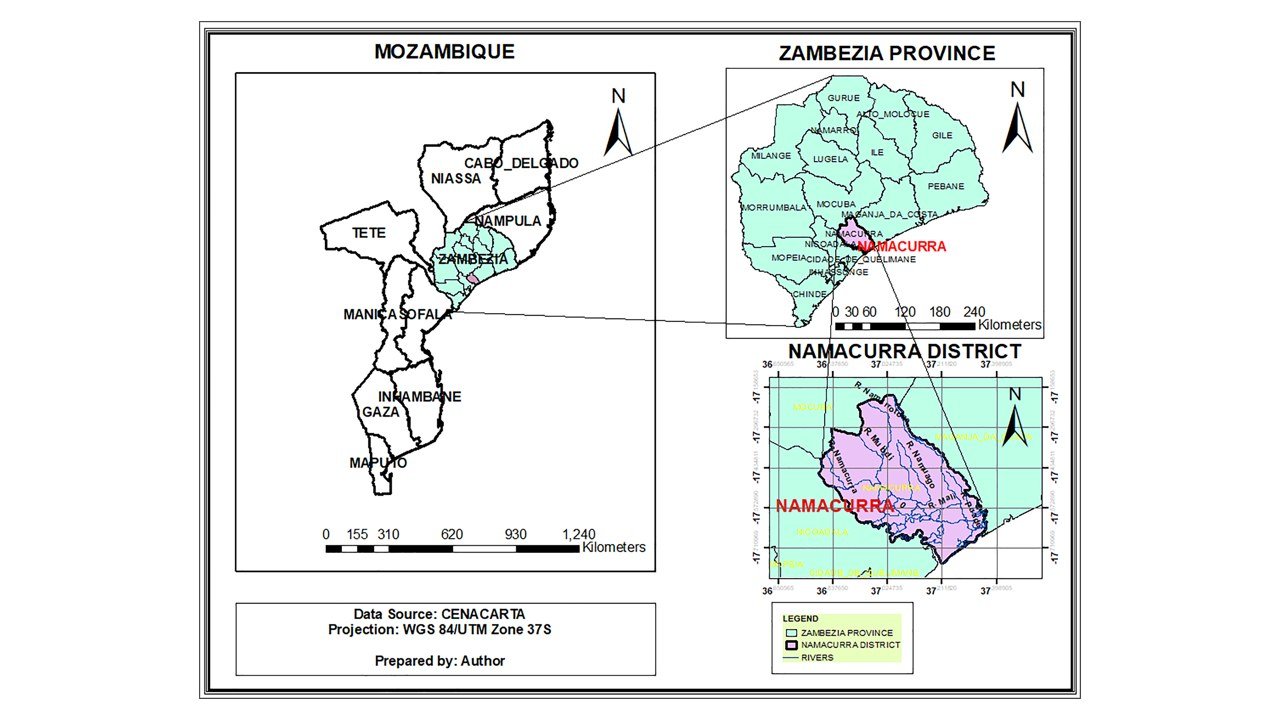
Published in PLOS One on 2026-09-03, this study is presented as an attributed evidence briefing. The excerpts below are the original researchers’ words, reproduced under their Creative Commons Attribution licence. Health Signal has selected the abstract and, where needed, opening background paragraphs; the complete methods, results, limitations and references remain in the linked paper.
Original authors: Tancredo José Carlos, Leonel Domingos Moiana, Omar Jorge Sabbag, Boniface Hussein J. Massawe, Akwilina Wendelin Mwanri, Kallunde Pilly Sibuga
Source: PLOS One • DOI 10.1371/journal.pone.0357473
Read the complete primary study ↗ · Creative Commons Attribution licence
From the researchers
Abstract
Agronomic biofortification with zinc (Zn) and iron (Fe) has emerged as a promising approach to enhance crop productivity while improving food and nutritional security. However, fertilizer recommendations based exclusively on maximum biological yield may not maximize farmers’ economic returns. This study integrated agronomic and economic analyses to identify the biologically and economically optimal Zn and Fe fertilization strategies for cowpea (Vigna unguiculata [L.] Walp.) under tropical field conditions in Mozambique. A randomized complete block design with a 3 × 4 × 4 factorial arrangement was used to evaluate three fertilization methods (soil, foliar, and combined soil + foliar) and four application rates of elemental Zn and Fe. Grain yield response was adequately described by a second-order polynomial regression model (R2 = 0.767), with maximum technical efficiency predicted at 18.92 kg ha ⁻ ¹ Zn and 19.17 kg ha ⁻ ¹ Fe. In contrast, maximum economic efficiency was achieved at lower application rates (16.94 kg ha ⁻ ¹ Zn and 10.09 kg ha ⁻ ¹ Fe), reducing Fe input by 47.4% while maintaining more than 97% of the maximum predicted grain yield and increasing net profit. Across the evaluated treatments, the combined soil + foliar application produced greater grain yield and agronomic efficiency than either application method alone. Economic robustness was further evaluated through break-even, sensitivity, and stochastic risk analyses, which indicated positive economic performance across the evaluated treatnebts under the agronomic, environmental, and economic conditions considered in this study. Within the agronomic, environmental, and economic conditions evaluated in this single-site, single-season study, the economic optimum was reached before the biological optimum, demonstrating that integrating agronomic and economic optimization can substantially reduce micronutrient inputs while maintaining high productivity and profitability. These findings provide an evidence-based framework for developing economically efficient Zn and Fe fertilization strategies for cowpea under tropical smallholder farming systems.
Introduction
Cowpea (Vigna unguiculata (L.) Walp.) is one of the most important grain legumes cultivated in tropical and subtropical regions, particularly in Sub-Saharan Africa (SSA), where it plays a key role in food security, household income, and sustainable agricultural production [1,2]. The crop is widely grown by smallholder farmers because of its remarkable adaptation to drought-prone environments, short growth cycle, and ability to fix atmospheric nitrogen, thereby improving soil fertility while reducing dependence on synthetic nitrogen fertilizers [1,3]. In addition to its agronomic importance, cowpea grains constitute an important source of dietary protein, vitamins, and essential minerals for millions of people whose diets rely heavily on plant-based foods [4,5].
Despite its importance, cowpea productivity in many tropical production systems remains considerably below its genetic potential. Among the major constraints, deficiencies of essential micronutrients, particularly zinc (Zn) and iron (Fe), are common in highly weathered tropical soils characterized by low organic matter content, poor nutrient retention, and limited micronutrient availability [6]. These nutritional limitations reduce plant growth, impair physiological processes associated with biomass accumulation and reproductive development, and decrease nutrient-use efficiency, ultimately reducing grain yield and farm profitability [6,7]. Similar micronutrient constraints have been widely reported for tropical agricultural systems across Sub-Saharan Africa, emphasizing the need for locally adapted nutrient management strategies.
Reading this evidence
Use the full paper to check the study design, participant selection, comparator and outcome definitions before drawing a practical conclusion. An association does not by itself show cause and effect. A reported performance measure needs its denominator and uncertainty. A finding from a particular facility, sample or time period should retain that scope when it is discussed elsewhere.
This briefing makes the source accessible within the wider public health desk. It does not assess an individual patient or certify a product. When considering relevance to another health system, examine the original authors’ account of context and limitations, then seek local implementation evidence. The related reporting below provides other studies to read alongside this one; it is a topic connection, rather than a claim that their results are directly comparable.
© 2026 Tancredo José Carlos, Leonel Domingos Moiana, Omar Jorge Sabbag, Boniface Hussein J. Massawe, Akwilina Wendelin Mwanri, Kallunde Pilly Sibuga. Excerpts reproduced under CC BY. Selection, formatting and contextual notes by Health Signal. The researchers are the authors of the source study, not members of Health Signal’s staff.
Explore connected evidence
- Evidence brief: Synergetic effect of bioslurry and charcoal co – composted fertilizers on soil properties and tomato (Solanum lycopersicum) productivity
- Evidence brief: Garlic (Allium sativum L.) yield and quality as affected by different integrated fertilizer levels in Wachemo University, southern Ethiopia
- Evidence brief: Optimal control of Typhoid fever transmission under environmental and public health interventions


