Published in PLOS One on 2026-06-18, this study is presented as an attributed evidence briefing. The excerpts below are the original researchers’ words, reproduced under their Creative Commons Attribution licence. HealthSignal has selected the abstract and, where needed, opening background paragraphs; the complete methods, results, limitations and references remain in the linked paper.
Original authors: Emad Malaekah, Husham Saied, Othman Alfahad, Tatyana Utkina, Marwa A Saleh, Ahmad abduaziz Aljaffer, Segun OYEDEJI, José Luiz Vieira
Source: PLOS One • DOI 10.1371/journal.pone.0348280
Read the complete primary study ↗ · Creative Commons Attribution licence
From the researchers
Abstract
Malaria is a potentially fatal illness caused by a parasite of the genus Plasmodium that humans get by being bitten by female Anopheles mosquitoes carrying the infection. The incidence of malaria worldwide is disproportionately high in the African continent. Automated systems and cognitive analysis of digitized images of blood smears were used to diagnose Plasmodium malaria. This method is implemented in the Aidos intelligent system, which is easily accessible online. For the study, the database included images of 191 blood smears of patients infected with malaria and 227 images of blood samples from healthy patients. The images were digitized using the method developed by Professor Lutsenko E.V. The images were digitized for 12 light spectra. Then, spectral analysis of the blood smear images was carried out only for 18 new patients, and the duration was 10 seconds. The average similarity value of Plasmodium malaria recognition in patients was achieved at 66.965%. No false positive decisions were obtained for digitalized blood smears from healthy patients. The automated system-cognitive analysis of digitized blood smears provides instant diagnostic support. It allows medical workers with limited knowledge in microscopy and artificial intelligence to perform diagnostics.
1. Introduction
Humans contract malaria via the bites of female Anopheles mosquitoes carrying the tiny parasite called Plasmodium that causes the sickness. A person’s red blood cells are destroyed by the Plasmodium malaria parasite, which then replicates in other cells. Typical symptoms of malaria include fever, headache, muscle soreness, and exhaustion [1]. WHO estimates that there will be 282 million cases of malaria and 610,000 deaths in 2024 – about 9 million more than the previous year [2].
A correct diagnosis at an early stage will reduce the cost of malaria treatment. Plasmodium malaria is detected by examining a drop of a patient’s blood, spread as a “blood smear” on a microscope slide, under a microscope [3]. Modern imaging techniques make digitizing microscopic blood smears with high optical resolution possible. A decision support system that assists microscopists in malaria diagnosis is available using computer vision to screen digital thin blood films, but it is prone to false negative decisions [4]. To count the number of infected cells in a single blood thick film, a skilled microscopist usually takes 20–30 minutes to carefully examine the film. Plasmodium malaria screening becomes a lengthy and error-prone process when there are many patients, and manual blood film evaluation mostly depends on skilled staff. When evaluating treatment results and the effectiveness of antimalarial medications, the parasite clearance rate is crucial [5]. Rapid tests, which use a small kit to identify antigens from malaria parasites, can be used to identify malaria. Through a hole in the kit, a drop of blood is added, and the tests are conducted inside the apparatus, yielding findings quickly [6]. However, the rapid diagnostic tests (RDTs) is imprecise, and any incorrect result may impact patient treatment [7].
Reading this evidence
Use the full paper to check the study design, participant selection, comparator and outcome definitions before drawing a practical conclusion. An association does not by itself show cause and effect. A reported performance measure needs its denominator and uncertainty. A finding from a particular facility, sample or time period should retain that scope when it is discussed elsewhere.
This briefing makes the source accessible within the wider technology & industry desk. It does not assess an individual patient or certify a product. When considering relevance to another health system, examine the original authors’ account of context and limitations, then seek local implementation evidence. The related reporting below provides other studies to read alongside this one; it is a topic connection, rather than a claim that their results are directly comparable.
© 2026 Emad Malaekah, Husham Saied, Othman Alfahad, Tatyana Utkina, Marwa A Saleh, Ahmad abduaziz Aljaffer, Segun OYEDEJI, José Luiz Vieira. Excerpts reproduced under CC BY. Selection, formatting and contextual notes by HealthSignal. The researchers are the authors of the source study, not members of HealthSignal’s staff.
Explore connected evidence
- Evidence brief: Exploring spatial variation and multilevel modeling of malaria prevalence among children aged 6-59 months based on RDT in Niger: Insights for public health decision-making
- Evidence brief: Malaria and malnutrition in children under the Seasonal Malaria Chemoprevention (SMC) coverage in the health district of Nanoro, Burkina Faso
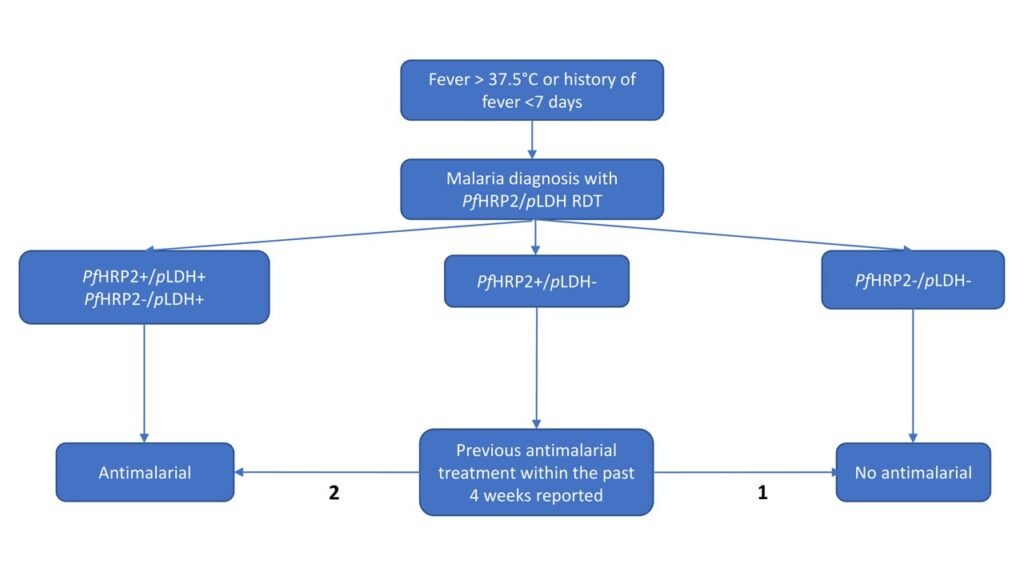
- Evidence brief: Improving the field accuracy of a malaria diagnostic algorithm combining sequential interpretation of rapid diagnostic test detecting PfHRP2 and pLDH in febrile children in a seasonal hyperendemic malaria transmission area in Burkina Faso