Published in PLOS One on 2026-06-23, this study is presented as an attributed evidence briefing. The excerpts below are the original researchers’ words, reproduced under their Creative Commons Attribution licence. Health Signal has selected the abstract and, where needed, opening background paragraphs; the complete methods, results, limitations and references remain in the linked paper.
Original authors: Abdi Gari Negasa, Firew Tekle Bobo, Meseret Gebre, Tsinuel Nigatu, Mirkuzie Woldie, Mideksa Adugna Koricho, Mohammod J. Chisti, Peter Berman, Girmaye Dinsa
Source: PLOS One • DOI 10.1371/journal.pone.0352122
Read the complete primary study ↗ · Creative Commons Attribution licence
From the researchers
Abstract
Pneumonia is preventable and treatable, yet it remains the leading infectious cause of illness and death among under-five children. Bubble continuous positive airway pressure (bCPAP) offers a promising option for oxygen therapy combined with appropriate antibiotics and other supportive care. However, the cost-effectiveness of bCPAP in resource-limited settings such as Ethiopia is not documented. We aimed to evaluate the cost-effectiveness of bCPAP in treating severe pneumonia and hypoxaemia in under-five children in Ethiopia.
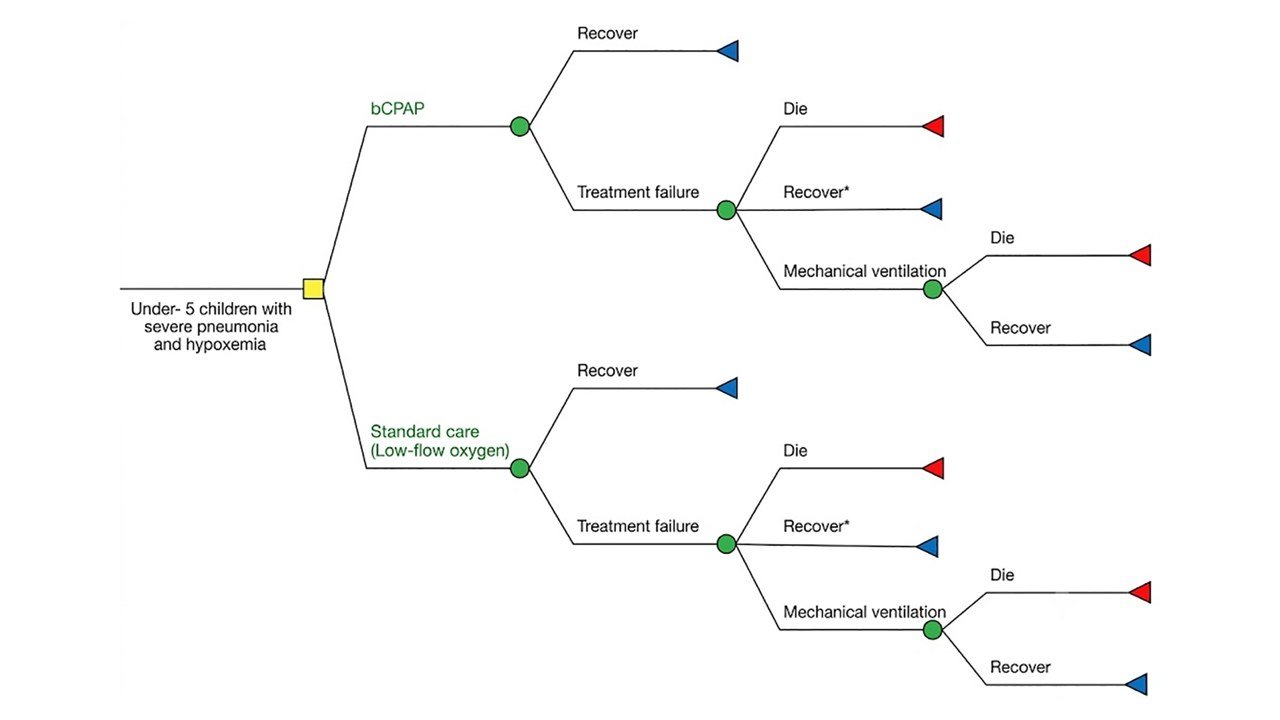
We developed a decision-analytical model (decision tree) to determine the cost-effectiveness of a locally made bCPAP compared with the standard of care (WHO-recommended low-flow oxygen therapy) in general hospitals. Effectiveness was measured as the number of child deaths and disability adjusted life years (DALYs) averted. Cost data were extracted from published literature and local markets. The incremental cost-effectiveness ratio (ICER) was calculated and evaluated against the willingness-to-pay (WTP) thresholds set at multiples (0.34, 1, and 3) of Ethiopia’s GDP per capita. Sensitivity analyses were performed to test the robustness of the results.
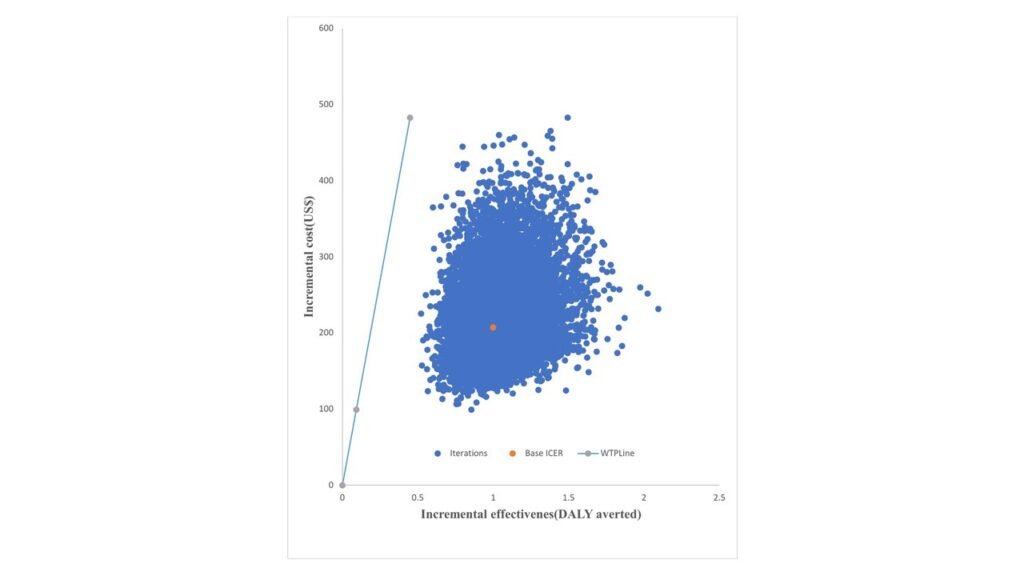
For every 10,000 children with severe pneumonia and hypoxaemia, providing oxygen using locally made bCPAP will save an additional 31 children compared to the standard of care. A locally made bCPAP has an ICER of 139.5 USD per DALY averted. These results were robust in the sensitivity analysis performed, showing a 100% probability of being cost-effective at one times the GDP per capita of Ethiopia.
A locally made bCPAP is a highly cost-effective intervention for treating severe pneumonia and hypoxaemia in under-five children in Ethiopian general hospitals. These findings provide critical evidence for decision-makers to support and scale-up use of bCPAP in Ethiopia and other similar low and middle income countries.
Introduction
In 2019, pneumonia killed 740,180 children before they reached their fifth birthday. It is a significant global health concern and remains a leading infectious cause of morbidity and mortality, accounting for 14% of all deaths among children under-five years of age [1].
Severe pneumonia in children is defined by clinical signs of pneumonia (such as cough or difficulty breathing) combined with danger signs or hypoxaemia. Specifically, it includes at least one of: central cyanosis, SpO2 < 90%, severe respiratory distress (e.g., grunting, very severe chest indrawing), or general danger signs like inability to breastfeed/drink, lethargy/unconsciousness, or convulsions [2]. The severity of pneumonia is often exacerbated by hypoxaemia, a condition characterized by low blood oxygen levels (less than 90% at room air measured by pulse oximeter), presence of which significantly increases the risk of fatal outcomes compared to those without hypoxaemia [3–5].
While pneumonia affects children and families worldwide, the highest death rates are concentrated in southern Asia and sub-Saharan Africa [1,6]. In Ethiopia, pneumonia is among the major reasons of hospital visit and mortality in under 5 children [7]. The pooled magnitude of pneumonia among under-five children was in Ethiopia was 18.03% [8] and mortality rate was relatively high with 16.09% in severe pneumonia [9].
Reading this evidence
Use the full paper to check the study design, participant selection, comparator and outcome definitions before drawing a practical conclusion. An association does not by itself show cause and effect. A reported performance measure needs its denominator and uncertainty. A finding from a particular facility, sample or time period should retain that scope when it is discussed elsewhere.
This briefing makes the source accessible within the wider financing & policy desk. It does not assess an individual patient or certify a product. When considering relevance to another health system, examine the original authors’ account of context and limitations, then seek local implementation evidence. The related reporting below provides other studies to read alongside this one; it is a topic connection, rather than a claim that their results are directly comparable.
© 2026 Abdi Gari Negasa, Firew Tekle Bobo, Meseret Gebre, Tsinuel Nigatu, Mirkuzie Woldie, Mideksa Adugna Koricho, Mohammod J. Chisti, Peter Berman, Girmaye Dinsa. Excerpts reproduced under CC BY. Selection, formatting and contextual notes by Health Signal. The researchers are the authors of the source study, not members of Health Signal’s staff.
Explore connected evidence
- Evidence brief: Time to recovery and its predictors among pediatric patients with severe community-acquired pneumonia admitted to public general hospitals in Tigray, Ethiopia, 2025: A prospective follow-up study
- Evidence brief: Economic evaluation of insulin glargine compared with human insulin for youth with type 1 diabetes in Tanzania and Bangladesh
- Evidence brief: Cost-effectiveness analysis of mammography screening for early detection of breast cancer in Nigeria