Published in PLOS One on 2026-07-29, this study is presented as an attributed evidence briefing. The excerpts below are the original researchers’ words, reproduced under their Creative Commons Attribution licence. Health Signal has selected the abstract and, where needed, opening background paragraphs; the complete methods, results, limitations and references remain in the linked paper.
Original authors: Titilola Gbaja-Biamila, Oliver Ezechi, Ebenezer Adeoti, Jane Okwuzu, Chiyere Arinze, Lauren Fidelak, Olufunto Olusanya, Ucheoma Nwaozuru, Akeem Lateef, Temitope Ojo, Hong Xian, Tomilola Musari-martins, Abideen Salako, Agatha Wapmuk, Folahanmi Akinsolu, Suzanne Day, Nora Rosenberg, Aisha Koledowo, Jason Ong, Weiming Tang, Susan Nkengasong, David Oladele, Adesola Musa, Conserve Donaldson, Ross Brownson, Collins Airhihenbuwa, Joseph Tucker, Juliet Iwelunmor
Source: PLOS One • DOI 10.1371/journal.pone.0322076
Read the complete primary study ↗ · Creative Commons Attribution licence
From the researchers
Abstract
The engagement of youth in the design of services that promote and increase the uptake of essential services to reduce HIV and other sexually transmitted infections is vital to sustaining these preventive services. The study objective is to identify strategies for sustaining HIV prevention services among Nigerian youth, in partnership with community-based organizations, through a crowdsourced open call and designathon in Nigeria.
From February to March 2024, Nigerian youth (ages 14–24) submitted ideas to an open crowdsourcing call on how community-based organizations in Nigeria might sustain HIV self-testing and youth-friendly preventive services for at-risk youth. The submissions were scored in each domain: relevance, novelty, scalability, replicability, potential for sustainability, and promotion of equity and fairness, with an integer score of 1 (low) to 3 (high)(S1). Ten teams were selected to participate in the 72-hour designathon. Both quantitative and qualitative analysis was conducted. The study used thematic analysis and the PEN 3-Cultural Model to categorize qualitative data into six themes. Descriptive statistics were used to calculate participants’ demographic characteristics.
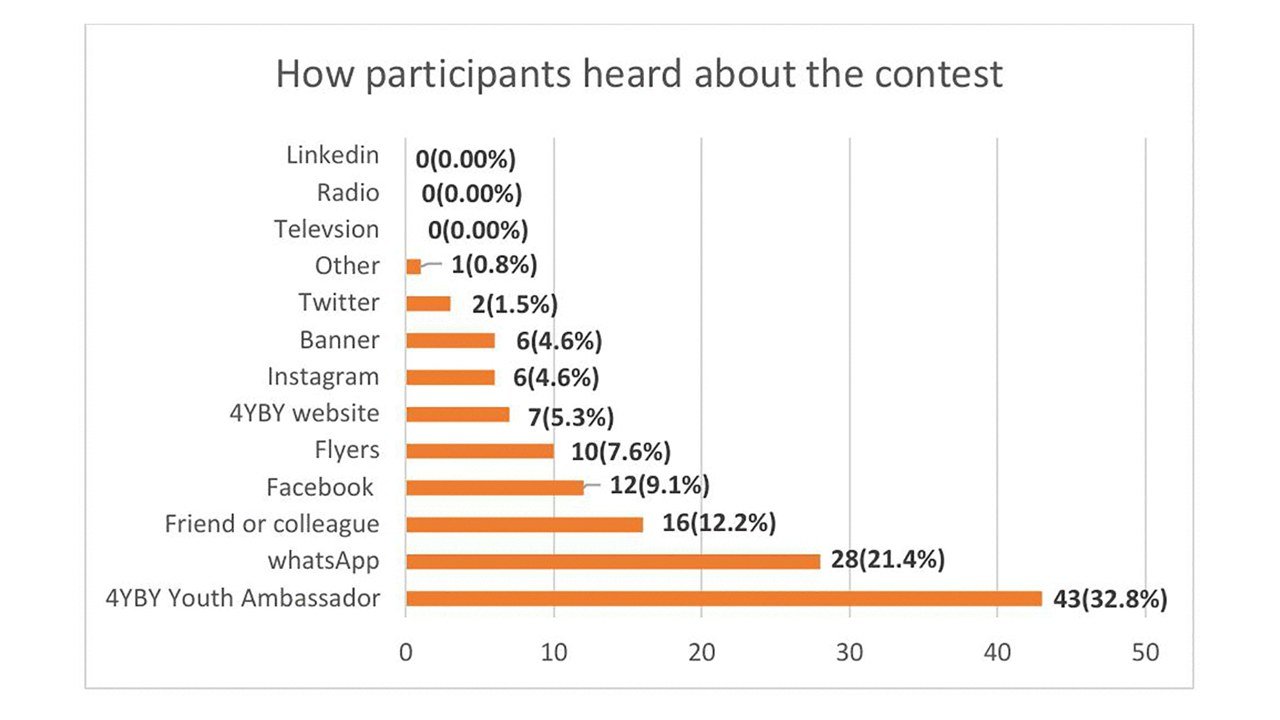
One hundred and seventy-eight participants submitted entries; 161 were online entries, and 17 were received via WhatsApp. The majority of participants were female (57.1%) and aged 19–23 years (55.0%), with a mean age of 21.7 (±4.1). Most participants were from the southwest of Nigeria (53.8%), had secondary education (68.9%), and were students (67.9%). About one-third of teams (31.1%) indicated collaborating with non-governmental organizations as a promising way to sustain preventive services. Six themes emerged: Adapted Intervention Design and Delivery, Youth Engagement and Education, Organization Setting, Socio-cultural and Community Context, Community Leadership Through Training and Financial Resources, and Sustainment Through Community Collaboration.
The crowdsourcing contest open call and designathon engaged youth from diverse backgrounds, and it is a practical way to generate solutions from key stakeholders affected by the community’s prevailing health issues. Developing service delivery strategies that engage, educate, and collaborate with youth on HIV prevention could be sustainable. However, this will not be conclusive without implementing them over time to test their feasibility and sustainability.
Introduction
Sustaining youth-friendly preventive services is a critical challenge in Africa, particularly in Nigeria. Nigeria faces one of the highest burdens of HIV among youth in West and Central Africa. [1]. We will refer to youth in this paper as individuals aged 14–24. Despite the progress made in HIV prevention, there is still suboptimal uptake of HIV self-testing (HIVST) and Pre-Exposure Prophylaxis(PrEP) among Nigerian youth [2–4]. In addition, there are limited youth-friendly clinics that tailor services for youth [5]. This may be a result of societal stigma surrounding youth access to sexual and reproductive health services [6]. As well as the designs and processes within the existing youth-friendly centers, making them unpopular among the youth [6]. A key contributory factor to this gap is the fact that there is limited youth engagement in the design and implementation of these preventive services, which has led to the creation of interventions that are often misaligned with the needs of youth [7–9]. Engaging youth in creating and planning HIV prevention services is essential to boosting their uptake. Youth engagement in the design of health services has been observed to play a critical role in improving the uptake of preventive measures against HIV and other sexually transmitted infections (STIs) [10–13]. Creative approaches are needed to develop youth-engaged HIV prevention services in LMICs, particularly in Africa [14]. Crowdsourcing represents one way to enhance youth engagement in HIV prevention services.
Reading this evidence
Use the full paper to check the study design, participant selection, comparator and outcome definitions before drawing a practical conclusion. An association does not by itself show cause and effect. A reported performance measure needs its denominator and uncertainty. A finding from a particular facility, sample or time period should retain that scope when it is discussed elsewhere.
This briefing makes the source accessible within the wider hospital systems desk. It does not assess an individual patient or certify a product. When considering relevance to another health system, examine the original authors’ account of context and limitations, then seek local implementation evidence. The related reporting below provides other studies to read alongside this one; it is a topic connection, rather than a claim that their results are directly comparable.
© 2026 Titilola Gbaja-Biamila, Oliver Ezechi, Ebenezer Adeoti, Jane Okwuzu, Chiyere Arinze, Lauren Fidelak, Olufunto Olusanya, Ucheoma Nwaozuru, Akeem Lateef, Temitope Ojo, Hong Xian, Tomilola Musari-martins, Abideen Salako, Agatha Wapmuk, Folahanmi Akinsolu, Suzanne Day, Nora Rosenberg, Aisha Koledowo, Jason Ong, Weiming Tang, Susan Nkengasong, David Oladele, Adesola Musa, Conserve Donaldson, Ross Brownson, Collins Airhihenbuwa, Joseph Tucker, Juliet Iwelunmor. Excerpts reproduced under CC BY. Selection, formatting and contextual notes by Health Signal. The researchers are the authors of the source study, not members of Health Signal’s staff.
Explore connected evidence
- Evidence brief: Gaps and barriers preventing sustained delivery of HPV vaccination in Kano, Kaduna, and Lagos states: An exploratory qualitative study
- Evidence brief: Lived experience of depression in women living with Human Immunodeficiency Virus in Gondar City health facilities, Northwest, Ethiopia: A phenomenological study
- Evidence brief: Effect of psychoeducation in reducing caregiver burden among family caregivers of people with mental disorders in Western Ethiopia, 2021–2022: A pre-test post-test study

