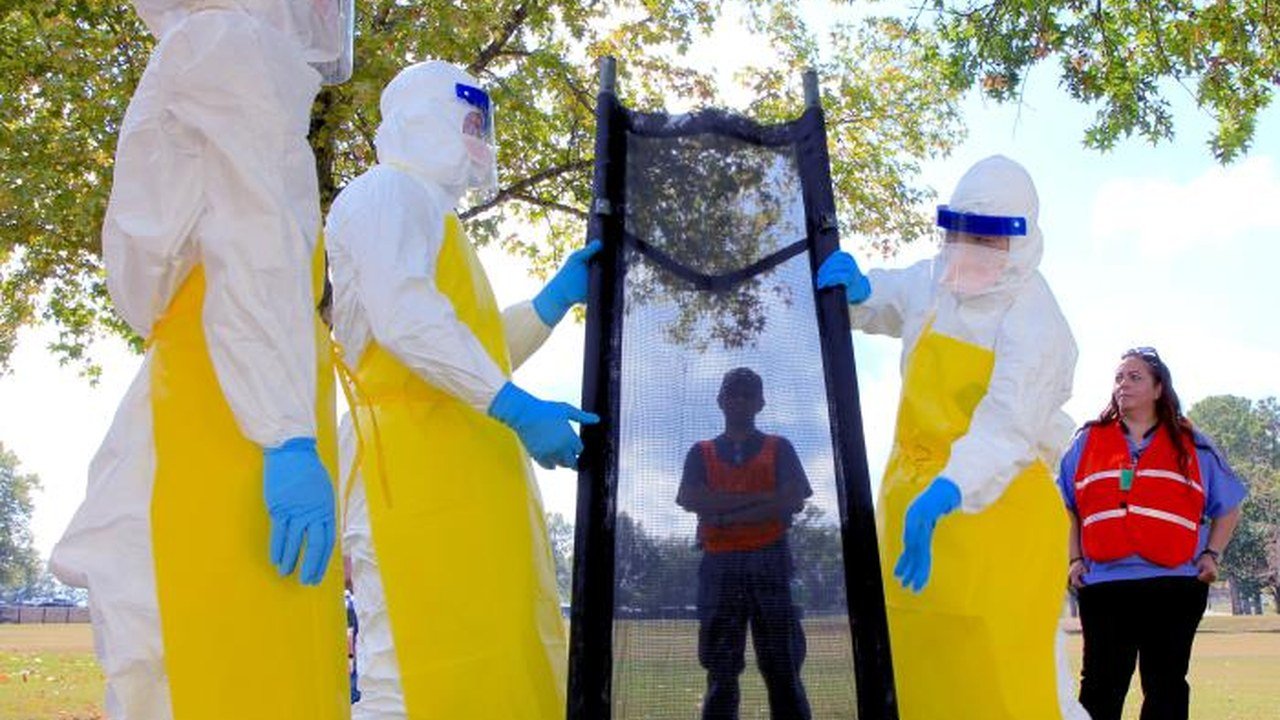
WHO reported on 12th October 2026 that it had handed over medical supplies worth around USD 70,000 to support Kenya’s response to its first confirmed imported Bundibugyo Ebola case. The consignment included protective equipment, testing kits, sample-transport containers, thermometers and infection-control materials. WHO said Kenya’s Ministry of Health would distribute the supplies to the facilities and teams needing them most.
The same update recorded 127 listed contacts, of whom 94 were in quarantine, and more than 665,000 travellers screened at points of entry. Five laboratories had been designated for testing, including two mobile laboratories at the Busia and Bungoma borders. Those figures describe the 12th October report. Contacts and people in quarantine are not confirmed infections, and designated laboratories are not evidence of identical turnaround times at every site.
Follow the supplies through the system
The handover is a concrete event, but its practical value depends on the journey from storage to use. Health Signal’s analysis is that subsequent reporting should identify the receiving facilities, the items allocated to them and the dates of receipt. A national consignment can support a response without answering whether every designated team has the required stock. Facility-level information would make that question assessable.
A useful inventory would keep different products separate. Protective garments, laboratory reagents and sample-transport materials perform different functions and can face different constraints. Adding all items into one headline quantity would hide those distinctions. For each product, the reporting could examine stock availability, distribution responsibility and replenishment arrangements, while avoiding disclosure of information that would identify patients or expose confidential medical records.
Readiness is a service pathway
A designated laboratory is part of a larger operational chain. A facility needs a way to recognise a possible case, arrange appropriate assessment, collect and transport samples safely, receive results and coordinate the next decision. The time spent at each stage would be a useful service measure if authorities publish comparable data. A laboratory count alone cannot establish that the whole chain is working consistently.
The same principle applies to staff protection. Training numbers describe participation in an activity; they do not independently establish competency during a particular shift or the availability of suitable equipment at the bedside. Follow-up reporting should connect the training, staffing and inventory records to the teams carrying out the response. That would provide a clearer account of preparedness than repeating a national total without an operational denominator.
What this update can and cannot show
The source establishes WHO’s account of the handover and the national response figures it reported. It is not an independent audit of distribution, a final procurement reconciliation or a forecast of future transmission. Those are separate questions with separate evidence requirements. A later article should identify any subsequent official update, retain the dates of changing contact totals and explain whether the supplies have reached the intended services.
The broader hospital-systems story is about continuity: how a facility protects staff and manages a possible infectious threat while maintaining its other services. Reporting that pathway requires named responsibilities, clear referral arrangements and evidence from implementation. This delivery provides a useful starting point for following those questions through the response rather than assuming that an announcement completes the operational work.
Source-based reporting and analysis by Health Signal Editorial Desk. Read the original source. Evidence reviewed on 12th October 2026; figures retain the date of the cited report.
Connected reporting
Read this alongside Kenya confirms an imported Ebola case: what the dated record establishes and WHO updates filovirus surveillance guidance: what health systems should examine.