An opening look at response readiness, hospital continuity and evidence from Cape Coast.
Opening preview · A sample of the reporting and context inside The Signal Briefing.
Welcome to The Signal Briefing. This preview brings together four pieces of reporting from the Health Signal Africa archive.
Start with the dated developments in Kenya, then turn to a study of informal workers in Cape Coast. Each item links to the full article, with its original source and the limits of its evidence.
The common question is practical: what do these developments mean for the people keeping health services running?
01Hospital Systems
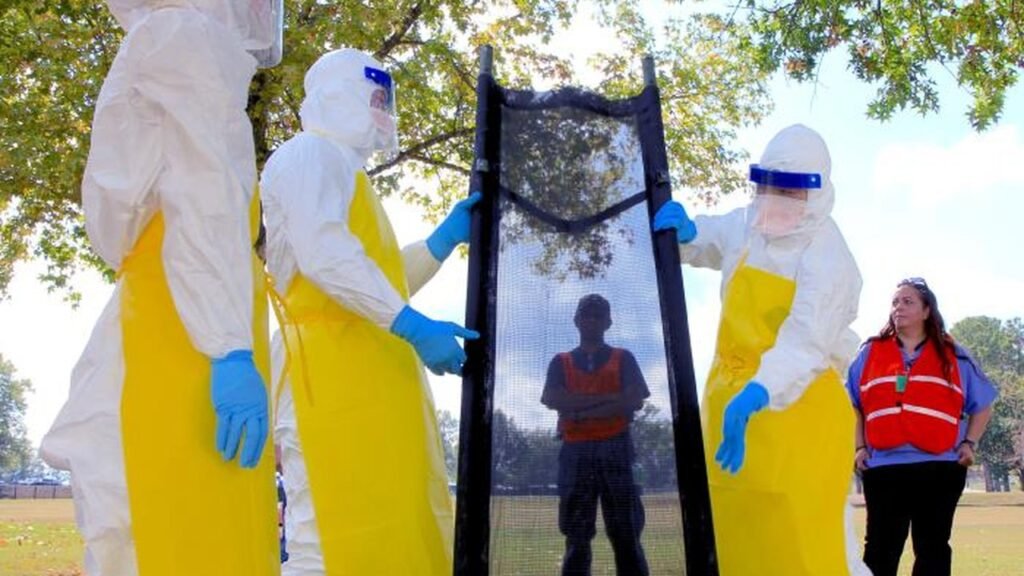
A simulated Ebola patient-care exercise during CDC’s 2014 Domestic Training Course. Photo: CDC / Cleopatra Adedeji, RRT, BSRT. Public domain; CDC PHIL #19198. Cropped to 16:9 and compressed. Archival training illustration; this does not show Kenya’s 2026 response or an actual patient.
WHO reported a supplies handover worth around USD 70,000 on 12th October. Follow the distinction between the handover, planned distribution and verified frontline readiness.
The Ministry said SHA contracts extended to 14th October would receive no further extension. The reporting examines the paperwork, payment routes and care pathways behind that deadline.
A cross-sectional study of 948 informal workers examines cardiometabolic disease in Cape Coast, Ghana. Its findings describe the study sample, with diagnoses varying across the criteria used.
Updated WHO guidance covers surveillance, case investigation and contact tracing. Its publication provides a framework for assessing implementation; national protocols still govern the response.