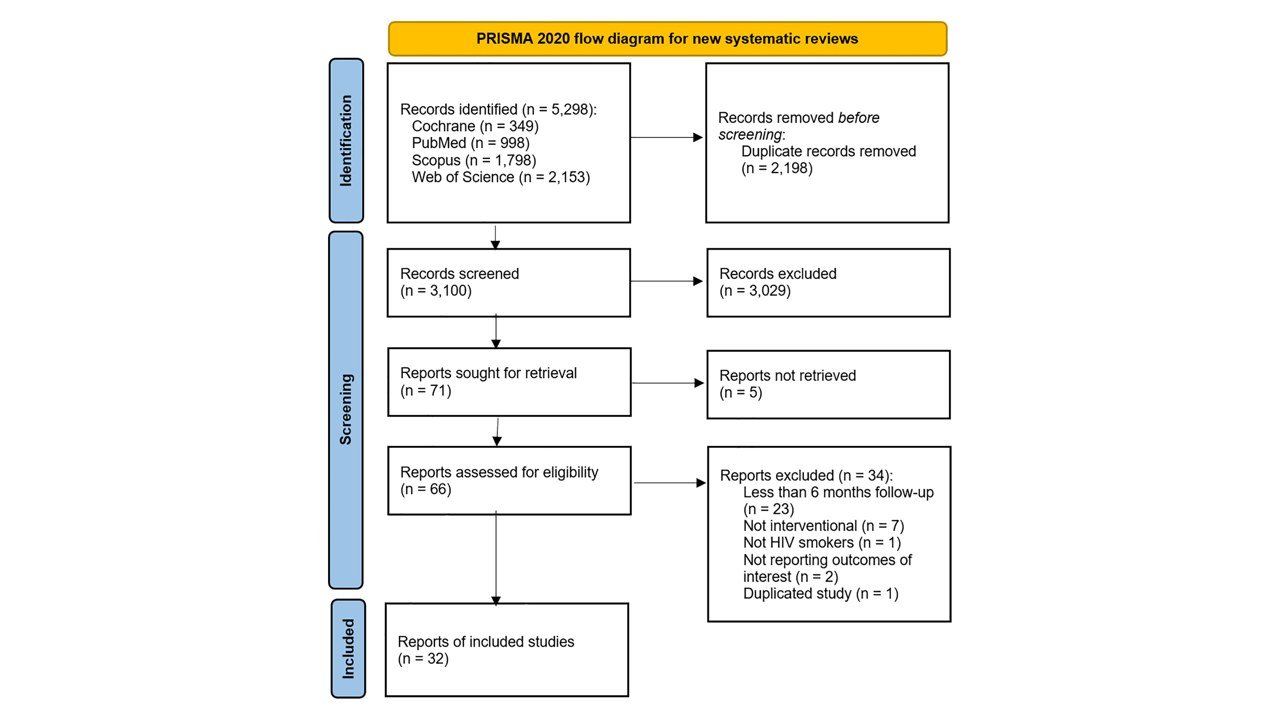
Published in PLOS One on 2026-07-30, this study is presented as an attributed evidence briefing. The excerpts below are the original researchers’ words, reproduced under their Creative Commons Attribution licence. Health Signal has selected the abstract and, where needed, opening background paragraphs; the complete methods, results, limitations and references remain in the linked paper.
Original authors: Van Minh Nguyen, Thanh Hoang, Yesim Tozan, Mikael Svensson, Minh Van Hoang, Nawi Ng
Source: PLOS One • DOI 10.1371/journal.pone.0350040
Read the complete primary study ↗ · Creative Commons Attribution licence
From the researchers
Abstract
The prevalence of smoking among people living with HIV (PLWH) is higher than in the general population, and PLWH who smoke are at increased risk of both smoking- and HIV-related comorbidities. As most PLWH reside in low- and middle-income countries (LMICs), there is a need for effective and cost-effective smoking cessation interventions in resource-constrained settings. We systematically reviewed and meta-analyzed the effectiveness of smoking cessation interventions for PLWH and looked for economic evaluations. Four databases (PubMed, Cochrane, Scopus, Web of Science) were searched up to March 23rd, 2026. Interventional and quasi-experimental studies evaluating smoking cessation interventions for PLWH were included. Risk of bias was assessed using Cochrane’s risk-of-bias tool for randomized studies and the Effective Public Healthcare Panacea Project tool for non-randomized studies. Thirty-two articles met the inclusion criteria. Most evidence originated from high-income countries, with three randomized controlled trials conducted in LMICs (Kenya, South Africa and Vietnam). No economic evaluations were identified. Smoking cessation interventions varied in type, duration, intensity, and mode of delivery. Overall, studies had low to moderate risk of bias. GRADE assessments indicated moderate-certainty evidence that pharmacological interventions (RR 1.86, 95% CI 1.42–2.45) and tailored, intensive behavioral support (RR 1.34, 95% CI 1.05–1.71) increase smoking abstinence compared with standard care. This review indicates that pharmacological and tailored, intensive behavioral support interventions can support smoking cessation among PLWH, including emerging evidence from LMICs, but the absence of economic evaluations limits guidance for resource-constrained settings. Future research should prioritise implementation strategies and economic evaluations to support scalable integration into routine HIV care. (PROSPERO Registration no: CRD42022313630).
Introduction
Tobacco use is a major public health challenge, causing more than 7 million deaths annually [1]. Smoking tobacco is substantially more harmful to people living with human immunodeficiency virus (HIV), posing a greater threat to long-term survival than the HIV infection itself [2, 3]. A study of people living with HIV (PLWH) in Europe and North America showed that participants who smoked had a 1.94-fold higher mortality rate compared to those who never smoked. This risk was particularly elevated for cardiovascular diseases and non-AIDS cancers, with mortality rate ratios of 6.28 and 2.67, respectively [2]. Despite being more vulnerable to the adverse health effects of smoking, a 2021 systematic review pointed out that PLWH were 64% more likely to smoke than the general population [4].
The burden of smoking among PLWH is more significant in low- and middle-income countries (LMICs), where populations face a double burden of high smoking and HIV prevalences. On one hand, 79% of global smokers reside in LMICs, with the average adult smoking prevalence estimated at 15.6% in middle-income countries and 10.3% in low-income countries [5]. However, the smoking prevalence among men living with HIV in LMICs was estimated at 24.4%, a rate significantly higher than among HIV-negative men (risk ratio: 1.46, 95% confidence interval: 1.30 to 1.65) [6]. This pronounced gender disparity is largely attributed to societal norms and gender inequalities that stigmatize tobacco use among women while socially accepting it among men [7]. Furthermore, the elevated smoking prevalence across the broader PLWH population is driven by high rates of co-occurring substance use and the reliance on tobacco as a coping mechanism for HIV-related psychological distress, including depression, stigma, and loneliness [7]. On the other hand, the global HIV burden is predominantly borne by LMICs, accounting for 36.94 million PLWH and 705,800 HIV-related deaths, compared to just 3.13 million PLWH and 12,200 deaths in high-income countries (HICs) [8]. The disproportionate HIV burden in LMICs is driven by factors such as low socioeconomic status and limited healthcare access, which have facilitated the spread of the virus in these settings [9].
Reading this evidence
Use the full paper to check the study design, participant selection, comparator and outcome definitions before drawing a practical conclusion. An association does not by itself show cause and effect. A reported performance measure needs its denominator and uncertainty. A finding from a particular facility, sample or time period should retain that scope when it is discussed elsewhere.
This briefing makes the source accessible within the wider financing & policy desk. It does not assess an individual patient or certify a product. When considering relevance to another health system, examine the original authors’ account of context and limitations, then seek local implementation evidence. The related reporting below provides other studies to read alongside this one; it is a topic connection, rather than a claim that their results are directly comparable.
© 2026 Van Minh Nguyen, Thanh Hoang, Yesim Tozan, Mikael Svensson, Minh Van Hoang, Nawi Ng. Excerpts reproduced under CC BY. Selection, formatting and contextual notes by Health Signal. The researchers are the authors of the source study, not members of Health Signal’s staff.
Explore connected evidence
- Evidence brief: HIV self-testing and partner notification strategies for key populations in low- to upper-middle-income countries: A mixed-methods systematic review
- Evidence brief: An economic evaluation of the LINKEDin study: An intervention to reduce initial loss to follow-up among tuberculosis patients in South Africa
- Evidence brief: Barriers and facilitators to healthcare access among Sub-Saharan African migrants in Europe: A scoping review

